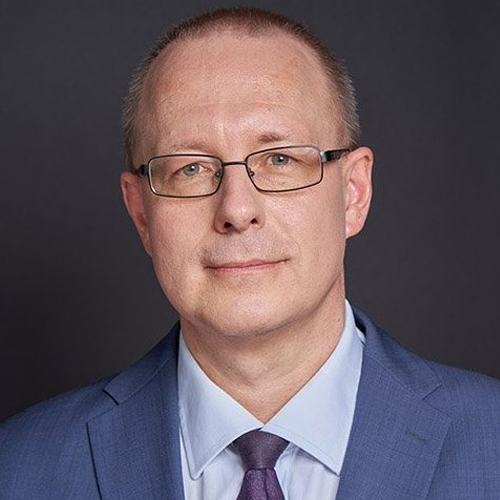
Punish – real criminals. And who they are was explained to the Saeima by Attorney General Armīns Meisters.
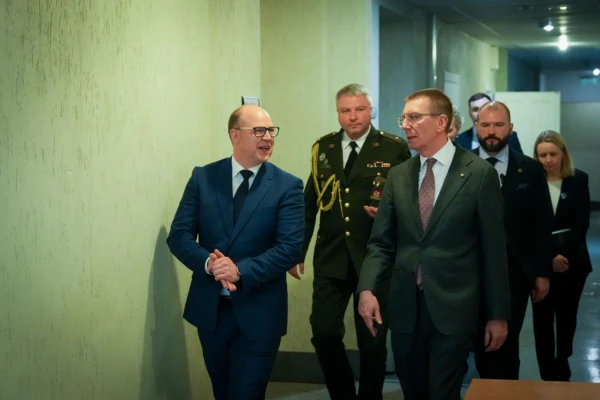
The main law enforcement agency of Latvia was personally visited in early March by the president of the country. Edgars Rinkēvičs stated: "It is precisely the prosecutor's office that has a significant role in implementing the decisions of lawmakers in the policy of punishments and using criminal law tools to combat internal and external threats to the state."
A little later, the Attorney General himself, appointed by the parliament last November for a term of 5 years, came with a report to the Saeima Committee on Defense, Internal Affairs, and Corruption Prevention.
"We have heard about good developments"
Such encouragement was given to the Attorney General by the head of the parliamentary committee, Raimonds Bergmanis, a famous strongman and former Minister of Defense (now from the "United List").
Mr. Meisters, for his part, explained that at the beginning of the 2020s, the work of the Prosecutor's Office was planned until 2027 – however, in 2022, "the situation changed radically." Law enforcement agencies, the Attorney General believes, must respond to "what concerns society." Therefore, in 2026, preparations began for a new strategy that "will be more adapted to the real situation."
In general, the data from the prosecutor's office and the Ministry of the Interior can differ significantly, as the former counts from the number of criminal cases, while the latter counts from the number of offenses. By the way, recently, the head of the State Police, Māris Ruks, made a truly revolutionary proposal – to transfer petty thefts from criminal offenses to administrative violations.
– We are fighting crime, and it manifests itself in specific criminal acts, – said A. Meisters. – Within one criminal case, we can have 100 episodes…
Currently, there is a 5% increase compared to 2023 in the number of cases under the supervision of the prosecutor's office – but the speaker does not consider this significant.
Stealing, drinking, and traveling around the country
"The most popular articles of the Criminal Code," in the words of the Attorney General, remain large-scale thefts and driving under the influence of alcohol. Together, these two types of offenses account for over 60% of the cases in which the prosecutor is involved!
"It is not the prosecutor who decides which cases to investigate. Obviously, this is the mindset of those people who go and steal or drive while drunk. Perhaps it is a kind of protest or nihilism?"
– We have criminalized such driving, – noted Raimonds Bergmanis. – But, looking at the years, it has not had the desired effect. Well, what can be done, how to change it, if even criminal punishment with confiscation of the car does not yield results? At one time it worked – when, like in America, they made it so that if you were caught driving drunk, the next day you were in jail. But then they found ways to circumvent it.
"Yes, indeed, – stated the Attorney General, – obviously, this deserves a separate study on how the inevitability and severity of punishment affects a person's mindset" (it was also added that some offenders do not agree to have their cars taken away just like that and go to court because of this!).
– It is certainly pleasing that the number of serious crimes is not increasing, – said Armīns Meisters, noting that sexual crimes against minors are now included in this category.
We need to be simpler
The first priority for the Prosecutor's Office is to ensure legality in the conduct of criminal proceedings. Prosecutorial oversight can manifest in "coming to the aid of investigators, facilitating the simplification of the criminal process." The main tools are written and oral instructions from prosecutors to investigators.
The possibility of terminating a case when it is "unpromising, insignificant" is also actively used. After all, Latvia has a shortage of judges, which has "reached a critical limit." Therefore, to expedite the consideration of cases in courts, the Prosecutor's Office considers maximum simplification possible!
– Of course, ensuring fair regulation, – clarified A. Meisters.
The prosecutor's office itself concludes cases, and they do not go to court. Currently, this is 44% of cases – "a very significant indicator."
"Unjustifiably reduced the opportunity"
Thus, the Attorney General assessed the application of the legal practice in Latvia – releasing people from criminal liability. Sometimes, A. Meisters believes, it is enough to "shake a finger," especially regarding minor offenses. Now such a practice is "no longer in vogue," and even minor cases end with guilty verdicts – although the sanctions in them are usually community service or probation.
However, such punishments can transform into actual imprisonment – if the probation service client does not cooperate or disappears without valid reasons.
For example, one acquaintance of the author initially posted on a foreign internet portal a call to join Latvia to the USA; then received a suspended sentence; waved a broom for a while; went on a foreign trip for a long euro; upon returning home – was placed in less distant places…
Attorney General Meisters believes that there are enough defendants in the country who show that they have "realized and proven through their behavior."
– For him, this punishment will change nothing. There is no need to punish at all costs a person who has violated the law – but the degree of the offense is not such that the case should be moved to court.
Drank, drove, went to jail
On the other hand, in the cases of the same drunk drivers, "everything is clear, only the prosecutor and the judge need to say their word." But no – all this bureaucracy begins with summons to court, etc. They are just wasting time.
"In these cases, there is very little verification of evidence," – revealed Armīns Meisters. Of course, this does not refer to cases involving fatalities and injuries.
The Attorney General also pointed out the lack of police resources – due to which they are forced to conduct the same control of "exhausts" of motorists, rather in the form of actions. Although, on the other hand, severe punishment for murder does not exclude them…
"One hundred percent deprivation of liberty"
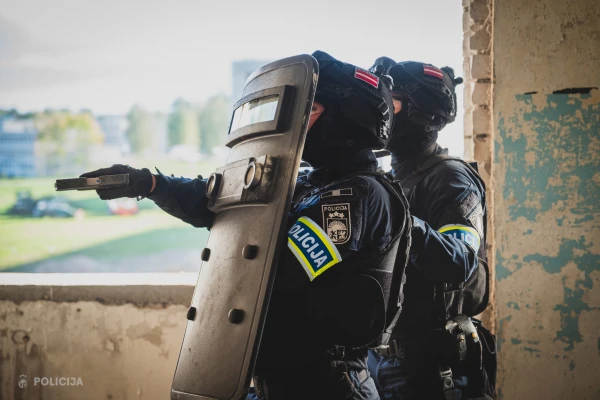
And such a severe punishment was promised by Mr. Meisters to all who threaten the security of the state. Well, yes – after all, the head of state himself placed this as a top priority, even above preventing murders, pedophilia, and corruption…
By the way, earlier in the discussion on measures to combat drunk driving – National Alliance deputy Jānis Dombrava noted that there is virtually no institution for compulsory treatment for alcoholism in Latvia. Mr. Meisters then referred this to the subject of probation.
And indeed, doctors have long and seriously spoken about people's dependence on social networks – which is a mental disorder just like alcoholism. So perhaps the overwhelming majority of "state criminals" are simply – dependent people?