
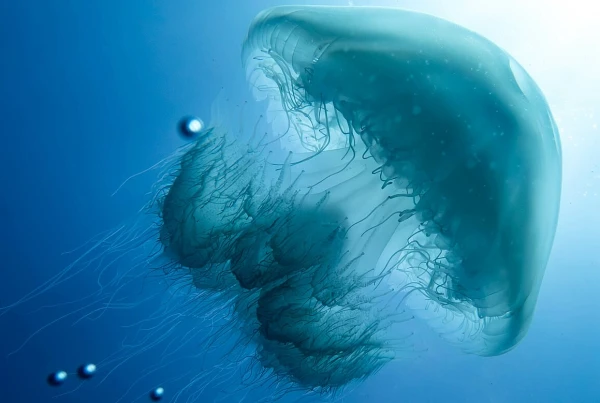
Currents have carried a huge number of jellyfish into the Antalya Bay.
Dangerous jellyfish of the species Rhopilema nomadica have invaded the shores of Turkey's Antalya. This was warned by Mehmet Gökoglu, a researcher at Akdeniz University.
Nomadic jellyfish inhabit the Red Sea, and they entered the Mediterranean through the Suez Canal, becoming the largest species — they weigh up to 10 kg, are the size of a large pot, and their tentacles can reach one and a half meters in length.
"For ten days now, strong winds have been blowing, which has caused currents to carry a huge number of jellyfish into the Antalya Bay," the scientist said.
This phenomenon will last at least until May. By June, the water will warm up, and the jellyfish will be gone.
"If you see white formations in the water — do not approach them, and do not touch them if jellyfish are washed ashore. If you come into contact with a jellyfish, it is necessary to treat the area with ammonia, and also with hot water; if you have antihistamine cream — use it," Gökoglu advised.
A jellyfish can inflict very painful injuries on a person, as its oral appendages contain thread-like structures covered with venomous stinging cells. R. nomadica has been responsible for the highest number of poisonings along the southern coast of the Levant. These jellyfish are known for their large swarms that they form in the summer. Outbreaks of R. nomadica, during which they can release their venomous stinging cells, have created a socio-economic problem in Israel. The outbreak led to a 3-10.5% decrease in beach attendance, resulting in financial losses of $6 million for recreational beaches.









Leave a comment