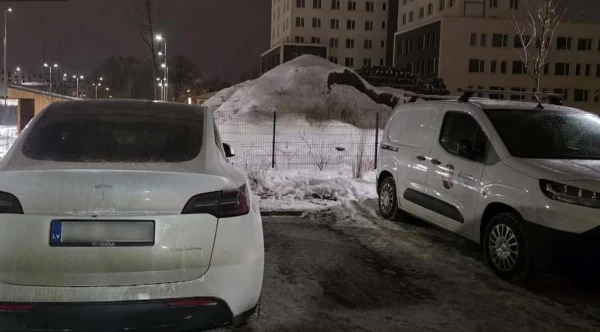
Marina purchased an apartment in a new building in Kengarags, Riga, about a year ago. A parking space near the building was also bought for 6000 euros. Although the area is fenced and vehicles can only be left there with special permits, from time to time someone illegally occupies someone else's parking spaces, reports the Bez Tabu program (TV3).
Residents suspect that the tenants of the neighboring house, which shares a courtyard, are allowing their friends into the yard. The management company "Selectum home" is not involved in resolving the situation and also categorically refused to explain to Bez Tabu (TV3) why it does not help the residents.
Marina, who bought a parking space in the yard, says:
“Sometimes you come home and can’t park your car because the space is occupied by someone else’s vehicle. In such cases, we write in the house chat. I also wrote — no one responded. A stranger’s car has been parked in my space for over 24 hours. I called the police four times and also sent an electronic application, but they never came. These 'foreign' cars do not belong to our house. They are either from the neighboring house or not from our territory at all. The police don’t help us! Why do they help others but not us?”
An unrelated real estate management specialist points out that residents should check whether a contract regarding the use of the territory is registered in the Land Register. Otherwise, the common area is equally accessible to each co-owner. It is within the management’s power to respond to the appearance of unauthorized vehicles in the yard. As one option, Vitolds Peipinsh suggests placing stickers.
“Very often, managers find 101 reasons why not to do something. By sticking information on the windshield, we create inconvenience for the vehicle owner. They will have to remove the sticker, the glue will remain on the glass, and it will take effort with chemicals to remove it. Maybe they will remove it once, but the second, third, fourth time when it’s stuck on the windshield, then perhaps they will understand that they cannot park in someone else’s spot,” Peipinsh noted.
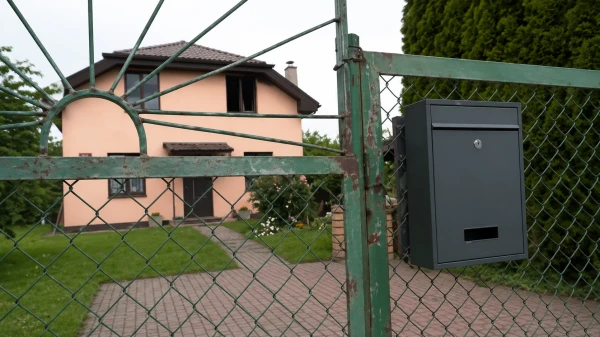
In the police, the lack of response to calls is explained by the fact that the yard is a fenced area.
“Only a certain group of people can enter this territory. They decided to organize traffic for their needs, to separate their territory from public roads. They regulate the order themselves; we do not see how the police could intervene. If it were a public, through-access area, then we would work 'according to established signs,' no problems,” explained the chief inspector of the Riga municipal police, Valts Veizitis.
Over the past two years, about 200 calls have come from this area. However, according to a lawyer, the police should act now.
“Any police are obliged to respond to violations of traffic signs. If a person calls the police, they have the right to enter private property if one of the owners allows it. They have every right to document this violation,” explained lawyer Ivars Kazaks.
Veizitis, for his part, notes that the police will intervene only if residents dismantle, for example, the gates and the area becomes publicly accessible.