Under the already forgotten Minister of Justice from the "New Conservatives" Janis Bordans, Economic Courts (SĒD) appeared in Latvia. The basis for removing this topic from general court proceedings was initially purely political: a fight against the so-called oligarchs.
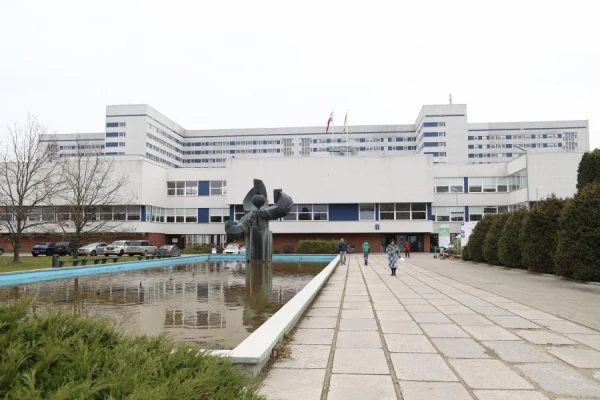
Moreover, in 2021, the COVID crisis was at its peak, and the Economic Court (SĒD) procedure involved remote court proceedings. Over time, the judges got into the groove – and are now full-fledged participants in the local judiciary. This structure is located in Riga's Pardaugava at Maza Nometņu Street 39.
Judicial Elite
Currently, there are 9 judges in the SĒD system, with 3 positions being vacant. They are served by 31 staff members – 12 assistants, 12 secretaries, 3 bureau workers, 3 clerks, and 1 translator.
Whether this is a lot or a little can be assessed in comparison with the composition of the Senate of the Supreme Court (38 members) and the staff of district courts (139 judges). There are more than a hundred judges in district courts, and the composition is constantly changing. So, the "economists" are, so to speak, the cream of the judicial system.
Last year, the maximum number of cases since the establishment of the system was reviewed – 444, compared to 174 in 2021. A relative majority of sentences are issued in civil cases, followed by criminal proceedings and courts dealing with property obtained through criminal means. On average, 9 and a half hours are spent on criminal trials. A civil case in the SĒD is reviewed in 2 and a half hours!
The biggest problem is the non-appearance of defendants or defenders in court. Some lawyers in Latvia are reportedly very busy – sometimes it is impossible to find a free "window" to attend a court session for four months.
The number of voluminous criminal cases also hinders the quick and efficient consideration of cases. On average, three defendants, 24 witnesses, and 17 volumes are involved in one criminal case...
Not Quite Very European
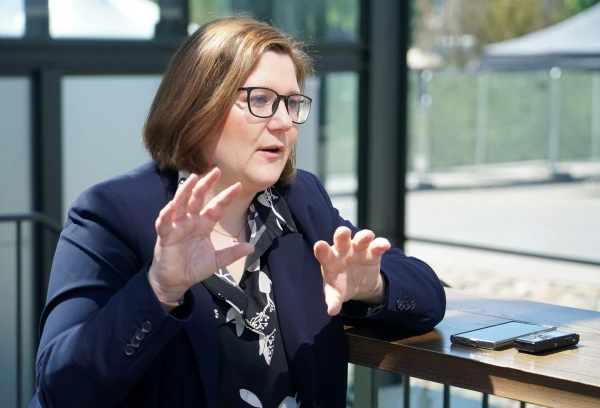
The Chairman of the Economic Court, Mikelis Zumbergs, told the members of the Saeima from the subcommittee on criminal law and judicial policy, headed by Andrey Yudin ("New Unity"), that initially 13 applicants were vying for 3 vacant judicial positions, and now only 4 candidates have been filtered out. Focused interviews are conducted, and a psychologist is involved.
– We thought we would be a commercial court, but we had to investigate criminal cases, – noted the chairman. In this regard, Latvia differs from other countries in the Old World. In Europe, specialized chambers often operate within general jurisdiction courts or as separate commercial courts:
-
Germany: Specialized commercial chambers (Kammern für Handelssachen) within regional courts.
-
Belgium: Commercial courts (Tribunaux de l'entreprise).
-
France: Commercial courts (Tribunaux de commerce), where judges are often representatives of the business community.
-
Netherlands: Netherlands Commercial Court (NCC) – a specialized court for international disputes in English.
-
Denmark: Maritime and Commercial Court (Maritime and Commercial Court).
-
United Kingdom (England and Wales): Business & Property Courts, including the famous Commercial Court of London.
Today's pressing issue for the SĒD has become "atypical cases" – for example, regarding telephone scammers who extort large sums and subsequently launder them.
In response, Deputy Gunars Kutris (Union of Greens and Farmers), a former chairman of the Constitutional Court, noted that the article on money laundering is quite difficult to prove, as it is hard to separate this action from the spending of money by criminals on themselves. The chairman of the subcommittee, A. Yudin, also stated: "You cannot attach Article 195 to every case." In general, this issue needs to be discussed with prosecutors.
Four out of five sentences remain in force
This is the approval rating of SĒD verdicts in the higher instance – the Riga Regional Court, where dissatisfied parties appeal against sentences. According to the "economists," this indicates the high quality of their work.
Unfortunately, during the proceedings, SĒD judges have to deal with thousands of pages of documents from various offshore companies (and not a word in Latvian!), while the maximum volume of a criminal case is 150 volumes. Sometimes a case goes for re-investigation due to a single document received from foreign colleagues as a result of a legal cooperation agreement.
Sometimes a criminal act in the commercial sphere literally stems from a comma placed in a contract between partners – the court must delve into all these nuances. International conventions and EU directives are studied. Regarding the labor intensity of court proceedings: in one of the cases that M. Zumbergs reviewed – about human trafficking – there were 140 victims. To write a verdict regarding money laundering, he spent up to 80 hours.
About Account Freezes
In business circles, there is a stereotype that in Latvia, accounts and property of legal and natural persons are frequently frozen. The SĒD statistics are somewhat different: approximately 70% of the prosecution's requests for property seizure are not satisfied by the court due to insufficient evidence.
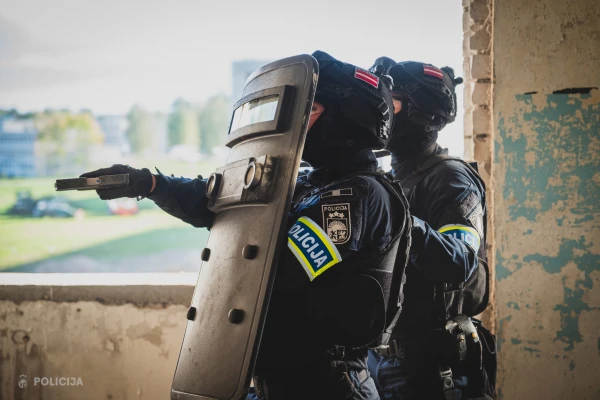
Mr. Zumbergs believes that joint seminars between the court and police staff are necessary – to improve working methods. Of course, the intensity of the investigative apparatus's work, which is literally overwhelmed with cases, must also be taken into account...
Mr. Zumbergs also spoke about the intricacies of international cooperation – for example, he recently met with representatives of the British Embassy. The SĒD's activities are also highly regarded by the Council of Foreign Investors in Latvia, a very influential body.
Regarding the main military-political ally, the chairman of the court expressed that – Ukraine should not be labeled as a corrupt state...
Nikita KRASNOGLAZOV.