
"Such discussions benefit Russia, as they reinforce the image of its omnipotence."
The Finnish Security Intelligence Service, Supo, believes that there is currently no reason to think that Russia is using intermediaries for maritime sabotage in the Baltic Sea.
Yle asked Supo whether the damage to underwater cables could be considered a typical method of Russian influence, as well as what the intelligence agency thinks about the public debates on this topic.
In an email, the Security Police noted that confirmed Russian sabotage in Europe has been focused on land targets. Intermediaries (proxy) were used to carry out such acts, and targets were chosen in advance.
- "At the European level, there are no signs that the Russian Federation has prepared intermediaries to carry out tasks at sea," Supo stated.
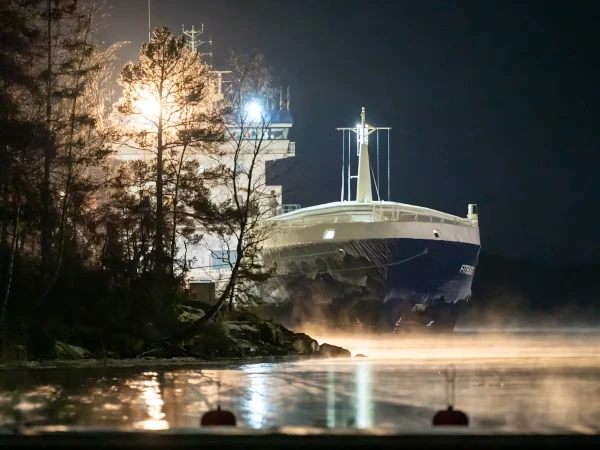
At the same time, the vessel Fitburg is currently suspected of damaging cables ahead of the New Year. Supo emphasized that they do not take a position on the case being discussed but comment on the situation in general.
Professor of Intelligence Studies Kari Luhto stated that, in his opinion, "it is quite obvious" that Russia is behind the incident with the cable in the Gulf of Finland. A year ago, Member of the European Parliament Pekka Tovari (CP) told The Washington Post that cable breaks in the Baltic Sea are typical Russian hybrid operations.
According to Supo, in public debates, various events unrelated to Russia are constantly and baselessly interpreted as attempts at Russian influence.
- "Such discussions benefit Russia, as they reinforce the image of its omnipotence."
Supo estimates that damage to underwater infrastructure is not uncommon in the Baltic Sea or globally. Previously, this topic was rarely discussed.
- "Anchors have constantly damaged cables in the Baltic Sea throughout the 2000s, but these incidents did not reach the media."
The most common cause of cable breaks could be fishing or anchoring a vessel.
Supo states that in the Baltic Sea, telecommunications cables are laid under and near shipping routes, which increases the risk of damage.
- "In the Baltic Sea, infrastructure damage caused by vessels primarily occurred in the autumn and winter months when weather conditions are usually challenging."
However, according to the Security Police, the number of damaged infrastructure cases has increased in recent years as there are more cables in the Baltic Sea than before.
Supo believes that commercial shipping in the Baltic Sea is vital for the economy and security of Russian supply routes, and therefore the authorities want to ensure that this route remains open.
At the same time, neighboring Baltic Sea states have concerns about shipping in the current security situation.
- "Under current conditions, neighboring coastal states are ready to respond to any threats that could harm their critical infrastructure or shipping."











Leave a comment