
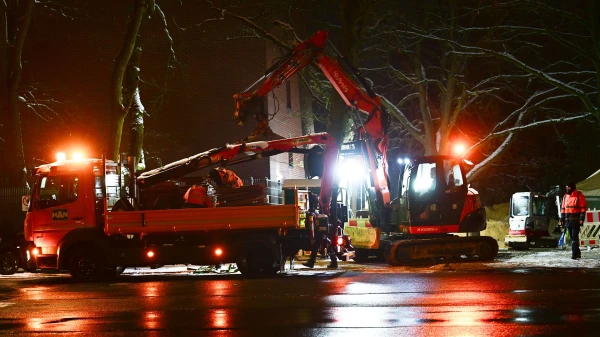
This leads to placing the sabotage in the context of the hybrid war that Russia is waging against Germany.
The responsibility for the Berlin sabotage was claimed by Vulkangruppe, a long-established but recently suspiciously revived structure. Out of nowhere. In Germany, the oddities in the text of the saboteurs' statement were quickly noticed. German experts and politicians noted that the German text of this address was written as if it had been translated from Russian, rather than created by native German speakers.
In the Russian émigré community, this perspective was most fully articulated in a Facebook post by Igor Eidman.
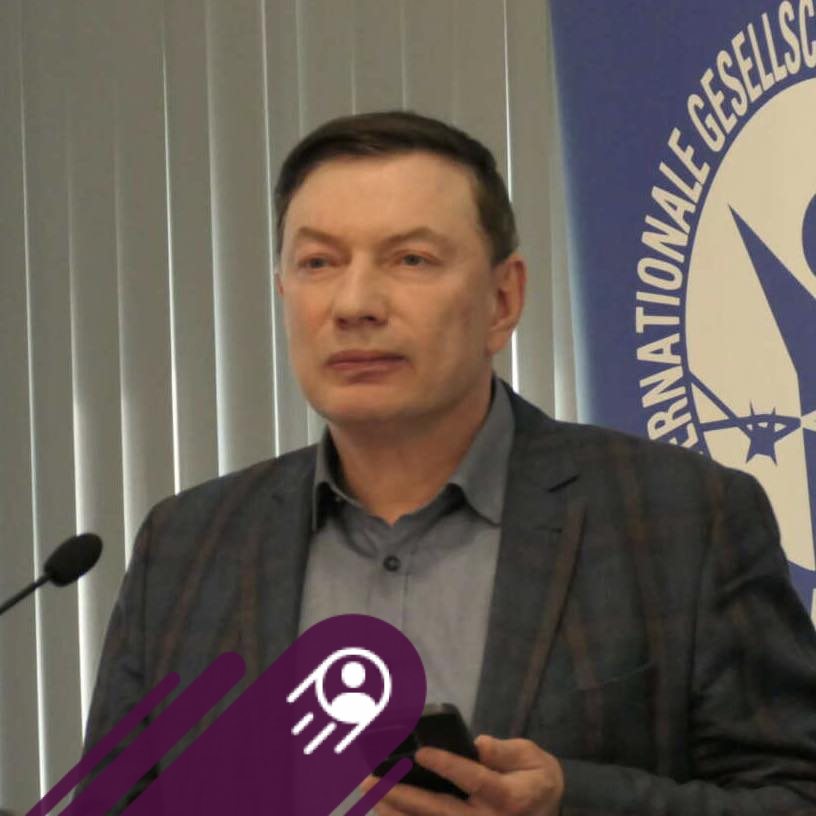
There is an opinion from Bundestag deputy Roderich Kiesewetter. He believes that a reverse machine translation of this text into Russian yields a smoother and more logical Russian version than the original German. This, in his opinion, may indicate that the text was originally written in Russian. It was then translated into German. This leads to placing the sabotage in the context of the hybrid war that Russia is waging against Germany. The goal is to undermine the public consensus in Germany and to weaken the unity of democratic forces.
In this context, the story about the Berlin mayor playing tennis is telling. As if it had a fateful and decisive significance for the power outage incident.
We probably wouldn’t have played tennis that day. But we don’t see it as a big crime either. However, it reminded us of another story: with the recently burned wires at the Schlossstraße subway station in the beleaguered Steglitz. Could there have been sabotage there too? Several stations on this line are still not operational.
Igor Eidman tasked artificial intelligence with analyzing the original statement of the group for possible Russian origins. Here is the analysis provided by the AI. We quote verbatim from Eidman's post.
"The text reads as if it was first written in another language, specifically Russian, and then transferred to German, and in places it does not conform to the German language norm. At the same time, it poorly matches the typical style of German left-radical statements, which are usually shorter, drier, and more localized in language.
The text contains many long, overloaded sentences with an accumulation of images, verbs, and evaluations. This resembles the Russian journalistic tradition. There, a phrase can develop for a long time and accumulate moral and emotional layers. In German radical statements, a choppier structure is more commonly used: short sentences, clear theses, minimal rhetorical clutter.
Instead of a brief message about the action, the text is structured like a manifesto with recurring images, almost a sermon. This is closer to the genre of Russian-language political "addresses," where the author seeks not so much to explain the action as to present the reader with a general worldview.
Many formulations sound like calques. Phrases and connections like "imperial way of life," "technological offensive," "act of necessary defense," "international solidarity" are placed in combinations and with such pathos that are uncharacteristic of the German stage tradition. It creates the impression that the author thinks in a different linguistic template and selects German equivalents for already formed ideas.
The unusual and targeted moralizing is also notable: apologies to the "less fortunate" and a demonstrative lack of sympathy for the "wealthy." For German left-radicals, it is more typical to either not apologize at all or to use the formula "against the system, not against people." Here, however, there is a sense of addressing an external audience with a simplified scheme of "us and them."
The text covers too wide a range of topics: climate, energy, digitalization, AI, migration, world politics, corporations, lists of leaders. German left-radical texts can also be broad. But they more often stick to one or two lines and tightly tie them to a local campaign. Here, there is a feeling of a journalistic canvas, where everything is connected to everything for a general effect.
The enumeration of a large number of world leaders in one line with the same intonation resembles a technique from Russian-language polemics — creating an emotional "board of enemies." In the German scene, lists are usually either thematically limited or used ironically. Here, it is neither satire nor analysis, but an emotional flow.







Leave a comment