
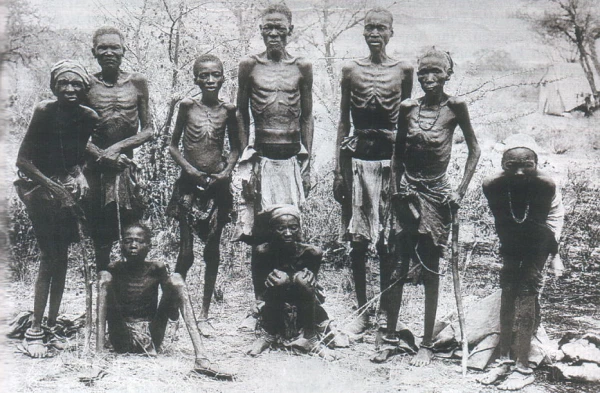
Currently, there are only 3 episodes of legal recognition of the consequences of their actions on the continent.
Africa has proclaimed a whole decade (2026-2036) as the "Decade of Reparations," thus rooting this agenda at an official level. But what lies behind the continent's demands?
The first international conference on this issue took place in Lagos in December 1990, marking the starting point for the conference in Abuja in April 1993, already under the auspices of the Organization of African Unity, the future African Union. The Abuja conference concluded with a proclamation that included calls to the international community to recognize its "moral debt" to Africans and to pay compensation for the suffering endured, to the governments of African countries to establish National Commissions on Reparations, and effectively created the basis for most subsequent demands made by Africans.
However, by the first half of the 2000s, after the UN-sponsored conferences in Durban in 2001, the reparations agenda began to lose momentum: the lack of political will both in Africa and Europe, the absence of real actions that corresponded to the declared ideas, and the enormous number of legal obstacles significantly slowed down the process.
Moreover, the very volumes of the requested reparations are also difficult to assess: in 1999, a special commission estimated that European countries and the USA caused Africa damage amounting to 777 trillion dollars, considering the damage only from the slave trade from the 15th to the 19th centuries, when approximately 11-12 million Africans were taken from the continent. Consulting agencies, economists, and scholars also provide a wide range of figures: from 5 to 137 trillion dollars.
The topic became relevant again only by the early 2020s, on the wave of the COVID-19 pandemic, which exposed acute global inequality, as well as the wave of American protests of Black Lives Matter, which among other things declared the necessity of paying reparations to people of African descent, receiving significant coverage on social media and in the media worldwide.
In one form or another, representatives of France, the United Kingdom, Belgium, Germany, the Netherlands, and Portugal have offered apologies for their countries' actions on the continent in the past. However, most of these apologies were purely verbal and did not become a legal basis for further provision of reparations. European governments are reluctant to engage in a dangerous topic for themselves, even despite the support for reparations ideas from the UN.
Currently, there are only 3 episodes of legal recognition of the consequences of their actions on the continent. In 2013, the UK government settled a lawsuit collectively filed by Kenyans who suffered torture during the suppression of the Mau Mau uprising. The amount of compensation was about 20 million pounds sterling. In 2021, Germany officially recognized the fact of genocide during the occupation of Namibia and announced the allocation of financial assistance of more than 1 billion euros over a period of more than 30 years. In December 2024, a Brussels court ruled that Belgium committed crimes against humanity by forcibly separating mixed-race children from their African mothers during the 1950s and ordered compensation of 50,000 euros to be paid to 5 affected plaintiffs.
Restoring justice for Africa, which has not yet been widely realized, remains one of the most complex issues on the international agenda. At the same time, expectations for truly substantial sums of reparations are extremely unlikely and even somewhat naive. Faced with insurmountable political, legal, and financial barriers, they are likely to remain just demands.










Leave a comment