
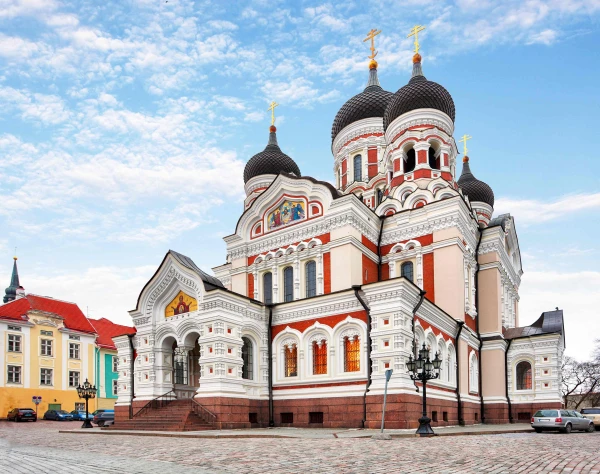
In the fall, a clergyman of the Russian Orthodox Church of the Moscow Patriarchate, Roman Kolesnikov, arrived in Estonia from Russia, but he was expelled to Russia, writes Postimees.
Roman Kolesnikov was born in Riga, and in his youth he went to study in Russia and stayed there. Before arriving in Estonia, Latvian citizen Roman Kolesnikov served in small churches in Moscow and the Moscow region.
In the summer of 2019, Kolesnikov became the rector of the Church of Saints Cyril and Methodius in Rostokino. In 2022, a stone church was built on the site of the wooden one. In Russia, Father Roman also served in the pre-trial detention center No. 1 "Matrosskaya Tishina."
Last summer, Patriarch Kirill of Moscow and all Rus released Kolesnikov from his position, allowing him the right to transfer to another diocese within the Russian Orthodox Church. A few months later, the clergyman received a position in the parish of the Estonian Orthodox Church of the Moscow Patriarchate (EOC MP). This means that the Russian Orthodox Church considers Estonia as its canonical territory, Postimees is confident.
The situation with Father Roman was commented on by Christian Pärt, head of the internal security department of the Estonian Ministry of the Interior.
According to Pärt, information about entry bans and individuals who have received such bans is intended for internal use, so the Ministry of the Interior cannot comment on specific circumstances and reasons for the imposition of entry bans.
"In general, it can be said that if any foreigner’s activities, including those of clergymen, reveal circumstances that provide grounds for establishing an entry ban against the individual, then this is done," said the Ministry of the Interior representative.
At the same time, the ministry and competent authorities assess the threat posed by the individual based on a combination of all facts.
"Church structures and individuals are systematically used by Russian special services and armed forces to undermine the security and sovereignty of other states through both military and non-military methods," Pärt said.
"Roman Kolesnikov's activities, which support the aggressive foreign policy of the Russian Federation, pose a security threat to Estonia," noted Christian Pärt.
"Already in the first days of his activities as a priest of the EOC MP, while in Estonia, he propagated Patriarch Kirill's motto that dying in war is sacred, and viewed Estonia as an inherently Russian land," Pärt said. "Such people are not welcome in Estonia."
The Ministry of the Interior representative acknowledged that in 2023 there were three cases where clergymen were subjected to entry bans for security reasons. Also, on the same grounds, the extension of a temporary residence permit was denied to one clergyman.




Leave a comment