
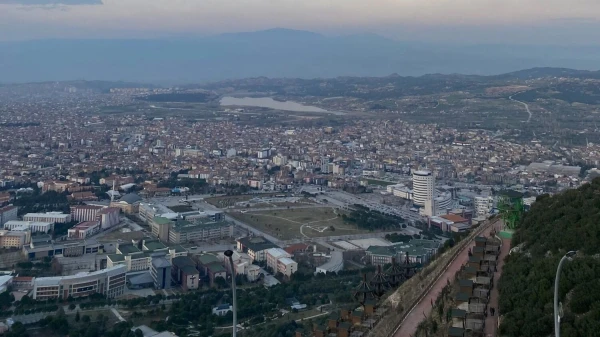
Scientists debate the dangers of underground faults.
Turkey is one of the most seismically active regions in the world. Destructive earthquakes have occurred multiple times in the Sea of Marmara, and today Istanbul may be at risk.
Istanbul, the largest city in Turkey and one of the most popular destinations for Russian tourists, is under threat of an impending seismic disaster. This conclusion was reached by European researchers. In their scientific paper published recently in Science, they indicate that the main Marmara fault (a segment of the North Anatolian fault zone located underwater southwest of Istanbul) poses the greatest seismic danger in Europe.
They analyzed a 6.2 magnitude earthquake that occurred in April and nearly 20 years of recordings of tremors in the same fault area. According to the study, despite the fact that the spring seismic event was the strongest in the region in over 60 years, it did not release enough stress to reduce the long-term risk.
According to the scientists, activity along the fault in the Sea of Marmara is approaching Istanbul. As a result, a strong earthquake could reach the waters south of Turkey's largest city.
"Istanbul is in the crosshairs," said seismologist Stephen Hicks from University College London.
As explained by the author of the new study, seismologist Patricia Martinez-Garson from the Helmholtz Center (Germany), it is impossible to predict earthquakes accurately; however, understanding how such an event might begin is vital. She explained that scientists must focus on mitigating consequences and early detection of any alarming signals.
According to another expert from Cornell University, Judith Hubbard, powerful tremors near Istanbul "are likely to trigger one of the most devastating humanitarian disasters in modern history," writes the New York Times.
Turkish professor and geologist Okan Tuyuz does not rule out that the April incident may have indeed shifted the expected major "Marmara earthquake" closer in time. He explained that aftershock activity following this event, spreading eastward, has led to additional stress accumulation on the "locked" segments of the faults in the Adalar and Avcılar areas. The expert reminded that the last major earthquake in the Sea of Marmara region occurred in 1766, and he believes that the process of re-accumulating "energy" in the faults continues. The professor also warned of the urgent need to prepare Istanbul for the anticipated seismic event, stating that mere renovations are insufficient; raising public awareness about actions before and after an earthquake, as well as regular drills, is of utmost importance.
Turkish seismologist Najı Gerür reminded that destructive earthquakes have occurred in the Sea of Marmara throughout history and stated that the risk for Istanbul will sooner or later become a reality.
However, not all experts share such concerns. Professor Osman Bektaş from the Department of Geopolitical Engineering at Karadeniz Technical University stated that there is no activity in the Avcılar and Adalar areas indicating an impending major earthquake.
He noted that the NYT speaks of the possibility of a rupture of the Avcılar fault and, consequently, a major earthquake in Istanbul; however, international data from 2010 to 2016 show that this probability is low.
"This is a very weak fault that easily slips and does not require the accumulation of large energy for a strong earthquake," he pointed out.
If it occurs in the Istanbul area, it is likely to have a magnitude of less than seven. He explained that in the Sea of Marmara, faults rupture in parts, which reduces the strength of the tremors.
Geologist Şener Uşumezsoy believes that the article in Science does not correspond to the geological structure of the area.
"Looking at a map and saying that earthquakes go from west to east and that the next one will be Istanbul means demonstrating ignorance of geology," he added, pointing out that the fault that the German researchers call "locked" is not active and released its energy back during the earthquake of 1894.
In his opinion, a "speculative atmosphere of fear" has been created around Istanbul for a long time. He believes that there is not a single fault in the Sea of Marmara that could rupture entirely and cause an earthquake of magnitude 7 or higher.














Leave a comment