This year, Lithuania has recorded almost three times more Belarusian smuggling balloons than last year. In recent months, there has been a record number of such flying objects — this has become the main method of delivering illegal cigarettes to the country. The balloons are uncontrollable but equipped with GPS devices, in which SIM cards from Lithuania, Poland, and Latvia have been found, reports the program "Nekā personīga" (TV3).
Lavoriškės is one of six border crossing points on the border between Lithuania and Belarus. It has been closed since March last year. A border guard explains that traffic here used to be intense, but now the only reminder of this is a huge sign warning not to go to Belarus.
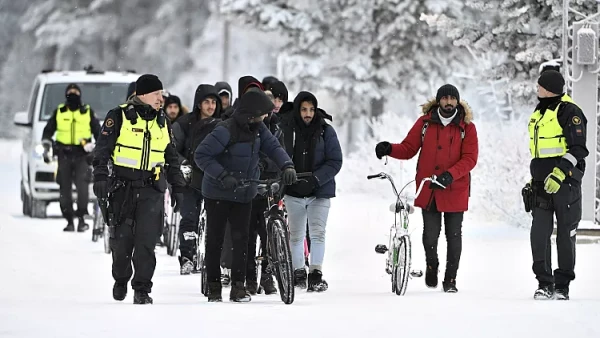
The border area is quiet, with only animal tracks visible in the snow. The pressure of illegal migration in Lithuania has significantly weakened. An employee at the Lavoriškės post notes that illegal migrants have not been recorded here for almost a year. The main struggle in recent months has been with Belarusian smuggling balloons.
This year, Lithuanian border guards intercepted 600 such balloons. They are uncontrollable but equipped with GPS devices, in which SIM cards from Lithuanian, Polish, and Latvian operators have been found.
The fight against the balloons has been ongoing since 2023. Airspace has become the main channel for smuggling — this year, about 80% of illegal cigarettes were imported using balloons. While 226 cases were registered last year, this year it is almost three times more. Border guards have confiscated approximately 1.3 million packs of cigarettes imported in this way.
"100% of our border is covered by prevention systems. We have created a physical barrier for organized crime groups, and now they are looking for new ways to import cigarettes. Unfortunately, part of society is looking for cheap cigarettes — this is what criminal groups exploit, finding reliable delivery methods," said Donatas Škarnulis, Deputy Head of the Lithuanian Border Guard Service.
Balloons are used in meteorology — they can rise to heights of up to 15 kilometers. Smugglers attach packages of cigarettes to them and launch them into the air. The wind then carries the balloon, making it impossible to predict where it will land. Therefore, a GPS device with a SIM card is attached to it.
"The SIM card is inserted into a device attached to the balloon. When the balloon falls, the device activates and sends coordinates to the smuggler waiting for the package. Then the device turns off. Border guards can only see and track the balloon, but cannot intercept the signal. It’s a race — who will reach the balloon and the cigarettes first," clarified Indrė Makaraitytė, editor of the investigative department of Lithuanian public media.
This method of delivery is relatively cheap. Balloons and GPS devices are freely sold online. For example, on AliExpress, the price of a balloon starts at a few euros, and a GPS device costs less than 30 euros.
"These are prepaid cards. Most of them are Lithuanian, followed by Polish, and a few Latvian. Our criminals are involved in these activities and even send SIM cards to Belarus. The balloons cross the border, and criminals need a way to control them. They use GPS devices that work in our mobile networks," explained Donatas Škarnulis.
Since the beginning of the year, regulations have come into force in Lithuania requiring even prepaid SIM cards to be registered. However, the sale and resale of these cards are not regulated by law. The head of the Lithuanian police stated that restrictions are needed in this area. Meanwhile, in Latvia and Poland, such SIM cards are still freely available without registration.
The exact number of balloons that have entered Lithuania is unknown to the authorities. According to unofficial estimates, there may be at least three times more than registered. Since the balloons fly at high altitudes, make no noise, and GPS devices activate only after landing, detecting them with radar is extremely difficult.
Airspace control is the responsibility of the Lithuanian Armed Forces. They declined to comment on the situation, citing limited access to information.
"Airspace control is not within our competence, but even if there are 200 or 50 objects — this is sensitive information. Some of them may be birds. In any case, we have good cooperation with the army. If we notice balloons, we inform them because they fly very high, and no one knows where they will end up. Sometimes they return to Belarus or fly to Poland," says Škarnulis.
According to journalists from Lithuanian public media, the organization of smuggling is likely carried out with the knowledge of the Belarusian authorities.
"Our partners in the investigation were Belarusian journalists. They spoke with former and current smugglers who claimed: it is a mistake to think that the smuggling of balloons occurs without the regime's knowledge. Launching a balloon requires time and logistics — transporting boxes, gas cylinders, vehicles. Border guards must know what is happening. If balloons appear in Lithuania, it means it is done with the regime's consent," said Mindaugas Ašura, a journalist in the investigative department.
Balloons pose a threat to air traffic safety. This is particularly felt by Vilnius Airport, located 30 km from the Belarusian border. In the last two months, it has been temporarily closed 11 times, affecting 249 flights and more than 36,000 passengers. The damage from the incidents amounted to about 750,000 euros. The airport has appealed to the Prosecutor General's Office to initiate an investigation, identify those responsible, and recover damages from them.
The government has called the situation a hybrid attack on Lithuania. At the end of October, the last two border crossing points with Belarus were closed. After that, the number of balloons decreased, and the border was reopened, but in the following days, Lithuanian authorities recorded 40 suspected balloons on radar.
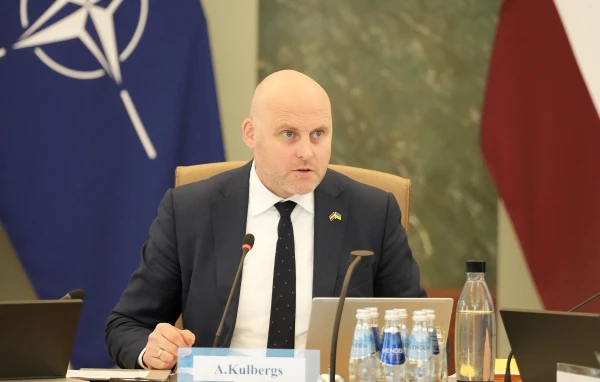
"In my opinion, there is currently no reason to close the border. We have good plans to combat smuggling by other methods. But if the situation changes drastically, we can close it again. [Nekā personīga: What are these other methods?] Investigation methods — our criminalists. Also new technologies for detecting balloons once they have already entered our territory," clarified Lithuania's Minister of the Interior Vladislav Kondratovich.
After the border was closed, Belarus banned the exit of about 1,000 Lithuanian trucks. The border has been open for more than a week now, but trucks are still stuck on the Belarusian side.
"This shows that it is not only about smuggling but also about politics, and this needs to be addressed. We hope to resolve this issue peacefully. But if that doesn't work — we have other options, including re-closing the border. As long as the trucks cannot return, we have no reason to keep the border open. There are also other measures — EU sanctions. The same sanctions against Belarus as against Russia. And, as already mentioned, airspace and airports are protected by international law, so we can also use these norms," explained Lithuania's Prime Minister Inga Ruginienė.
According to expert Julián Jatkhovich from the Vilnius Center for Geopolitical and Security Studies, the goal of all these actions is to exert political pressure on Lithuania and force it to sit at the negotiating table with Belarus.
"If they manage to achieve at least minimal dialogue, they will use it for several purposes. Firstly, to legitimize the regime within the country, showing that it is talked to not only by non-democratic countries but also by EU states. Secondly, it is an attempt to create a precedent — individual meetings with EU states undermine Europe's unity on sanctions against Belarus," the expert believes.
In Latvia, the first such balloon was recorded last year. This year, 20 have already been discovered. The border guard has transferred the investigation to the State Police, which has opened criminal cases for each of the incidents. Three people have been detained. Nekā personīga unofficially reports that local SIM cards were also found in the balloons that fell on Latvian territory.
Journalists from Lithuanian public media point out that since the requirements for registering prepaid SIM cards came into effect, the share of Lithuanian cards used in balloons has decreased. At the same time, the head of the Lithuanian police stated that a new type of crime has emerged in the country — "SIM card mules."