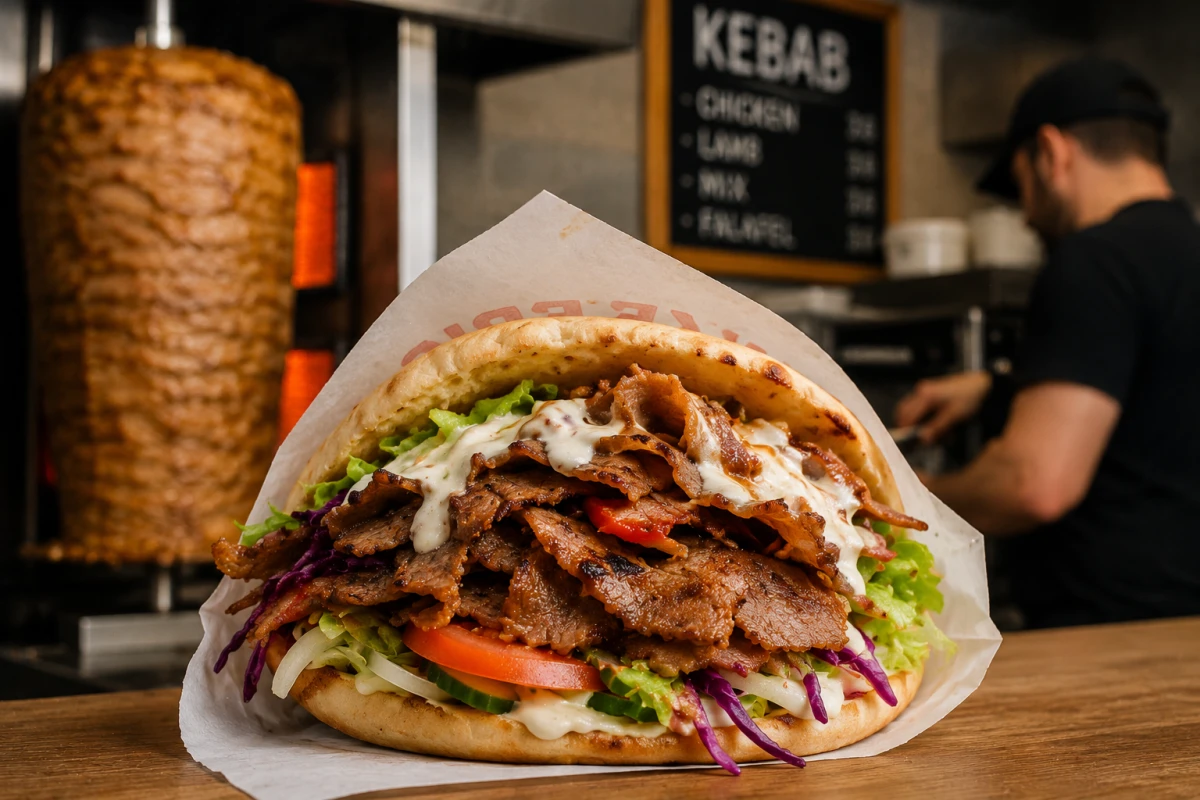
A British company supplying meat for kebabs nationwide has received a hefty fine after it was revealed that the products were sold as lamb, although a significant portion consisted of fat, skin, and cheap meat scraps. The court described the producer's actions as a deliberate deception of consumers.
A British kebab meat producer has been fined approximately €581,000 for years of product falsification. Additionally, the company is required to pay over €300,000 in legal costs. This was reported by the BBC.
As reported by NOS, a court in Swansea concluded that the company had engaged in "substantial and deliberate deception" for a long time, misleading both consumers and restaurant representatives.
The case involves Kismet Kebabs, a company based in Essex in the northeast of England. The company supplied meat semi-finished products for kebabs to catering establishments across the UK.
Serious Violations Identified The investigation began following inspections conducted by Swansea municipal inspectors in 2020 and 2021. Experts examined the composition of meat products used in various cafes and restaurants.
During one of the inspections, it was discovered that kebabs produced by Kismet Kebabs did not match the information stated on the packaging.
For instance, in a sample of lamb doner kebab, instead of the claimed 87% lamb meat, there was only 51%. The rest of the product consisted mainly of skin, fat, and other low-quality components.
Cheap Raw Materials Instead of Lamb During the court proceedings, it was revealed that the company purchased significantly less lamb than necessary to produce the claimed volumes of products.
According to the prosecution, the company actively used lamb fat, meat from adult sheep, goat meat, and cheap meat scraps, including neck trimmings. Furthermore, experts found excessively high water content in the products.
According to the prosecutor, the quality of some batches was so low that under current legislation, they could not be officially classified as meat products.
The prosecution characterized the company's actions as an "organized and intentional fraudulent scheme," resulting in deception of wholesale buyers, owners of catering establishments, and end consumers.
Defense Position
A company representative stated in court that the management had "lost proper attention to compliance with regulatory requirements" over time.
According to the lawyer, after the violations were identified, significant changes were made within the company, and the firm allegedly did not gain significant financial benefits from the product falsification.
Court's Harsh Decision
The judge acknowledged that the company had taken steps to prevent similar violations in the future. However, he noted that the fraudulent practice was systemic and deeply rooted in the company's operations.
As a result, the court imposed a fine of approximately €581,000 on Kismet Kebabs and ordered the company to reimburse legal costs amounting to over €300,000.
The company has been given four years to pay the full amount.
The story of Kismet Kebabs has become one of the most high-profile cases of food fraud in the UK in recent years. The investigation highlighted the importance of monitoring the origin and composition of food products, as well as regularly checking manufacturers supplying products to trade and the catering sector.