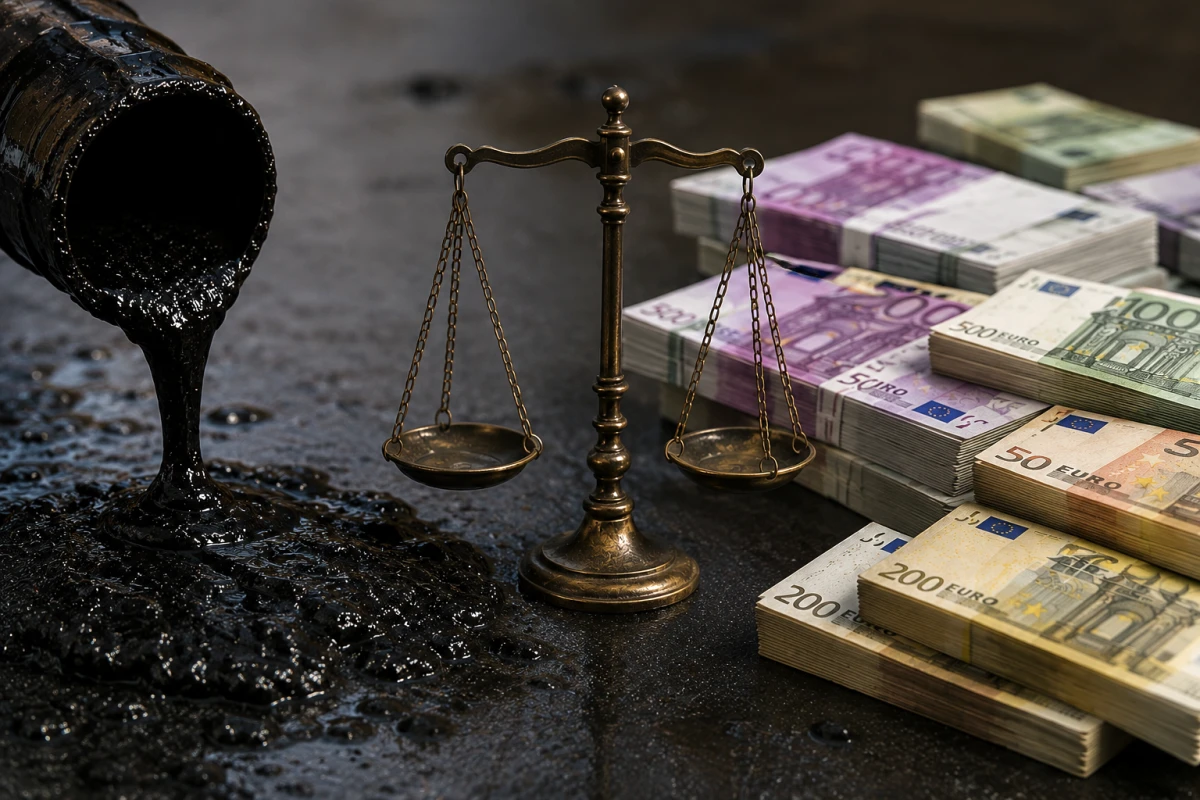
Latvian law enforcement agencies uncovered a scheme to circumvent sanctions, under which bitumen of Russian origin was imported into the European Union under the guise of products from Kazakhstan. After the confiscation of the goods, over one million euros were transferred to the state budget.
An investigation by the Tax and Customs Police concluded with the confiscation of a large batch of bitumen, which, according to the investigation, was imported into the European Union in violation of the sanctions regime.
The criminal proceedings were initiated back in 2024 after the detection of a shipment of bitumen, which was listed in the accompanying documents as produced in Kazakhstan. However, during the investigation, it was revealed that the declared origin of the product did not correspond to reality. Investigators were able to establish that the imported bitumen most likely has Russian origins, and the documents were arranged in such a way as to conceal its real source and circumvent the existing sanctions of the European Union.
As part of the case, 3,489 containers of bitumen weighing a total of over 3,600 tons were seized.
The investigation lasted a long time and required the involvement of several state institutions, including the Customs Administration, the State Security Agency, and the Prosecutor General's Office. Establishing the actual origin of the goods and analyzing the international supply chain posed particular challenges.
For the ordinary market, this is one of the largest publicly known cases related to attempts to circumvent sanctions by changing the country of origin of the products. The import of bitumen of Russian origin into the European Union is prohibited by the sanctions regime imposed after the start of Russia's war against Ukraine.
After the materials were allocated to a separate proceeding regarding criminally acquired property, the case went to court. In August of last year, the Riga City Court ruled to confiscate the seized bitumen in favor of the state. The funds received from its sale amounted to 1,013,620 euros.
The participants in the scheme attempted to challenge the decision; however, this spring, the Riga District Court upheld it. This means that the court decision has entered into legal force and is no longer subject to appeal. The funds obtained from the sale of the confiscated goods have already been transferred to the state budget of Latvia.
The case has become another example of how complex attempts to circumvent sanctions remain through intermediaries, reissuing documents, and changing the declared origin of goods.