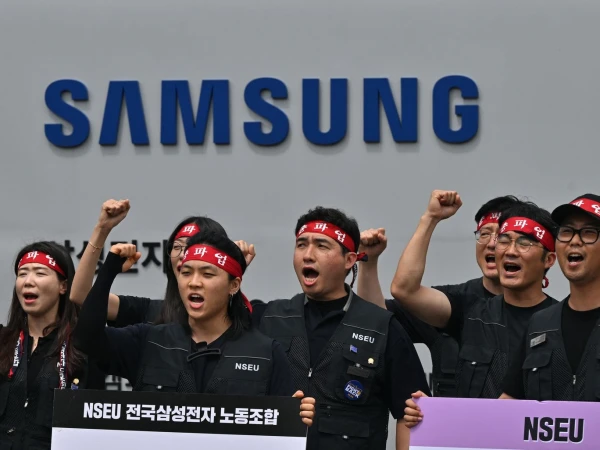
The Samsung Electronics union announced plans to initiate a large-scale strike involving 48,000 workers. According to Reuters, the protest could significantly impact not only South Korea's economy but also global semiconductor supplies.
Union leader Choi Seung-ho stated that an 18-day strike will take place as the company's management did not concede on one of the remaining contentious issues in negotiations mediated by the government.
According to Reuters, the union demanded that Samsung lift the bonus cap, currently set at 50% of annual salary, allocate 15% of annual operating profit for employee bonuses, and secure these changes for a longer term rather than just one year.
"The reason an agreement could not be reached is that accepting the union's excessive demands would undermine the fundamental principles of corporate governance," Samsung Electronics said in a statement.
Over the weekend, the South Korean government threatened to intervene and appoint emergency arbitration, citing the potential negative impact of the strike on the country's economy. As noted by Reuters, this measure is rarely applied and, if enacted, would suspend the strike for 30 days while the government mediates negotiations.
According to bb.lv, the situation surrounding Samsung highlights how vulnerable the global technology sector remains to internal conflicts among major manufacturers. If the strike does occur, the consequences could affect not only South Korea's economy but also the global electronics market, where semiconductor supplies continue to play a critically important role.