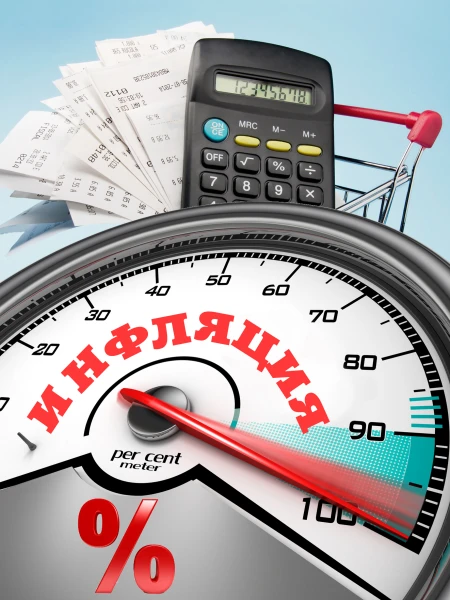
Latvian inflation has become a hostage to the war in the Middle East, local banking analysts assert, commenting on the published data on changes in consumer prices in March.
"They will start demanding salary increases"
Oskars Nik Malnieks, economist
– Inflation in March compared to February rose by a staggering 1.9%. Such a rapid monthly price increase in Latvia was only observed in 2022, and before that — in certain months during the crisis years of 2007–2009. Annual inflation increased from an unexpectedly low 2.3% in February to a relatively high 3.4% in March.
The latest data from the CSB, combined with the uncertainty caused by the conflict in the Middle East, raises concerns about the further path of inflation. Modeling shows that we are unlikely to reach such sharp price growth rates as in 2022; however, the risks remain significant.
In recent days, oil prices have slightly decreased, but there is no guarantee that this will last. The conditions of the two-week ceasefire between the U.S. and Iran, as well as the further development of the situation, remain unclear. Each side has declared victory, but the Strait of Hormuz is still effectively closed.
Financial markets are pricing in a relatively quick resolution of the conflict and a gradual decrease in energy prices — oil and gas. According to preliminary estimates, in this scenario, the average annual inflation in Latvia this year could exceed 4%.
If the conflict drags on, inflation could rise significantly more. In addition to the direct impact through energy prices, indirect effects will also intensify — the rising cost of fuel and energy increases the transportation and production costs of goods.
Other mechanisms may also come into play: residents, fearing a rise in the cost of living, may start demanding salary increases, which will further fuel inflation.
There are many risks and uncertainties in global politics. For Latvia, as an open economy, events even thousands of kilometers away have significant implications.
Two months to save
Dainis Gashpuitis, macroeconomic expert:
– The further development of inflation will depend on the course of the war in Iran. So far, the risks indicate a stable, albeit limited, impact on inflation and economic growth. However, the longer the restrictions in the Strait of Hormuz persist, the stronger the impact will be.
Although the U.S. is currently trying to stabilize the situation, further negative impacts on inflation are quite likely. The global economy has about two months before the most severe scenarios are realized. If a sustainable solution is not found during this time, the economic situation and inflation forecasts will become more severe.
The energy infrastructure of the Middle East is already damaged, and the risk of further damage remains high. Therefore, even with the restoration of shipping, the geopolitical premium in oil and gas prices will persist for a long time. This means that inflationary pressure has already been formed, and its impact on heating prices next season is almost inevitable.
If the rise in fuel prices is immediate, the impact of gas on consumer prices manifests with a delay.
Higher energy prices will gradually translate into food costs, where both energy costs and logistics are important. Therefore, pressure on food prices is likely to increase.
An additional factor is the rise in fertilizer prices. Although producers and traders do not immediately pass on the increased costs to consumers, this will inevitably happen over time.
"Nothing can be known for sure"
Pēteris Straujiņš, economist
– The conflict is happening far from Latvia, yet the price level in March compared to February rose by 1.9%, and annual inflation reached 3.4%.
This is still lower than in most months last year, but the growth will continue. It may not last long. Another significant jump is expected in April, and annual inflation will exceed 4%, although there is hope that by May, the pressure from import prices will begin to ease.
However, nothing can be known for sure. The last month and a half have reminded us that reason and patience do not always prevail in the world.
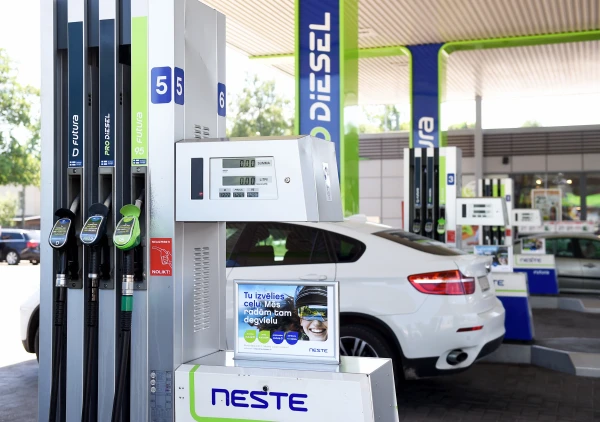
The main reason for the price increase has been fuel, which rose by 21% over the month. More than half of the overall increase in expenses is related to transportation. Clothing and footwear increased by 5.7%, and alcohol by 3.5%.
There is also good news — food prices increased by only 0.1%, which is usually below the seasonal growth.
In April, the rise in fuel prices will again be double-digit, but possibly below 21%. In May, a decrease is possible, but this is not guaranteed due to the instability of the situation in the Persian Gulf.
The consequences of energy events may manifest in rising food prices in the second half of the year. However, the wheat market remains relatively stable — around 200 euros per ton.
There are many hopes now, but little confidence. However, the forecast remains that purchasing power is more likely to increase than decrease, although not as strongly as last year.
For different people, inflation will be felt differently, as the share of fuel expenses varies significantly.
Two scenarios – bad and very bad
Oleg Krasnopеров, economist at the Bank of Latvia:
– In March, inflation in Latvia rose significantly. This is the highest monthly inflation in Latvia since 2022, largely driven by a sharp rise in fuel prices: the price of gasoline increased by 11% over the month, and diesel fuel by 25%. This also reflects the rise in oil prices and its refined products due to the military conflict in the Middle East.
Overall, the military conflict in the Middle East could increase inflation in Latvia by several percentage points.
If the market is currently correctly predicting oil prices and it averages around 90 USD per barrel this year, the rise in energy prices could increase inflation in Latvia by 1.7 percentage points this year and by 0.9 percentage points next year.
Conversely, if market participants are still underestimating the significance of the conflict in the Middle East and the average oil price this year is 120 USD per barrel, this could increase inflation in Latvia by an additional 3.1 percentage points this year and another 2.4 percentage points next year.
In the latter case, global food prices are likely to rise as well: more expensive fuel increases the cost of agricultural production, and more expensive natural gas raises the cost of fertilizers. Expectations of higher inflation may also become entrenched. Therefore, the full impact of events in Iran could turn out to be even more significant.
Nevertheless, he stated that at the moment, nothing indicates that inflation in Latvia will rise as significantly as in 2022–2023.
For reference
In March, consumer prices in Latvia rose by 1.9% compared to February and by 3.4% year-on-year, while the previous month, annual inflation was 2.3%.