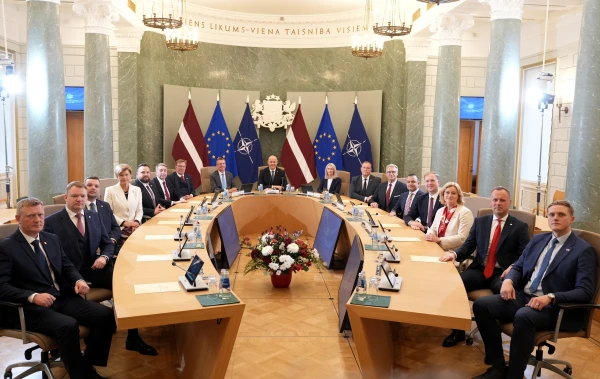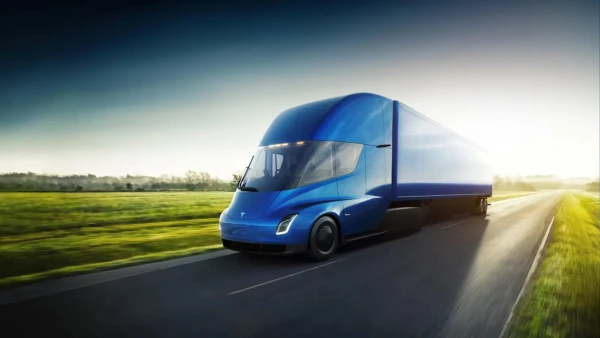
Incredible but true: Brussels' course has encountered resistance from local officials. This is particularly surprising in what was recently considered a sacred cow—reducing emissions! And the leadership of the executive power of Latvia has agreed to "take note," as stated in the protocol signed by Prime Minister Evika Silina.
National Position
In the Latvian vehicle market, legal entities play a leading role. Approximately 60% of new passenger cars and 90% of vans are purchased by enterprises, according to statistics from the Ministry of Transport. Therefore, corporate transport should become the driving force for the republic's decarbonization. Moreover, fuel prices continue to soar. However, the EU's 'green course' is hindered by money.
Recently, the executive branch articulated its stance on the proposals from the European Parliament and the EU Council regarding the reduction of CO2 emissions from corporate transport. Low-emission vehicles (electric and hybrids) directed towards the economy "can enhance the competitiveness of the European Union's automotive industry... help accelerate the reduction of transport emissions and contribute to a fair transition," the document signed by Minister Aitis Švinka (Progressives) states.
The EU regulation project stipulates that starting from 2030, large enterprises will be required to register a certain share of new zero-emission and low-emission passenger cars and vans in their fleets. Meanwhile, countries are given a certain leeway in implementing Brussels' norms: "The development of measures remains the responsibility of each member state."
In our case, the Ministry of Transport notes, there is a "special situation" related to "the economic capacity to address higher initial capital costs..." In other words, the republic simply lacks the funds to purchase 'green' transport, which is why "Latvia is cautious and expresses concerns about the proposals of the Regulation..."
The requirements put forth by the European Union are regarded by official Riga as "very high, especially for countries with limited infrastructure."
The Ministry of Transport's forecast: "The rapid increase in requirements may lead enterprises to postpone investments to later years, awaiting greater market maturity, more favorable incentives, or the introduction of new technologies. As a result, the renewal of the vehicle fleet may slow down, and older, more polluting vehicles will remain in operation longer than desirable for both environmental and safety considerations."
Chinese Disguised as European
According to A. Švinka, the European Union needs "flexibility and clarity so that enterprises have the opportunity to prepare." Therefore, in negotiations with Brussels, Latvia considers it essential to first define what constitutes 'made in the EU' concerning electric transport (after all, it is no secret that a significant share of components and batteries is produced either in China or by its European subsidiaries). There is also a desire to balance the target indicators for the share of electric transport with the charging network.
Of course, our country is also safeguarding its strategic interest: "Latvia believes it is important to provide exceptions for vehicles intended for use in civil defense needs during emergencies." The agency states that "it is not always possible to use zero-emission vehicles for these needs."
"In addition, geopolitical circumstances that significantly affect both the availability of vehicles and the energy resource market must also be taken into account," the Ministry of Transport states. "Energy security and supply stability are currently at high risk, which means that transitioning to a single dominant energy source—electricity—without sufficient safety and diversification mechanisms could create additional vulnerabilities."
What We Will Step On
Thus, in the ministry's vision, Latvia will find it difficult to obtain financial resources for electric transport in a critical situation (referring, of course, to a military threat). However, it is worth noting that the cycle of renewing the same batteries spans years. Does the Ministry of Transport not consider an armed conflict on our territory, and nearby, to be so prolonged? Moreover, how is the transport that delivers combustible hydrocarbons to Latvia less vulnerable in the event of war than the supply of consumables for 'electric trains'?
Furthermore, expanding solar and wind farms can provide, to some extent, Latvia's autonomy in terms of energy resources. Of course, we are still far from Germany in this regard, and fragile turbines and solar panels will still need to be protected by air defense and anti-drone systems.
In any case, the strange turn of the Progressives, who incidentally oversee both the Ministry of Transport and the Ministry of Defense, can only be explained by inter-party competition. The projects for renewable energy power plants are overseen by the Ministry of Climate and Energy (led by New Unity) and the Ministry of Economics (headed by the Union of Greens and Farmers). And ahead of elections, each coalition force is pulling the blanket in its direction.