Although the war in the Persian Gulf has heightened uncertainty regarding the near future of Latvia's economy, it has not changed the prospects for the housing market, which remain good for this year and next, said LETA economist Peteris Strautins from Luminor Bank.
According to the economist, this is evidenced by the indicators of the construction industry, which allow for a glimpse into the future and the expected trends, as well as the dynamics of household lending.
Strautins notes that in 2025, the index of new apartment building reached its highest level since 2007, increasing by 26% compared to the previous year. This is also four times higher than the average level of 2010–2015 — a period after the global financial crisis, when there was high pessimism in the housing market, caution in borrowing, and a significant volume of unsold properties.
The index of new single-family home construction has not changed significantly over the past three years — it was about 10% lower than in 2020–2021, but 56% higher than the average level of 2010–2015. At the same time, as Strautins points out, the area of one apartment building and the number of apartments created in it are significantly larger than when constructing single-family homes.
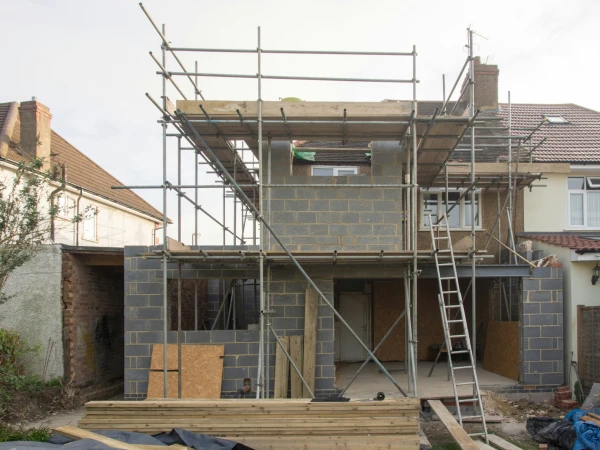
Positive signals about the future are also given by data on building permits issued. According to the economist, they indicate developers' readiness to increase the supply of housing in the coming years. Particularly rapid growth is observed in the apartment segment, where the volume of permits issued has almost doubled over two years, while activity in the single-family home segment also remains high.
Although building permits are not a precise indicator of upcoming construction volumes, they clearly indicate the market participants' preparation for the next development cycle and the expectation of increased demand.
According to the Central Statistical Bureau, in 2025, the volume of building permits issued for apartments reached nearly 500,000 square meters compared to about 250,000 square meters in 2023. In the single-family home segment, permits for nearly 600,000 square meters were issued last year. "Overall, it is clear that the growth trend in the housing segment has been maintained over the past ten years," noted Strautins.
The economist emphasizes that a significant impulse for the development of the housing market is provided by the recovery of lending. Last year, household lending noticeably accelerated — in November, the growth of the loan portfolio in one month exceeded 100 million euros for the first time since the global financial crisis, and the annual growth rate has since remained above 11%.
According to Strautins, this indicates the return of not only developers' optimism to the market but also buyers' ability to purchase housing. The growth of mortgage lending in the near future will contribute to increased construction activity.
Currently, the housing market in Latvia is balanced, according to Strautins. The price level is high enough to stimulate the activity of developers and builders, while at the same time being low enough for housing affordability in Latvia to be better than in other Baltic countries, and by a significant margin.
However, the economist points out that there remains significant unrealized potential in this area — investments in housing last year amounted to only about 2.5% of the gross domestic product (GDP), which is roughly half the average figure in the European Union.
Despite the positive signals, the main challenge now is not a lack of demand but the construction industry's ability to cope with the growing volumes of investment. According to him, alongside the development of housing construction, large infrastructure projects funded by EU funds continue, the development of energy capacities, and in the future — the railway project "Rail Baltica." This creates pressure on industry capacities — the risk of a shortage of specialists in construction and related fields, such as spatial planning, is increasing.
"Although recent data shows moderate inflation in construction, there is a risk of accelerating cost growth. The impact of oil prices and disruptions in supply chains will be reflected in the cost of mineral materials, plastic, and metal products used in construction. At the same time, high prices for sawn timber persist in Europe, putting pressure on the cost of wood materials," emphasized Strautins.