Previously, the EU gradually learned to live without Russian gas.
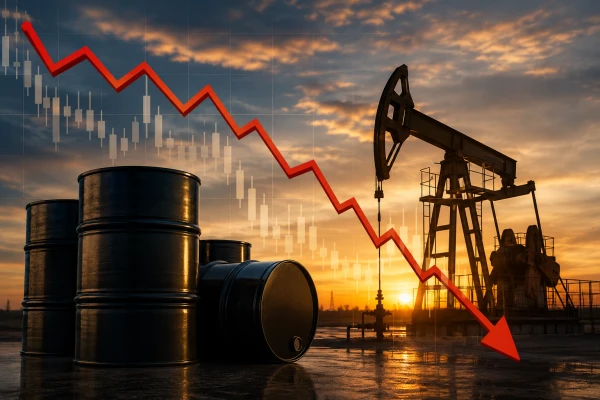
Gas prices in Europe soared by 30%, while oil prices worldwide increased by 7% due to Iran moving into a new phase of war with America and Israel. The Islamic Republic began bombing the largest gas plant in the world in Qatar in response to Israel's strike on the Iranian part of the largest gas field in the Persian Gulf, which Iran shares with Qatar.
Not only Asian countries but also major economies like Turkey and Egypt heavily depend on gas supplies from the Middle East, the BBC material notes. Now they are all forced to compete for a smaller volume, which will inevitably drive prices even higher, as wealthy Europe will also enter this competition, despite the fact that it purchases liquefied gas not from Qatar but from the USA, and pipeline gas from Norway and Africa.
A similar situation arose after Russia's invasion of Ukraine and the Kremlin's decision to cut off gas to Europe. At that time, gas prices in Europe soared to 300 euros per megawatt-hour, but the EU gradually learned to live without Russian gas, and by the Iranian war in 2026, despite the cold winter, prices had dropped to 20-30 euros.
There is no substitute for Qatari liquefied gas. The largest gas producer in the world is the USA, but its capacities are already operating at full capacity.
The only one capable of quickly increasing gas supply in the European market and lowering prices is Russia. It has an operational line of 'Nord Stream 2' to Europe, a pipeline through Ukraine, and liquefaction capacities. However, Russian gas is under Western sanctions for the invasion of Ukraine, and Europe not only does not intend to lift them but also plans to completely abandon Russian gas.
In the event of a large-scale gas crisis, these plans will surely put into question even the European allies of the Kremlin — Hungary and Slovakia, as well as those who until recently received Russian gas — Austria and Italy, and the main instigator of the looming crisis — Donald Trump.
The USA has already lifted sanctions on Russian oil to lower global prices on it. In the gas issue, Russia has even more trump cards, as there are no strategic gas reserves in the world, unlike oil, and the ability to quickly increase production and supplies is almost entirely concentrated in Yamal. If the strikes on the Qatari plant turn the gas deficit in the global market from temporary to long-term, the main buyer of Russian energy resources, China, may finally move forward with the stalled project of the new gas pipeline 'Power of Siberia 2', aimed at redirecting Russian gas from the lost European market to the less profitable Chinese one.
For many years, Russia has been unable to agree with China on the price of future supplies and negotiate who will pay for the construction of the pipeline. Until now, China has had strong negotiating positions, as it did not need additional gas in such volumes in the coming decades.
Moreover, the Chinese Communist Party is pursuing a line of energy independence and does not want to fall into excessive dependence on a single supplier. If 'Power of Siberia 2' is implemented, Russia will increase supplies to China almost threefold after 2030 and will provide more than 40% of its needs. It was the same with Europe until the Kremlin unleashed the gas war.
However, if Middle Eastern liquefied gas disappears from the global market for a long time, prices for Russian pipeline gas may become more attractive for China than assured energy independence. Then, due to the US war against Iran, Russia will continue to receive additional income from exports not only of oil but also of gas for many years to come.