
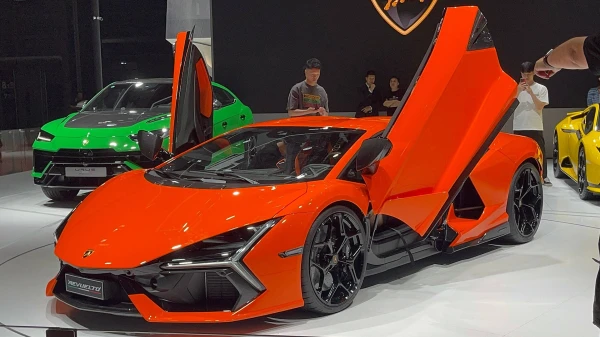
Amid global instability, the company's management is cautious.
The Italian supercar manufacturer Lamborghini finished 2025 with mixed results, showing revenue growth amid declining profits. Despite a record number of cars delivered and high demand for premium models, the company's financial performance was under pressure from several factors, including U.S. trade policy, currency fluctuations, and strategic changes in electrification.
The company's revenue increased by 3.3% to €3.2 billion, marking a historic high for the brand. This growth was driven by an increase in deliveries to a record 10,747 cars. However, operating profit fell from €835 million in 2024 to €768 million in 2025. The decline in profitability indicates that the increase in sales volumes could not offset the growing pressure on margins.
One of the key factors negatively impacting the results was U.S. tariffs, which remain a crucial market for Lamborghini. Despite price increases in the previous year, the company was unable to fully pass on the additional costs to customers. Management recognizes the limitations of such a strategy and does not plan further price increases, fearing a negative market reaction. As a result, the operating margin decreased from 27% to 24%, reflecting a deterioration in overall business profitability.
Currency fluctuations and write-offs related to the abandonment of the fully electric supercar project also played an additional role. This move was part of a broader reassessment of strategy in the face of changing demand for electric vehicles. While many automakers continue to invest heavily in electric technologies, Lamborghini has decided to temporarily step back from previously announced plans, citing weak customer interest and doubts about the profitability of such investments.
Nevertheless, the company was able to partially offset external challenges through internal optimization. Strict cost control and a focus on selling more expensive models played a significant role in maintaining financial stability. The supercar Revuelto, priced at over half a million euros, as well as vehicle personalization programs, achieved particular success. Almost every car sold in 2025 included elements of personalization, which helped increase the average transaction value and maintain the brand's appeal in the premium segment.
Amid global instability, the company's management is cautious in its forecasts. Military conflicts in the Middle East, affecting oil supplies and logistics, create additional risks for the luxury car market. This segment is particularly sensitive to economic fluctuations, as demand for expensive cars directly depends on consumer confidence and the state of the global economy.
One of the most notable strategic decisions was the abandonment of the fully electric supercar planned for 2030. The company's management noted a rise in skepticism regarding electric vehicles among the target audience. Many customers had already experienced electric cars, but their expectations were not fully met. This became an important signal for revising the product strategy.
Instead, Lamborghini is betting on hybrid technologies. The company already has a lineup of hybrid models and plans to expand it by launching a new "2+2" Lanzador car with a plug-in hybrid system. This approach allows for a balance between innovation and traditional brand characteristics, including power, engine sound, and the emotional aspect of driving.
At the same time, Lamborghini is not completely abandoning the development of electric technologies. Investments in this area continue, indicating a long-term approach and readiness to adapt to potential changes in demand in the future. However, in the short term, the company is clearly betting on more proven solutions.













Leave a comment