The situation with the rising costs of energy resources may stabilize within a few months, said the President of the Bank of Latvia, Mārtiņš Kazaks, during the TV3 program "900 Seconds," LETA reports.
Therefore, the Latvian government should consider how to curb the impact of rising prices so that the increase in energy resources does not spill over into other segments of consumption. According to him, it is necessary to assess the possibility of reducing excise duties and adding biofuels. However, in any case, it should be taken into account that it is impossible to completely isolate the rise in prices, but it may be possible to mitigate its impact.
According to Kazaks, it is necessary to assess the situation and develop action algorithms. Speaking about possible support measures, he noted that they should be temporary and targeted, with a preliminary assessment of their impact on price increases, for example, regarding fuel for spring sowing.
Assessing the situation in the European economy, Kazaks noted that both the European and Latvian economies are currently more resilient than in 2022, when Russia's full-scale invasion of Ukraine began. However, the level of uncertainty remains very high, so it is necessary to closely monitor the situation to prevent a sharp rise in inflation. The risk of recession cannot be ruled out if the war with Iran drags on, but it is important not to exaggerate the threats and to remain cautious.
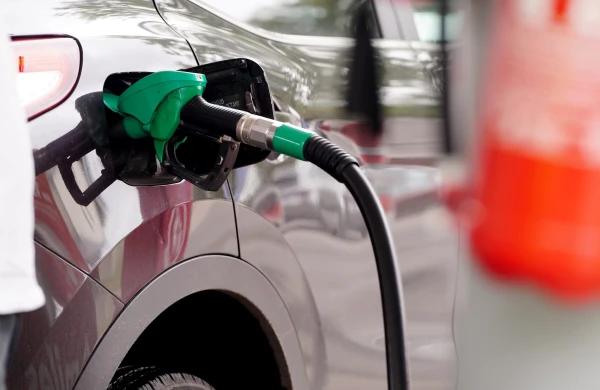
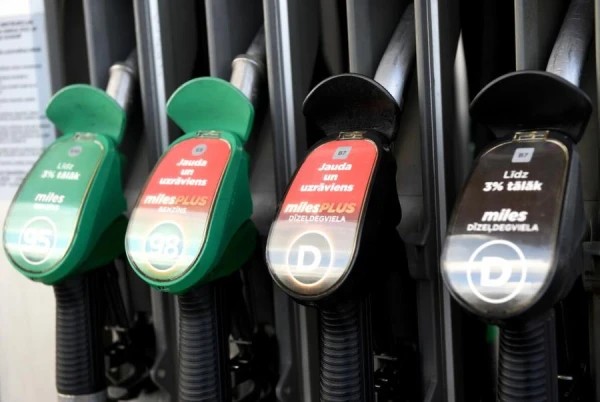
As reported, according to calculations by the LETA agency, in the largest networks of gas stations in Latvia, the average price of diesel fuel has increased by about 28% since the escalation of the conflict in the Middle East on February 28 of this year, while the price of 95 octane gasoline has increased by 11%.
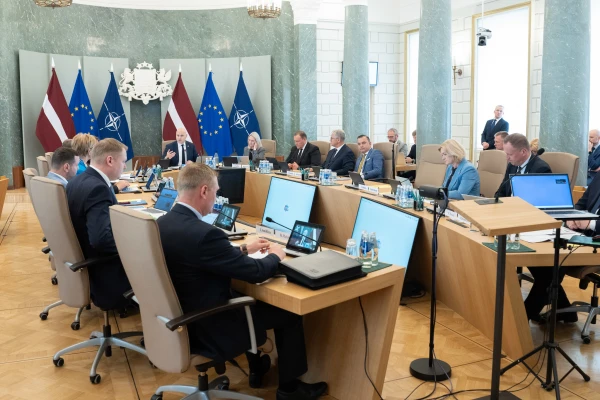
Earlier, after a management meeting on March 17, Minister of Economics Viktor Valainis stated that two solutions are primarily being considered to reduce fuel prices — reducing the excise tax on fuel and limiting excessive profits in fuel retail.
It was also reported that the European Central Bank (ECB) decided on Thursday to keep interest rates unchanged. At the ECB council meeting in Frankfurt, it was decided to maintain the deposit rate at 2%, the main refinancing operations rate at 2.15%, and the overnight lending rate at 2.4%.
These rates have been in effect since June 11, 2025.