
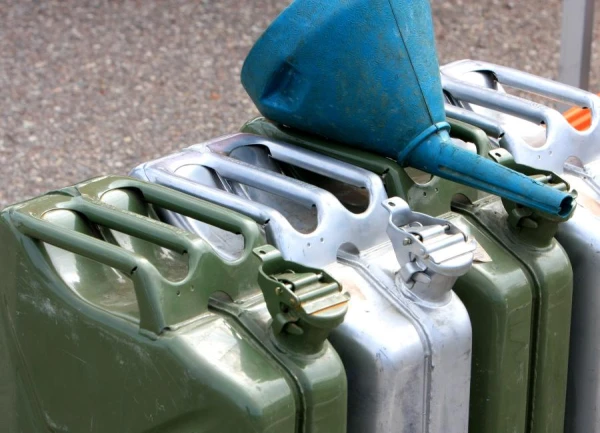
Considering the developments in military escalation in the Middle East and the resulting tension in global energy markets, the overall situation with fuel supplies in Latvia and the Baltic region remains stable, said Minister of Climate and Energy Kaspars Melņis to bb.lv.
Today, March 6, Minister Kaspars Melņis met with the Latvian Association of Fuel Traders (LDTA) and individual fuel traders to discuss the overall situation.
Chairman of the Board of the Latvian Association of Fuel Traders Ieva Ligere states:
"The volumes of fuel available at gas stations are sufficient to meet current demand. At the same time, considering the uncertainty of the geopolitical situation and the sensitive market reaction, unfounded reports about possible supply disruptions may appear in the public space. Currently, there are no grounds for such concerns.
In certain regions of Latvia, the capacity of tanks at gas stations may be lower than at larger stations; however, this is related to the technical parameters of the stations, not supply issues."
When will state reserves be released?
At the same time, regardless of events in the Middle East, the demand for fuel in Latvia, as every year, increases due to seasonal factors — with the start of the active agricultural season, farmers require additional volumes of fuel, and demand from freight carriers traditionally rises.
"We are in constant contact with the Ministry of Economics. Given the current situation, there is no need to release state strategic oil reserves, as there is no fuel shortage. We discussed with the Ministry of Economics that if such a need arises, it will be done to smooth price dynamics, as has happened before — in 2022," noted Minister of Climate and Energy Kaspars Melņis.
We are not buying oil from Qatar
A representative of the Orlen group also confirmed that there are currently no risks to fuel supply security, and oil deliveries are occurring according to the planned schedule. The company notes that the Orlen group does not purchase oil from the conflict-affected region — Qatar.
Oil supplies are being secured from other regions, including the Mediterranean region, Egypt, North and South America, as well as from other sources, ensuring diversification of the supply chain.
Neighbors are already close to 2 euros per liter
However, despite the challenges, the price increase in Latvia is more moderate than in Lithuania and Estonia. For example, in Vilnius, the price of diesel fuel is already approaching 2 euros per liter.
In Latvia (in Riga) today, March 6, diesel fuel prices range from 1.10 euros per liter to 1.77 euros per liter, depending on the gas station. The minister did not specify where diesel is sold for 1.10 euros per liter.
"On the global market, a price increase of 20–30% for diesel fuel is generally forecasted. Looking at the long-term financial markets, the industry believes this is a relatively short-term conflict, and I hope that will be the case. But we are also preparing for the unfortunate possibility that it may drag on," noted Melņis.
Who is to blame?
As previously reported, on February 28, 2026, Israel and the USA began military actions against Iran, after which Iran launched retaliatory strikes against countries in the region.
As a result of the military escalation, the operation of several important oil and gas facilities (in Saudi Arabia, Iraq, Iran, Israel, and Qatar) was halted or disrupted. Most of the halted enterprises and ports do not have a significant impact on the market; however, Qatar plays an important role in global oil and natural gas markets.







Leave a comment