
In the post-COVID period, several sectors of the EU economy faced difficulties in filling vacancies, while in other sectors, employment levels decreased, indicating fewer challenges in hiring personnel.
As of early 2026, the labor market in Europe is at a fairly stable level, demonstrating record-high employment figures amid economic downturn and global instability.
However, despite the overall resilience of the market, some industries are in need of workers and are struggling to fill the gaps created after the COVID-19 pandemic.
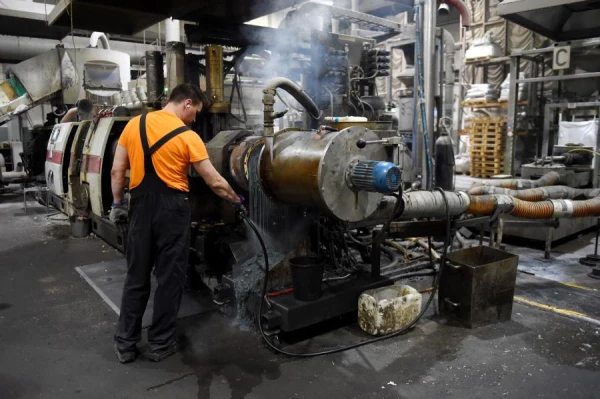
New data published by Eurostat shows that from 2019 - before the pandemic - to 2023, the highest growth in the number of vacancies was recorded for manufacturing workers - at 4.2%.
This growth indicates that during this period, the sector faced more difficulties in hiring personnel. The closure of businesses during the pandemic led to significant disruptions in the supply chain and a loss of workers from the manufacturing industry.
As soon as the situation began to normalize, the industry started to recover quickly to accelerate production and meet the growing demand - and to achieve these goals, it needed workers.
According to Eurostat data, the next highest vacancy rates were observed for sales, marketing, and development managers (3%), sales department workers (2.8%), transportation and warehousing workers (2.5%), and other office workers (2.4%).
However, not all professions are the same - in some sectors, the number of vacancies decreased during the same period.
The largest decline was noted among biological science technicians (-2.6%), database and network specialists (-1.7%), as well as software developers and analysts (-1.5%).
Some experts explain the slowdown in growth in these sectors partly due to the development of automation and artificial intelligence. While the demand for specialized positions, such as in data analysis or gene therapy, remains high, this is not always the case for physical labor or purely research vacancies.
Nevertheless, although the decline in figures likely indicates that there are fewer difficulties in hiring personnel in these areas, it does not mean that the number of such professions is decreasing, according to Eurostat data.
For example, despite the decline in the share of vacancies for database and network specialists (to 5.1%), it still significantly exceeds the average for all professions, which is 2.4%.
Moreover, from 2019 to 2023, the share of employees engaged in databases and networks grew by 0.2%.
A similar situation occurred with software developers and analysts - a sector that recorded a decrease to 6.9% in 2023, but whose share of workers increased by 0.5% during this time, according to Eurostat data.
On the other hand, in other sectors where the vacancy rate increased, there was a decrease in the share of employed individuals. This was the case, for example, for transportation and warehousing workers (-0.2%) and sales workers (-0.1%) from 2019 to 2023.















Leave a comment