The Saeima Commission for Long-Term Development, led by National Alliance representative Ugis Mitrevics, reviewed the Main Directions of Forestry and Related Industries last week. They took a broad perspective – for a quarter of a century.
Optimism is firmly grounded: in January, a public discussion concluded, and the Silava Forest Institute presented expert assessments.
Natural Capital
This term now defines "the monetary expression of the totality of natural resources that can be used in the national economy and also includes the products and services provided by ecosystems." According to analytical data from local scientists, Latvian wood, going through all stages of value addition, can increase in price by 12 times.
This does not exclude the preservation of forests as an untouched reserve of our ecosystem – 30% of forest areas are primarily designated for biodiversity needs, and 10% are strictly protected reserves.
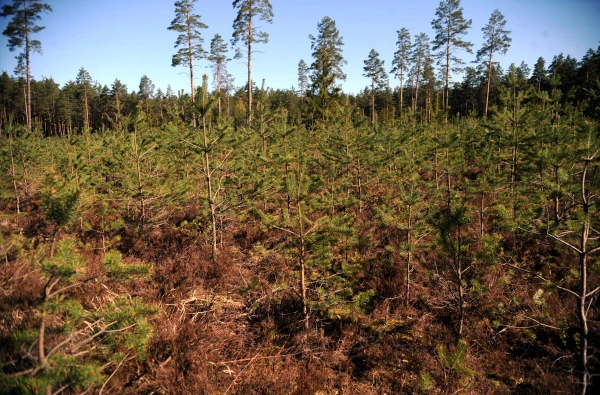
As for afforestation in Latvia, its intensity has increased by 25% in recent years.
The Ministry of Agriculture (currently headed by Armand Krauze, a representative from the Union of Greens and Farmers) puts forward the following theses:
"Latvian forestry is long-term and internationally recognized. The products of the Latvian forest industry are competitive, with high added value and meet customer needs. The development of forests and related industries has the corresponding educational and scientific potential, as well as a level of human resource skills."
Moreover, the goal of forest policy is to create "a well-kept, independent, and prosperous Latvia" (which should fit into the overall strategy of the European Union – to be independent of wood imports). The country's bioeconomy will allow it to adapt to climate changes with minimal pain.
Specialization of 15 Regions
If we look at the map of the economic geography of Latvia, presented by banking economist Peteris Straujinsh, forests occupy a leading position in the national economy:
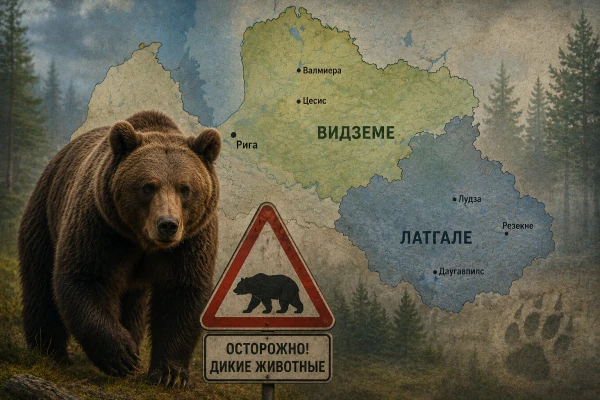
- Vidzeme (Ropazhi, Sigulda, Cesis, Limbazi, Madona, Gulbene, Smiltene, Aluksne, Valkas regions);
- Kurzeme (Ventspils, Talsi, and Kuldiga regions);
- in Zemgale, there are only two forest regions – Aizkraukle and Jekabpils;
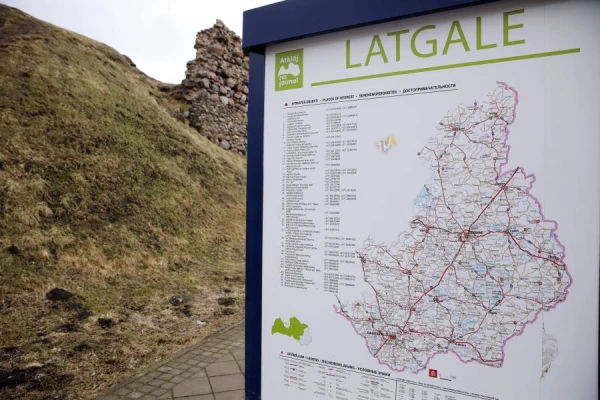
- and in Latgale, there is only one – Rezekne.
Of course, this is not about the density of green areas – but about their contribution to GDP. For example, the Valmiera region is no less forested than many of the aforementioned, but there, metalworking and machine engineering products are predominantly produced, which mainly support this administrative entity.
We Order Only from Locals
The Ministry of Agriculture document contains a significant provision: "Promote the inclusion of locally sourced wood products in the green procurement of the state and municipalities." The latter, according to 2024 data, amounted to 124 million euros, or 19.4% of the total budget expenditures.
The age structure of Latvia's forests must optimally reproduce CO2, for which a new category – plantation forest – is being introduced. All changes – cuts, plantings – will be digitally accounted for in the State Forest Register, which will become a client-oriented segment of the State Forest Service. Of course, for a fee from forest owners.
In the forests of Latvia, a significant portion consists of unproductive areas where economic activity is impossible due to swampiness. However, in the vision of the Ministry of Agriculture, these territories also need special attention, as they ensure hydrological balance and contribute to the growth of industrial forests. The main directions call for "managing forests while strengthening the integration of biodiversity values, while also promoting the creation of various products and services from forest ecosystems in a changing environment."
What Else Needs to Be Done
Among the promising directions is the restoration of forests in areas of former peat extraction; paying fair, market-appropriate compensation to private forest owners for limiting economic activity.
Regarding the latter, the Ministry of Agriculture sets the condition: "Reduce the export of roundwood, promoting its processing in Latvia." As for the workers in forestry, they need to be transitioned to fully legal employment contracts and provided with comprehensive accident insurance.
IT solutions will be widely introduced not only in forest accounting but also in the production process. For example, remote counting of the parameters of felled trees. The basic scientific center will be the Latvian University of Biotechnology (Jelgava). The interest of the general public is supported by the annual Forest Days organized by Latvijas valsts meži, involving schoolchildren and parents.
It is necessary to completely stop the vicious practice of illegal dumping in forests. Instead, create and maintain infrastructure for free forest recreation for the population.
In this last thesis, your author unequivocally supports the authorities. It is only a pity that the municipal capital society Rīgas meži uses its limited resource for work, say, in the Ogre region – while questions remain regarding the state of the green lungs of the capital. When the snow melts, we will see the condition of Bikerneki, Shmerli, Kleisti...
Oh, the Roads
The maximum task for Latvia's forest roads is to make them passable for at least 11 months a year.
In a World of Predators and Bark Beetles
Today, the main questions being debated by scientists, the public, and market participants are:
- Optimal criteria for logging, taking into account the growing risks of climate change. The species of trees being planted should also be oriented towards potential changes in temperature and humidity.
- Conducting phytosanitary monitoring, curbing the threats of pest and plant disease proliferation.
- Maintaining the balance of wildlife, especially ungulates and predators.
- Maintaining proper forest infrastructure, including fire-fighting stations, transitioning to remote monitoring devices.