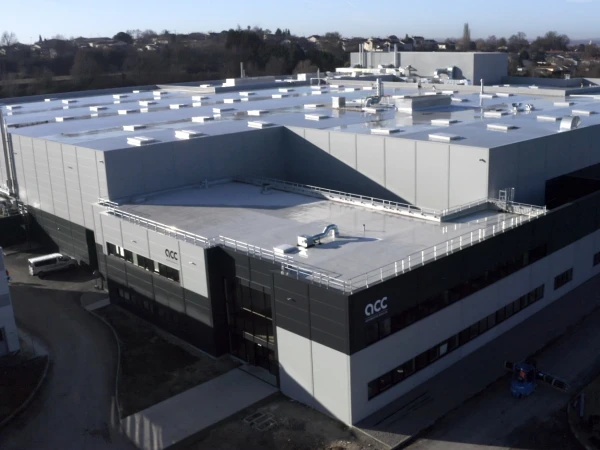
European battery manufacturer Automotive Cells (ACC) is halting the construction of so-called gigafactories in Italy and Germany, reported the Italian metalworkers' union UILM.
ACC has postponed its plans due to a slower-than-expected growth in demand for electric vehicles. The company is considering closing projects that have been halted since 2024.
ACC is a joint venture of the French oil giant TotalEnergies, the German automaker Mercedes-Benz, and the American-European automaker Stellantis, which produces a number of brands including Peugeot, Fiat, and Chrysler.
The company's new plants were among dozens of battery production projects emerging in Europe in an attempt to reduce dependence on dominant Chinese manufacturers.
The first ACC plant was built in Douvrin, France, with an initial production capacity of 13 GWh, which was later increased to 40 GWh. The plant in Germany was supposed to supply batteries needed by Mercedes-Benz, which acquired a 33% stake in the company.
All three plants (the third one in Italian Termoli) received EU funding of about €1.3 billion. This is money that theoretically should have been paid back.
Stellantis, which has already released 24 fully electric models under the Tavares brand, plans to launch 47 electric vehicle models and reach a milestone of 5 million electric vehicles by 2030. At the same time, the total number of electric models released by the 14 brands in its portfolio will account for 75% by 2030.
On Friday, February 6, Stellantis reported a loss of over €22 billion due to the slower-than-expected adoption of electric vehicles and stated that it would not pay dividends to shareholders for the 2025 financial year.