The Veterinary and Food Safety Service (VFSS) identified violations in several batches of goods from Uzbekistan, Iran, Russia, Afghanistan, Ukraine, India, and Turkey during border control — exceedances of pesticide residue norms, banned additives, pathogenic bacteria, as well as labeling and documentation violations were recorded. As a result, part of the cargo was recalled, sent for destruction, or returned to the countries of origin, according to the information released by the service, writes LETA.
During a laboratory check of a sample taken at the border, the Veterinary and Food Safety Service (VFSS) detected 0.47 milligrams per kilogram of propiconazole in dill from Uzbekistan, with a possible margin of error of 0.24 milligrams.
The service reports that a recall of nine tons of Uzbek dill has been initiated. This is already the third case in the first weeks of the year where residues of a banned pesticide have been found in dill imported from Uzbekistan.
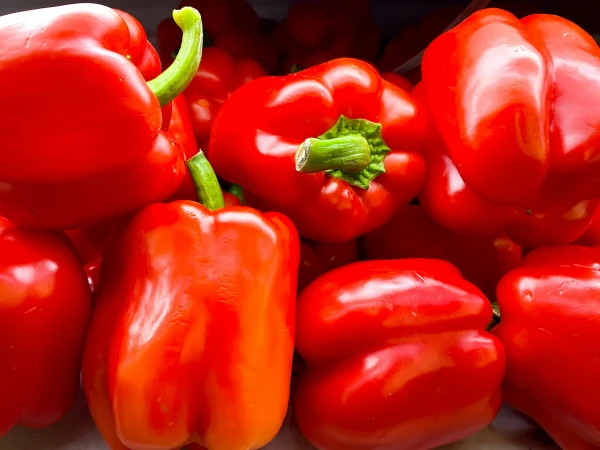
At the same time, in fresh peppers from Iran, according to a laboratory check conducted at the border, the VFSS found an exceedance of the permissible level of pesticide residues. The sample contained 0.093 milligrams per kilogram of ethion with a possible margin of error of 0.047 milligrams, as well as 0.038 milligrams of profenofos with a margin of error of 0.019 milligrams per kilogram.
The owner of the batch weighing 15 tons decided to send it for destruction.
Additionally, an 18-kilogram shipment of wafers containing a food additive E171, which is banned in the European Union, and 12 tons of wild mushrooms were sent back to Russia, as the owner of the cargo could not provide documents confirming their safety regarding radioactive cesium-137.
The VFSS also notes that a 400-kilogram batch of food flavoring from Russia, destined for Lithuania, was deemed unsuitable — the ingredients were not listed. The competent supervisory authority in Lithuania has been informed of the violation.
Furthermore, Salmonella spp. bacteria were found in feed yeast of Russian origin during laboratory testing.
The service explains that 21 tons of feed yeast from Russia with batch number "12/01" has been decided to be destroyed.
Discrepancies were also found in two batches of dried apricots from Afghanistan and Uzbekistan. In both cases, the allergen — sulfur dioxide — was not indicated on the labeling.
The VFSS notes that 504 kilograms of dried apricots from Afghanistan with batch number "10.2027." have been decided to be destroyed in Germany. Meanwhile, four tons of apricots from Uzbekistan with batch number "A1820122025" have been decided to be sent to Italy, and the relevant authority in that country has been informed.
The VFSS also discovered an unjustified indication of organic origin in a batch of raisins from Afghanistan, and the packaging of raisins from Uzbekistan lacked information about the product's expiration date.
570 kilograms of Afghan raisins have been decided to be sent to Germany for relabeling as a regular product, while 20 tons of raisins from Uzbekistan have been sent to the Netherlands, and the competent Dutch authority has been notified.
At the same time, the VFSS found added echinacea extract, which is banned in the EU, in Ukrainian lemonade, so a two-ton batch of lemonade with number "B/N" was sent for destruction.
Meanwhile, a ton of turmeric from India with batch number "J01H25" was returned, as it was unloaded before safety checks were conducted. Additionally, 190 kilograms of gummy candies from Turkey with number "25-34-068500" were sent back due to the use of gelatin of unknown origin, the VFSS notes.
The VFSS has posted information about the identified cases in the EU Rapid Alert System.
The VFSS is a government agency under the Ministry of Agriculture that oversees and controls food circulation and veterinary matters.