
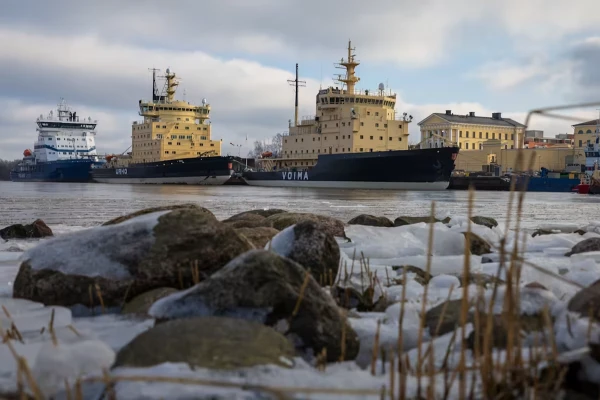
Modern winters have become windier, which significantly complicates operations.
Finland will need icebreakers in the future, despite climate change. The changing composition of the merchant fleet supports the need for icebreaking vessels: regular ships are gradually losing their ability to navigate through ice.
The warm start to winter has reflected on the schedule for icebreakers going to sea: the first major vessel set out only on New Year's Eve.
A year ago, the first icebreaker from Arctia, which owns and operates large icebreaking vessels, went on duty about two weeks earlier.
Paavo Koyonen, the operations director of Arctia, notes that climate change has brought new challenges for the icebreaking service. Modern winters have become windier, which significantly complicates operations.
Mikko Suominen, an associate professor at Aalto University, emphasizes that the changing composition of the merchant fleet supports the need for icebreakers, even as winters become milder. Modern vessels are increasingly optimized for sailing in open water, and their ability to overcome ice barriers is lower than that of previous generations of ships.
Finland has built a significant number of icebreakers for itself and for export, including the nuclear-powered "Taimyr" and "Vaigach" for the USSR, and is now preparing for a major deal with the USA for 11 icebreakers, 4 of which will be built in Finland. The exact number of all icebreakers built is difficult to count, but Finland designs up to 80% of the world's icebreakers, and Finnish shipyards construct about 60% of them, including the icebreaker "Polaris" (2017) and the new project "Arctic Icebreakers" (2026-2028).













Leave a comment