
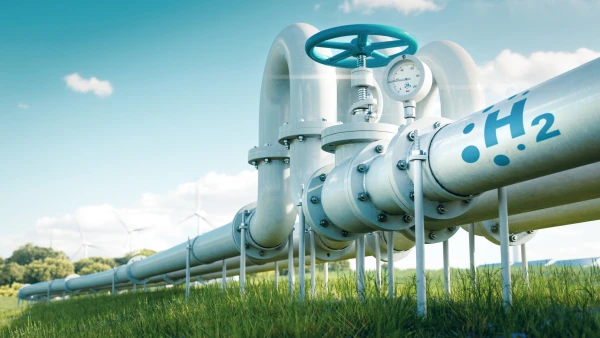
Today, the government is adopting the Long-Term Energy Technology Development Plan until 2035. The document is not tied to a single industry or sector but represents a comprehensive roadmap for macroeconomics.
How to Double GDP
The initiator is the Minister of Economics, Viktors Valainis, who promises to double the country's economy in the next decade and achieve a gross domestic product (GDP) of Latvia of 83 billion euros. Currently, it is around 40 billion.
One of the prerequisites for this economic miracle is to increase the productivity of local enterprises from 60% of the average in the European Union to its average level. So far, the republic's industry accounts for only 15% of the total added value in the economy.
How will the "Baltic Tiger" make a giant leap? "As an important element for achieving rapid growth, the application of innovations and the latest technologies, including artificial intelligence, as well as the state's successes in the green economy, renewable energy, and bioeconomy are highlighted." For example, the joint project with Estonia for offshore wind farms, ELWIND, is expected to bring economic benefits that exceed the necessary state funding," officials from the Ministry of Economics promise.
According to the Teachings of Mario Draghi
"Latvia also needs to develop hydrogen production and its derived products," the plan states.
Former President of the European Central Bank Mario Draghi spoke in 2024 about the future competitiveness of the Old World. Draghi is now long retired, but his legacy lives on. "In this context, hydrogen is considered one of the key energy carriers for decarbonizing European industry, and it is proposed to strengthen EU investment tools and market accessibility to form a viable and integrated European hydrogen ecosystem," state government economists.
But the economy breathes not only hydrogen. "Latvia can strengthen its position in the EU market and the international market, increase export volumes, as well as enhance the level of innovation and create new jobs in high value-added sectors. The strategy for the development of Latvia's economy in the medium term until 2035 provides for an annual GDP growth of 4-5%, while the growth of the export share is expected to reach at least 80% of GDP, and the annual growth of private investment volumes is to be at least 25% of GDP."
At the same time, the EU Transport Sector Directive states that by 2030, at least 29% of energy consumed in the transport sector must come from renewable sources (with 5.5% being non-biological), and greenhouse gas emissions must be reduced by 14.5%.
Leaders in Production
Although, as the Ministry of Economics acknowledges, "currently there are no identified projects in Latvia for the production of climate-neutral technologies that could qualify as strategic projects," there are still "enterprises contributing to the transition to greener energy." Among them are:
-
The development of high-performance drones that service wind turbines, including cleaning, de-icing, and applying special protective materials.
-
The production of equipment for applying nanocoatings for hydrogen technologies (electrolysis and fuel cells) for bipolar plates.
-
Innovative solutions for producing "green" hydrogen, with the development and commercialization of membrane-free water electrolysis systems using a unique two-step process.
Nevertheless, speaking about alternative energy, "Latvia will find it difficult to enter this market." Germany, China, and Denmark dominate the segments of solar panels and wind turbines.
The Ministry of Economics' plan includes a directive: "By 2030, create a manufacturing base in Latvia for at least two categories of climate-neutral technological installations that meet the objectives of Regulation (EU) 2024/1735, ensuring 40% of the needs for strategic technologies." Such enterprises should have a combined turnover of at least 50 million euros per year.
People Will Be Blown by the Wind
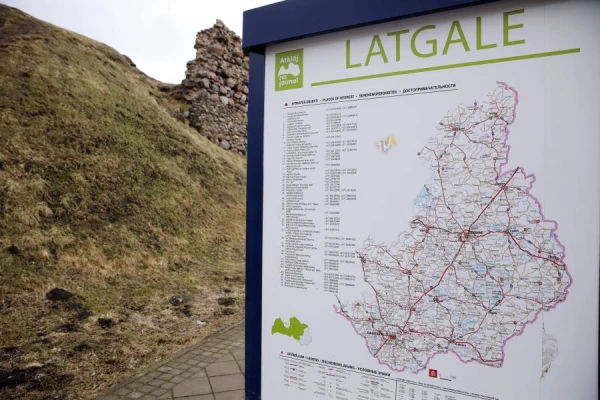
To "reduce the population decline in regions and create the development of a new national economic sector and thus increase basic growth," the Ministry of Economics, together with the Latvian Investment and Development Agency, plans to concentrate biogas production facilities in Latgale and Zemgale, and wind and hydrogen parks in Kurzeme.
In cooperation with the Ministry of Education and Science, new qualification requirements for "green" technologies will be established, and assistance will be provided for the transfer of skills and knowledge, using the European Social Fund and the Erasmus+ program. Scientific institutions in the republic will focus more on the "zero-emission economy."
Components of Success
"Timely attraction of funding from EU funds, the state budget, and the private sector is essential to ensure resources for equipment production solutions, particularly considering Latvia's limited local capital," the plan outlines the necessary conditions.
Additionally, "technological readiness is needed, including the ability of research and developing projects to create competitive technologies and adapt them to market requirements." This will help "Latvia create a specialized manufacturing sector."
The Movement Will Be Led by the Prime Minister
"The availability of a skilled workforce, provided by targeted educational programs, will be crucial for the implementation, maintenance, and development of technological capacity," the Ministry of Economics points out. Although it does not directly specify whether these labor resources must be specifically Latvian or can be imported.
In absolute numbers, we need just a few — only 200 specialists.
In general, there will be work for everyone. The Prime Minister, for example, is supposed to lead the Council for the Coordination of Large and Strategically Significant Investment Projects. This is stated in the document — but how this will be practically implemented by the specific Evika Silina ("New Unity") is still a big question…


Leave a comment