
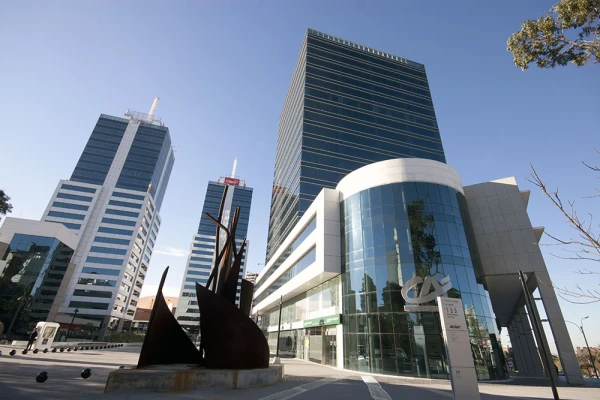
Until recently, Uruguay was an exception in the region.
Starting in 2026, the head of the Central Bank of Uruguay, Guillermo Tolosa, plans to implement measures aimed at strengthening the role of the Uruguayan peso. This measure is part of a strategy to develop the domestic financial market, which is intended to improve the situation for private borrowers, businesses, and the government itself.
The initiative begins with simple pressure on private banks. Now, lending in dollars will become less profitable for them compared to issuing loans in pesos.
To achieve this, the Central Bank will raise reserve requirements for dollar loans. Banks will have to hold more of their own funds for such loans, which cannot be put into circulation. These reserves effectively freeze money and reduce the profitability of dollar lending.
At the same time, the regulator will abolish mandatory reserve requirements for peso deposits. This will free up funds for banks that they can direct towards lending in the national currency. Dollarization will be a long process for Uruguay. Today, more than two-thirds of bank deposits in the country are held in U.S. dollars. The habit of using "bucks" took root in the second half of the 20th century when high inflation and frequent devaluation of the national currency were common. Currently, ATMs in Uruguay dispense both pesos and dollars, and large purchases like cars and real estate are mainly priced in American currency.
The dollarization policy promoted by President Yamandú Orsi sharply contrasts with the course of neighboring Argentina. There, President Javier Milei is implementing reforms that allow salaries to be paid in both dollars and pesos. Moreover, the libertarian president has repeatedly stated that he might even close the central bank and completely abandon the peso in favor of the dollar.
According to Tolosa, the Uruguayan attachment to the dollar is a relic of an era of economic instability that the country has, in his opinion, already overcome. Uruguay's attempt to reduce dependence on the American currency is primarily driven by internal reasons. At the same time, it fits into a broader international debate about the future of the dollar. Few expect the American currency to lose its dominant role in the global economy anytime soon, but its attractiveness is steadily declining.
According to the IMF, the share of the dollar in central bank reserves has decreased from about 71% at the turn of the century to nearly 59% last year. In the foreign exchange reserves of the Central Bank of Uruguay, the share of dollar assets has dropped from 90% in March to 84% in September, already after Tolosa took office.
Tolosa is actively trying to gain public support, claiming that Uruguayans are losing money by keeping their savings in dollars. According to him, dollar checking accounts have lost half of their purchasing power over the past two decades.
Until recently, Uruguay was an exception in the region. From 2001 to 2022, the average annual increase in consumer prices in the country was 8.8%. This generally suited the economy thanks to a system of collective agreements and business contracts that protected parties from price fluctuations. High inflation did not prevent the country from receiving favorable ratings from international rating agencies and attracting billions of dollars in foreign direct investment, including projects for building pulp mills and luxury real estate on the coast.
The tight monetary policy is beginning to yield results. Inflation has been maintained within the Central Bank's target corridor of 3–6% for two and a half years and has been around the target level of 4.5% for six consecutive months.
According to developer Fabián Copely, who works in the affordable housing segment, the construction industry would benefit from transitioning to prices in the national currency linked to inflation. About 75% of developers' costs are in pesos, while housing prices are often set in dollars. This discrepancy makes projects vulnerable to currency fluctuations, reduces profits, and leads to rising dollar prices for buyers.












Leave a comment