In the fall, there was a panic-driven surge in sales.
The cautious optimism that the results of 2024 instilled in players of the Russian automotive industry confidently faded in 2025. Sales volumes fell month after month. Dealers locked their showrooms by the hundreds. Some brands, even before they could be remembered, quietly left the market. However, upon closer inspection, the situation does not seem entirely bleak. Car sellers are coming up with 'tricks' to attract customers. Overnight, showrooms change their signs and suddenly fill with new models. The places of defunct brands are taken by others, previously unknown.
For almost three quarters of 2025 (except for January), the sales of new cars steadily declined. According to the analytical agency 'Autostat', in the first six months, the decline reached 26.3%, and for nine months this figure was 22.4%. But in the fall, a sudden surge in demand arose. Its main driver was... panic.
After the announcement of new recycling fees, Russians began to frantically import cars from abroad and buy up what was available at dealerships. Moreover, they did not hesitate in choosing a brand or model. The main thing was to buy a car with a power of at least 160 hp, for which the government decided to increase the fee. Even the electronic registration system could not handle this surge — it experienced a failure. Many deputies and public figures found a reason to criticize the government. As a result, the increase in the fee was postponed, and sales statistics in October showed growth for the first time in 2025.
Experts have no doubt that the market will end up in the negative by the end of 2025: the final sales figures vary in forecasts from 1.1 million to 1.3 million units. Recall that a year earlier, Russians purchased over 1.57 million passenger cars (including crossovers in 'Autostat'). However, a number of trends are interesting that are likely to persist in 2026.
Translation from Chinese
According to the agency 'Autostat', by the beginning of October 2025, Chinese automakers accounted for 54% of the new passenger cars sold in Russia. More than 35 Chinese brands offered them, many of which were unfamiliar even to specialists. The leading roles were played by market veterans — Haval, Geely, Chery, Changan, each of which sold at least 50,000 cars over three quarters. Meanwhile, some brands had sales limited to just a few dozen units — it is clear that such a business will not last long.
It should be noted that Chinese models were also sold under the brands of Russian enterprises. They accounted for at least another 10–15% of the market. 'These are Moskvich, Solaris, Evolute, Tenet, Xcite,' lists Igor Morzharetto, a partner at the agency 'Autostat'. 'We can also add the Belarusian company Belgee. All these companies essentially just assemble cars from kits that come from China.'
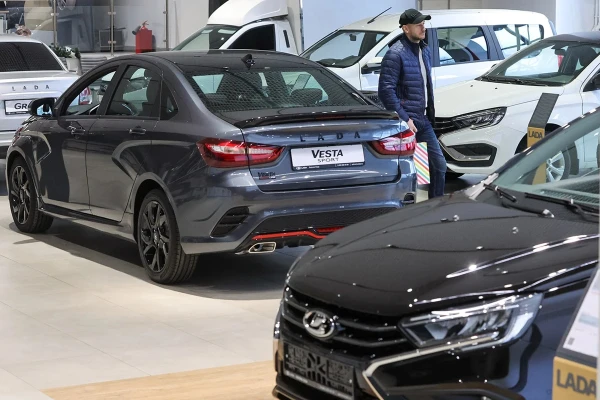
Indeed, the only company currently producing its own products in the passenger segment is AvtoVAZ, which still leads all sales rankings, whether in total sales volume or by model breakdown. However, its operations have also been affected by a shortage of imported parts. This is evidenced by the transition to a reduced workweek and the fact that the Togliatti plant has not resumed production of the once very popular Lada X-Ray.
There are problems with the heavily advertised new model Lada Iskra. The car has hit the market, and there is even a queue for it: customers were signing up for September as early as the summer months of 2025. As a result, many refused to purchase other Lada models.