

If the conflict in the Middle East ends in the coming weeks, inflation in Latvia this year could reach 3.4%, the Ministry of Finance told LETA.
The ministry notes that inflation in Latvia continues to decline. In February of this year, consumer prices were 2.3% higher than in the corresponding month a year earlier. According to the ministry, this level of inflation was the lowest since December 2024.
The Ministry of Finance indicates that a significant slowdown in the growth of consumer prices has been achieved in a relatively short period: in October of last year, the annual inflation was two percentage points higher at 4.3%. However, in the ministry's opinion, the moderate growth of consumer prices in Latvia is unlikely to be long-term, as recent events in the Middle East are causing fluctuations in oil and gas markets.
Although the Gulf countries that are directly or indirectly involved in the war with Iran are not among Latvia's top 20 export markets, and direct imports of energy resources from this region are small, the energy market is global and closely interconnected. Therefore, the Ministry of Finance warns that the potential impact on Latvia's economy could be significant both this year and next, primarily manifested in higher prices for fuel, gas, and thermal energy.
The ministry explains that the scale of the negative impact on the economy and inflation will largely depend on the duration of the military conflict and its geographical escalation. The longer the conflict lasts, the stronger its influence on energy resource prices may be, which, in turn, will increase consumer and production costs in Latvia and directly affect the purchasing power of the population.
Currently, prices in the oil and gas markets mainly reflect the risk of possible supply disruptions through the Strait of Hormuz, rather than an actual shortage of oil or gas. The ministry adds that this is evidenced by the drop in oil and gas prices on Tuesday, March 10, compared to Monday, March 9, which followed immediately after U.S. President Donald Trump's statement that the war with Iran is largely over.
On Tuesday, March 10, the price of Brent crude oil fluctuated below $90 per barrel, although in the morning trading session on Monday, March 9, it exceeded $108 per barrel. Nevertheless, this is still about $18 more than the price of Brent oil before the onset of the military conflict with Iran, the ministry emphasizes.
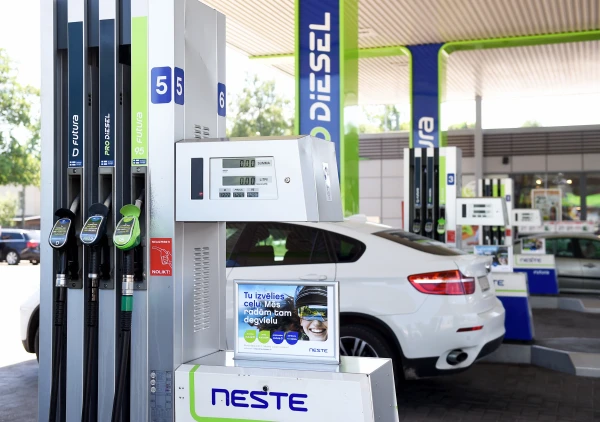
The Ministry of Finance adds that the impact of rising oil prices is already noticeable at gas stations in Latvia, where prices for gasoline and especially diesel fuel have increased in recent weeks. According to the ministry, this is the first and so far the only negative channel affecting inflation in Europe and Latvia.
The Ministry of Finance emphasizes that in the second half of last year, oil prices significantly decreased as large oil reserves were formed globally and production volumes increased. At the same time, some Gulf countries reported the closure of certain oil refineries due to a depletion of storage capacity for oil, rather than due to military actions. This means that if the Strait of Hormuz remains open to shipping in the coming weeks, the capacity for oil supplies to the global market may remain high. Thus, oil prices could stabilize relatively quickly and even decrease from the current level.
However, if the conflict continues for several more months, the negative impact on consumer prices in Latvia will also manifest in higher prices for gas, thermal energy, and food products, which could lead to a significant price spike, the Ministry of Finance predicts. Although global oil and gas reserves would temporarily mitigate such disruptions, the risk premium for possible supply interruptions would significantly increase in the markets.
The ministry notes that gas is an important component in the production of mineral fertilizers, diesel fuel is necessary for agricultural work, especially during planting and harvesting, and electricity is a significant part of costs in food processing. Thus, in the case of a prolonged conflict, the rise in energy resource prices could significantly increase food production costs and, accordingly, intensify pressure on food prices.
In January of this year, the Ministry of Finance updated its medium-term macroeconomic forecasts. According to them, average inflation this year was expected to be at 2.9%. However, events in the Middle East increase the risks that could negatively affect Latvia's economic growth and inflation both this year and next.
The Ministry of Finance forecasts that inflation this year could reach 3.4% if the conflict in the Middle East ends in the coming weeks, which is 0.5 percentage points higher than the baseline scenario. If the conflict drags on and the Strait of Hormuz is closed, average inflation this year will be significantly higher due to rising prices for fuel, thermal energy, and food products, which will primarily be reflected in consumer price statistics in the second half of the year.
As previously reported, in Latvia, consumer prices in February of this year increased by 0.2% compared to January, and on a year-on-year basis compared to February 2025, they rose by 2.3%, while the annual inflation a month earlier was 2.9%. At the same time, the average level of consumer prices over the past 12 months compared to the previous 12 months increased by 3.6% in February.










Leave a comment