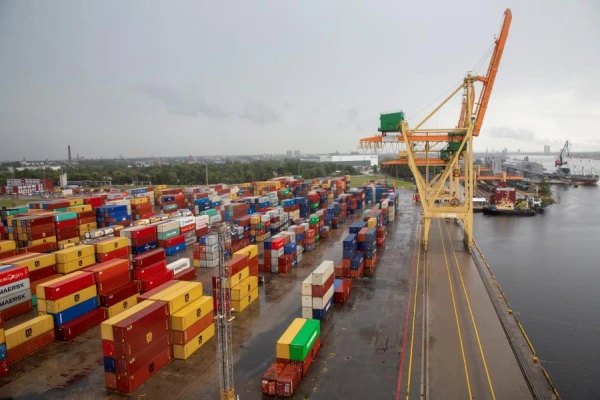
The authorities managed to reduce the number of citizens living below the poverty line.
In the 21st century, China is rightly called an economic superpower. The market reforms of recent decades have pulled the country out of a long-standing crisis, allowing it to become one of the main global suppliers of goods and attract billions in foreign investments. This phenomenon has been termed the Chinese economic miracle. However, even before this, there were bright and fascinating pages in China's history. We study how China's economy developed, what plunged it into crisis, and how the country reimagined its own state structure to lead society to prosperity and become a desirable partner for businesses around the world.
The Importance of the Silk Road
While Europe refers to China as the Middle Kingdom, in China itself, the state is often called the Central Kingdom. Since ancient times, the Chinese have considered themselves the center of the world: from the emperor to the common peasant, there has always been a belief that China is located in the middle of the universe. This is linked to the desire to maintain balance and engage in trade that is mutually beneficial for all parties: both traditional Confucianism and basic notions of justice embedded in society support this.
Respect for a good deal and understanding the advantages of exchanging experiences and goods have historically placed China at the forefront of technological progress. The history of foreign trade here began before our era: since ancient times, navigation was developed in the country, and sailors transported many goods abroad, the main one being silk. Historians attribute the emergence of the Silk Road — a vast network of land routes connecting Asia and Europe — to the beginning of the 2nd century BC.
The total length of the Silk Road's land routes exceeded 6,000 km. Traveling on camels overland and on ships over water, traders brought fabrics, spices, tea, pottery, paper, and precious stones from China. If we use modern country names, the main — southern — route of the Silk Road passed through Kyrgyzstan, Uzbekistan, Turkmenistan, Iran, Iraq, Syria, Lebanon, and Turkey, while the auxiliary — northern — branch covered Kazakhstan, Russia, Belarus, and further into Europe.
Extensive trade contacts not only stimulated China's economy but also allowed for the exchange of achievements with other states, building cultural communication. Much of this led to China becoming the epicenter of science and inventions, which included gunpowder, paper, and many other human discoveries.
It would be a mistake to think that throughout the years of the Silk Road's existence, China thrived. Internal conflicts and crises arose at different times; however, the country's leadership continued to bet on openness to world trade. Everything changed in the late Middle Ages when the Ming dynasty came to power.
At the beginning of the Ming dynasty's rule, China's foreign trade remained at a developed level. A dramatic change occurred in the 16th century when the country severed ties with Europe. Fearing possible colonization and wishing to preserve the conservative feudal structure, the authorities of the Central Kingdom adopted a policy of strict restrictions in interactions with foreigners. China isolated itself from foreign trade connections, which predictably led to stagnation. The opportunity to earn huge profits from selling silk, tea, and other goods was lost along with its leading position in the global economy.
An even greater weakening occurred in the 19th century after military conflicts known as the Opium Wars. Having accumulated centuries of technological lag, China could not compete with European goods, armies, and fleets. As a result, the signing of several unfavorable treaties led to China becoming a semi-colony of European countries, turning into a supplier of raw materials and a market for sales.
China's position on the world stage remained dependent in the 20th century. The country was agrarian, with most of its population living below the poverty line. Unsuccessful attempts to pull the state out of a prolonged crisis led to even more severe consequences. Thus, in 1959–1961, the people of China suffered from a mass famine that claimed, according to official data, about 15 million lives.
It is all the more surprising that just three decades later, the country managed to become one of the fastest-growing economies on the planet. A true breakthrough was facilitated by the effective abandonment of socialism and the 'open door' policy adopted in China in the late 1970s. During this period, the country reimagined its economy and the very structure of the state.
The End of the 20th Century: A Time of Miracles
The changes in China's economic life are associated with the name of Deng Xiaoping. Although he never held the position of head of state, he effectively led China from the late 1970s to the early 1990s. In 1978, Deng Xiaoping initiated a program of economic reforms aimed at establishing a new regime — 'socialism with Chinese characteristics,' or a socialist market economy.
One of the first and main changes was the establishment of a system of family contracts in agriculture.
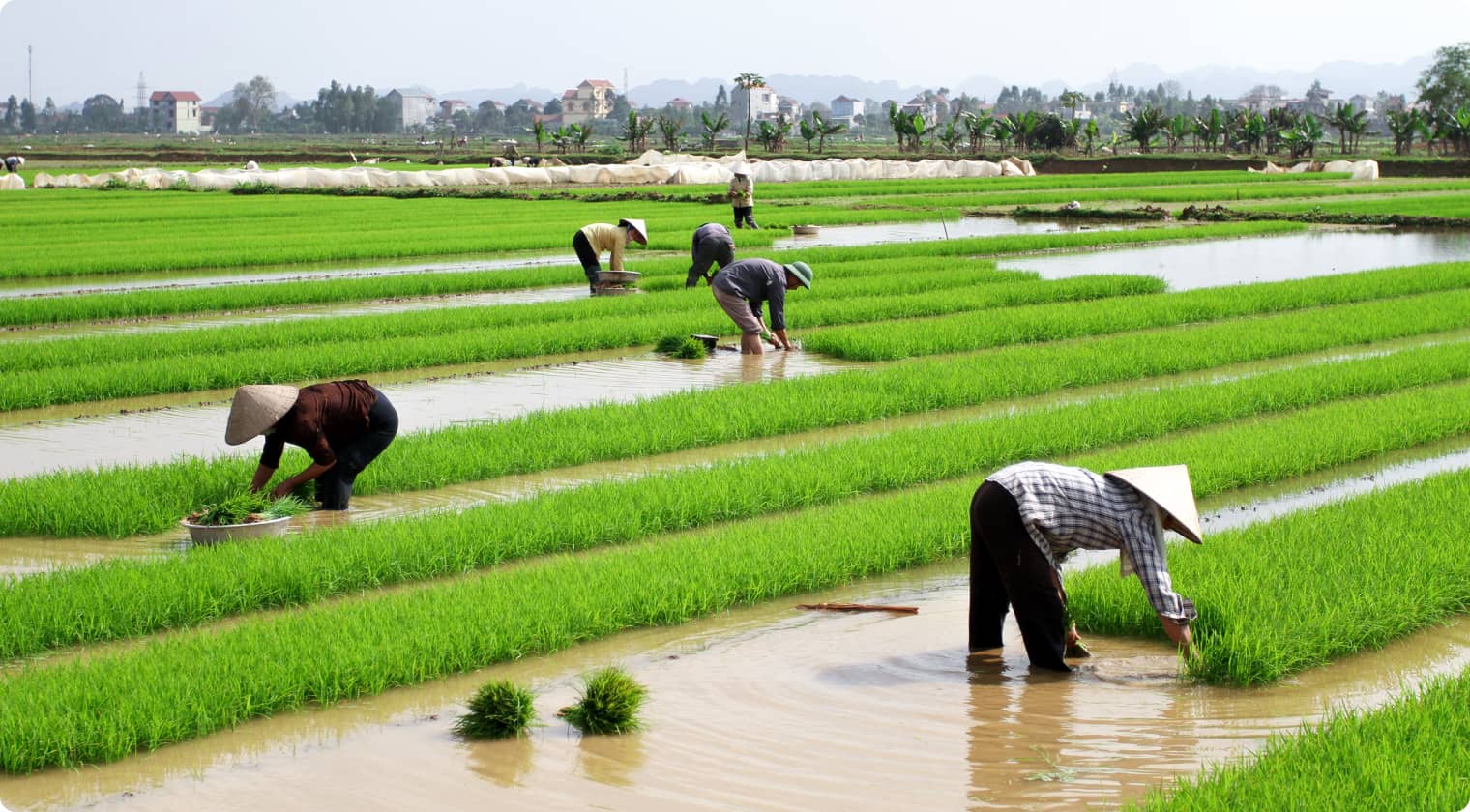
Peasants no longer worked for communes; instead, the land became the property of so-called 'collectives of rural residents.' This allowed residents more freedom and the opportunity to work for themselves while maintaining collective ownership as a declarative element of the socialist economy.
In foreign policy, Deng Xiaoping established the principle of 'open doors.' International trade, direct foreign investments from capitalist countries, and the creation of joint ventures with foreign partners were not only permitted but also encouraged by the Chinese leadership.
Foreign companies saw numerous advantages in working with the PRC due to low costs and cheap local labor. Essentially, China integrated into the global labor distribution system, taking on the role of the 'world's factory' for producing any goods — a position that no other country with a capitalist system wanted to be in during the 1970s. The results exceeded the boldest expectations.
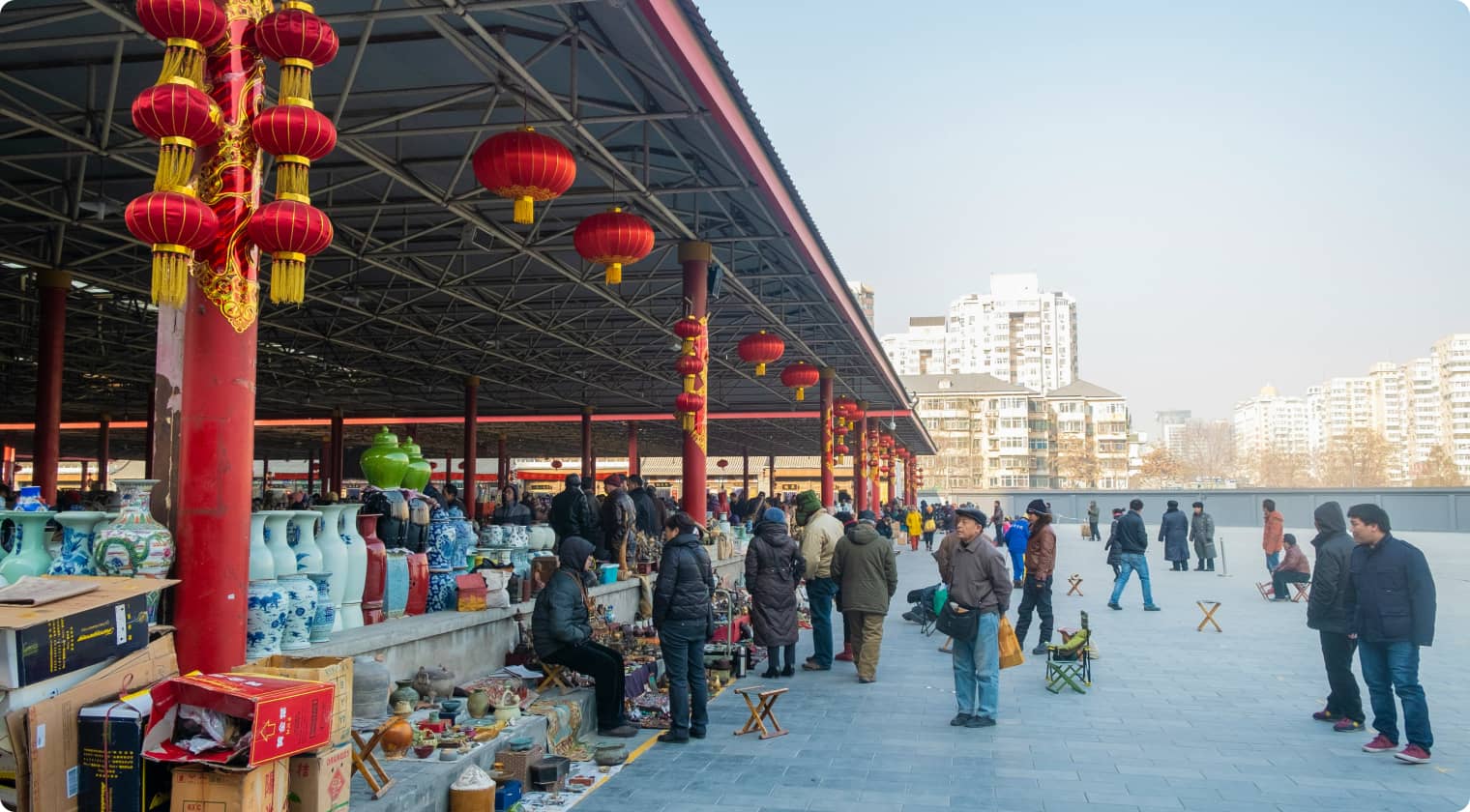
In 1984, China's economic growth reached an incredible 15.2%. By the late 1990s, the pace slowed but remained at an impressive 7–8% per year: this was due to the effect of a low base combined with a vast working-age population.
Additionally, China became one of the largest global exporters: instead of $580 million in exports in 1950, by 1978, the country exported goods worth $10 billion. New opportunities opened up in 2001 when China joined the World Trade Organization (WTO) on the most favorable terms for itself. Restrictions on trade with other countries were minimized, which was felt by the whole world when shelves were flooded with goods from China: by 2020, the volume of Chinese exports exceeded $2 trillion — 3,544 times more than in 1950.
Thanks to economic reforms, the Chinese authorities managed to reduce the number of citizens living below the poverty line and increase the number of residents with higher education. In 2023 alone, over 47.6 million students in China were pursuing higher education. The higher education coverage ratio in the country is 60.2%.
Why It Is Worth Collaborating with China
By the 2020s, the miracle that began in the late 1970s had come to fruition — China had gone through a period of frenzied growth. In the first half of 2024, its GDP increased by 5% and reached $8.6 trillion.
Currently, the country continues to strengthen its position as the 'factory of the world': China accounts for about 30% of total global industrial production. Technologies are also developing in China: here, industrial robots, electric cars, complex measuring devices, solar panels, artificial intelligence devices, and even spacecraft are designed and assembled independently. Moreover, entrepreneurs are interested not only in exports from China but also in imports. There is a high demand in the country for food products, chemical products, and materials for furniture production.
<iframe width="560" height="315" src="https://www.youtube.com/embed/A9f4a62TtMA?si=I62Xt44pG2D9eZ94" title="YouTube video player" frameborder="0" allow="accelerometer; autoplay; clipboard-write; encrypted-media; gyroscope; picture-in-picture; web-share" referrerpolicy="strict-origin-when-cross-origin" allowfullscreen></iframe>