New achievements in biology must pass the market test.
Experts from the Spanish Agency for Food Safety and Nutrition (AESAN) stated that the maximum shelf life of frozen meat depends on its type. They provided exact data to the publication Vanitatis.
According to the experts, any meat should be frozen immediately after purchase. The storage temperature should be at minus 18°C or lower. In this case, beef, lamb, and goat meat can remain unspoiled for up to one year, the specialists explained.
For pork, they said, the maximum shelf life is only six months. As for poultry, it depends on whether the carcass was processed or left whole. In the first case, the shelf life is nine months, while in the second case, it is three months longer.
The report from the European Academies Science Advisory Council (EASAC) warns that reducing meat consumption is key to combating the climate crisis, improving public health, and ensuring future food security.
Experts note that future generations of Europeans are likely to grow up with less meat in their diet, which they consider "necessary and beneficial," given the significant impact of livestock farming on the environment. They point out that this activity accounts for more than half of the carbon footprint, while food overall contributes nearly half of the environmental impact in Europe.
The report analyzes options with great potential to replace traditional meat. These include plant proteins, insects, and microbial fermentation, which can provide quality protein with minimal environmental impact, provided sustainable production practices are used.
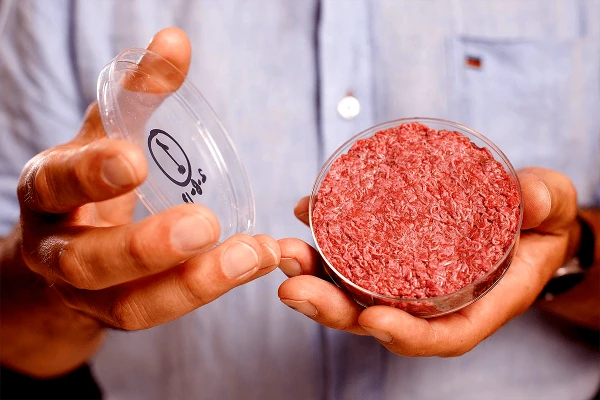
Cultivated meat may also become a viable solution if renewable energy is utilized. However, researchers warn that some processed plant products contain excessive amounts of salt or saturated fats, and further studies are needed on the long-term effects of new methods such as meat cultivation or precision fermentation.
The Issue of Public Trust
In addition to technology, the real issue lies in social acceptance. Taste, price, naturalness of products, and clear labeling play a key role in gaining consumer trust, especially among young and urban individuals concerned about animal welfare and climate change.
"Trust is easily lost if products are overly marketed or have misleading labeling," warns Professor Hanna Tuomisto, co-author of the report. Therefore, experts call for complete transparency regarding not only the composition but also their environmental impact and production processes.
Compared to "classical" methods, cultivated meat will have several advantages. These include a guaranteed absence of pathogenic microorganisms, as well as likely reduced levels of hormonal substances that some farms actively use in raising livestock. Some proponents of this technology also predict that synthetic meat will have advantages in terms of reducing the impact of harmful chemicals, such as pesticides and fungicides, on the environment and human health.
<iframe width="560" height="315" src="https://www.youtube.com/embed/0yktI7op_FE?si=2IMGGVW3IOGraCSb" title="YouTube video player" frameborder="0" allow="accelerometer; autoplay; clipboard-write; encrypted-media; gyroscope; picture-in-picture; web-share" referrerpolicy="strict-origin-when-cross-origin" allowfullscreen></iframe>