
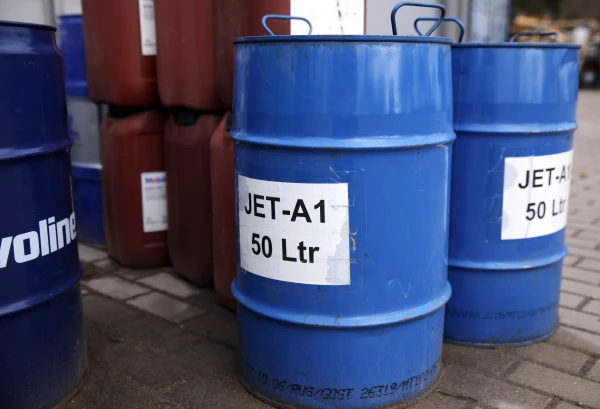
Daily news brings dramatic images of fires at "black gold" storage bases in Ukraine and Russia. Meanwhile, in our republic, the "Procedure for the Creation and Maintenance of State Security Reserves of Petroleum Products" has been updated.
Based on the 2009 Directive
EU member states faced a directive from the European Council more than 16 years ago (on September 14, 2009), which obliged them to "ensure state security reserves of a certain volume." Latvia would thus have the opportunity, in the event of an energy crisis, to supply the national economy while the International Energy Agency "would activate coordinated emergency response measures."
On one hand, the creation and maintenance of petroleum product reserves is an "imperative obligation of a European Union member state," on the other hand, each country must address it within its own competence.
If so, then why not profit from fear? Therefore, in Latvia, "a reserve management model was in place... which provided for the acquisition of a service." And the payment for it was "significantly increased each year."
Finally, the authorities grew tired of this, and a model was adopted whereby Latvia is to transition to 100% acquisition of "security reserves" in state ownership by December 31, 2028, with the state's share increasing by 15% each year.
Thus, the transfer of reserves from private entities to the state will allow for a reduction in costs over a 10-year period – from 1.636 billion to 759 million euros.
Since the storage service is not market-based, the state also took on the function of pricing – and with a reduction in tariffs. If, according to Cabinet of Ministers Decision No. 313 of May 27, 2025, the payment rate for 1 ton was 91.26 euros, it has now been significantly reduced by exactly 10 euros.
Nevertheless, ultimately, the formation of the state reserve is paid for out of the consumer's pocket. Even a rate of 81.26 euros per ton means an increase in the price of each liter of diesel fuel purchased in Latvia by 6.9 cents, and for gasoline – by 6.1 cents. All without accounting for taxes.
Naturally, information about the specific location of these reserves is classified. This is to ensure that "in light of current changes in the international security environment and taking into account the geographical position of Latvia, significant interests are protected... in the event of an energy crisis in fuel supply."
How Not to Overpay
Regarding petroleum products purchased under this scheme, the Law on Procurement in the Field of Defense and Security applies, which provides for the exclusive nature of work under "delegated tasks of state administration."
"Additionally, it is noted – we read in the annotation to the government decision – that petroleum products are goods subject to sharp price fluctuations. Thus, to prevent damage from price fluctuations, there is a likelihood that the risk of price fluctuation is factored into the bid price and as a result of the public procurement, a price higher than the market price is offered..."
This "creates a reasonable likelihood that the state will overpay for the creation of guarantee reserves," as stated in the document prepared by Barbara Sunīne, a senior expert in the Crisis Management Department of the Ministry of Economics.
However, fuel consumers will have to wait just three more years, as once the required number of tons of fuel is accumulated (how much – this information is also classified), spending will only be for replenishing reserves. That is, prices at gas stations may decrease.
Distrust in Biomass
Interestingly, when describing the necessary characteristics in the document "Procedure for the Creation and Maintenance of State Security Reserves of Petroleum Products," it is emphasized:
"Security reserves may be stored without the addition of liquid or gaseous fuel used in transport, obtained from biomass, which is a biologically degradable fraction of products, waste, and residues from agriculture, forestry, and related industries (including substances of plant and animal origin), as well as biologically degradable fractions of industrial and household waste (hereinafter – biological fuel) and other substances that are not hydrocarbons and which are added to or moved to any product to change its properties (hereinafter – additives)."
That is, the state is admitting that the bioproduct imposed on consumers cannot be stored due to its characteristics. Security reserves can only be created from:
- gasoline;
- diesel fuel, kerosene, and kerosene-type jet fuel;
- fuel oil;
- liquefied petroleum gas;
- crude oil and petroleum by-products.
However, according to Brussels regulations, the last category can only be stored by those EU member states "on the territory of which there is an oil refinery." In the Baltics, this is only Lithuania, which has the Mažeikiai Oil Refinery, now 100% owned by the Polish company Orlen. By the way, as stated by the company's head Daniel Obajtek in an interview with the Financial Times, alternative oil to Russian oil cost the enterprise nearly 30 dollars more per barrel.
Only in Flight Do Airplanes Live
As for jet fuel reserves, "the aviation industry entrepreneur creates security reserves for at least a 90-day period," based on the previous year's consumption. Moreover, not only for their own needs but also for refueling "international carriers."
In this regard, it is worth citing the example of Ukraine, when all foreign companies ceased flights to the country on the eve of the anticipated invasion by the Russian Federation. For almost 4 years of large-scale hostilities, there has been a no-fly zone for civil aviation over the country.
Therefore, it seems quite strange to assume that a situation could arise around Latvia where fuel supplies would be halted – yet aviation flights would, magically, continue to operate. All this can only be explained by the fact that we are dealing with a regulation that euro-bureaucrats concocted in the early 2000s when they were only dealing with hypothetical threats.






Leave a comment