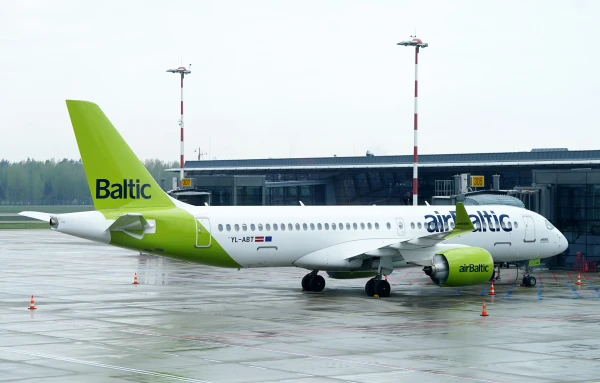
Considering the latest report from the rating agency "Fitch" on "airBaltic", in which the airline's rating was downgraded, the main problem for the company has been and remains the management of free cash flow, believes Julia Bystrova, a partner at the investment company "Alphinox", writes Diena.
Although the company has improved its profitability over the nine months of this year (last year it operated at a loss of €48.5 million), the positive contribution to profit came not from operational activities, but from favorable currency exchange rate dynamics. The company's operating profitability remains low, and additional pressure comes from very expensive debt servicing. Essentially, there are no significant changes in the company's financial position - the financial statements currently reflect the consequences of previous decisions and actions related to fleet expansion and the issuance of expensive bonds.
"Fitch" downgraded the company's credit rating due to a reduction in free cash flow (for example, the absolute liquidity ratio fell from 9.4% at the beginning of the year to 2.5% at the end of September). The cash deficit continues to grow due to high interest payments on bonds and large leasing payments.
The chairman of the board of "airBaltic", Andrey Martynov, also does not deny that the signals from "Fitch" deserve attention. He states that fluctuations and the level of risk in the aviation industry as a whole fully apply to "airBaltic". Moreover, the geopolitical peculiarities of our region further exacerbate this influence.
"The aviation industry as a whole is currently facing increasingly challenging conditions. Across Europe, manufacturers are unable to supply engines and spare parts quickly enough, which often requires aircraft to undergo longer maintenance, thereby increasing costs. These are common industry problems, not just specific to "airBaltic". However, current forecasts indicate that the situation will gradually normalize by 2026," says Martynov.
He also points to several key aspects of the "Fitch" assessment. Firstly, the stable and leading position of "airBaltic" in the Baltic States market. The airline is a leader in the Baltic States, and its role in developing Riga as an aviation hub is significant. This factor is assessed by "Fitch" as a long-term advantage. Secondly, external conditions and cost pressures. Issues with engine availability and supply chain disruptions are risks that indirectly determine capital needs not only for "airBaltic", but also for a significant part of the European aviation industry. Thirdly, there is a clear opinion in the industry that the impact of these technical problems and supply issues will be gradual and temporary.