
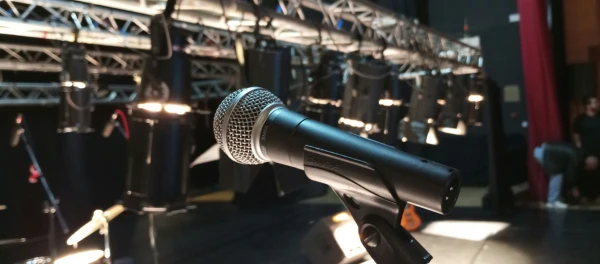
Radio microphones, in-ear monitors, and other devices used for program creation and special events (PMSE) will be able to be used without individual permits for frequency use, reports LETA citing Elektroniskie sakari.
As of December 5, 2025, amendments to the National Frequency Allocation Plan (NRFP) have come into effect, which change the procedure for using radio frequencies and simplify everyday processes for users of various radio devices.
The aim of the amendments is to increase the efficiency of frequency use, adapt Latvian regulation to the latest European standards, and reduce administrative burdens. The amendments were developed based on a technical assessment and proposals prepared by Elektroniskie sakari — the state operator managing the radio frequency spectrum and numbering in Latvia.
As noted by Elektroniskie sakari, PMSE devices will now be usable based on shared frequency allocation, which means a simpler procedure for their operation and no additional costs associated with the consideration of applications for individual permits and ensuring electromagnetic compatibility (EMC).
Exceptions are cases where PMSE devices operate in the frequency range of 1350 to 1400 MHz — individual permits will still be required here.
Mobile and portable radio devices used in private terrestrial mobile communication networks are also exempt from individual permits. Their use will only require a permit for the use of the terrestrial mobile radio network in the future.
Elektroniskie sakari emphasizes that the changes mean fewer formalities and simplification of everyday work for users of walkie-talkies, as devices will operate based on shared frequency allocation.
Additionally, the company continues to provide technical oversight of radio channels, including electromagnetic compatibility, spectrum management, and interference elimination — regardless of the number of devices operating on a specific channel. For this reason, the monthly fee for EMC remains unchanged, as it relates to spectrum management rather than the issuance of individual permits.
The amendments also include the adaptation of a number of decisions from the European Commission (EC), the European Conference of Postal and Telecommunications Administrations (CEPT), and the European Consumer Protection Center (ECC Latvia), which establish updated technical requirements for various groups of radio devices. Among them are changes in the regulation of ultra-wideband technologies, new conditions for wireless access systems, updated technical standards for short-range devices, as well as clarified rules for terrestrial satellite communication stations and the inclusion of the results of the World Radiocommunication Conference 2023 in Latvian regulation.
To ensure access to the National Frequency Allocation Plan of Latvia, Elektroniskie sakari has developed a digital explorer of the plan. It provides users of radio communication access to the distribution of radio frequencies by services, systems, and relevant regulations in one place.
The explorer already contains information included in the NRFP, including the distribution of radio frequencies among radio communication services and systems, notes on international radio regulations, radio communication interfaces, and links to decisions from the EC and CEPT.
Elektroniskie sakari is a state capital company that manages limited state resources — the radio frequency spectrum and numbering. Spectrum management includes planning and monitoring of the radio frequency spectrum.














Leave a comment