
Unresolved issues stand in the way of the transatlantic agreement.
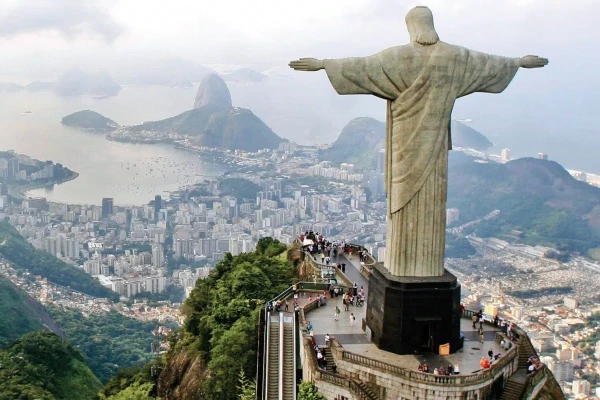
Brazilian President Luiz Inácio Lula da Silva, who heads the rotating presidency of MERCOSUR, has for the first time named a specific date for a possible signing of a free trade agreement with the European Union — December 20, 2025. However, so far it seems more like another attempt to revive a process that has been dragging on for over a quarter of a century and has repeatedly stalled.
According to Lula, this will be a "moment of special significance," creating "the largest free trade area in the world" covering 722 million people and a combined GDP of $22 trillion. However, it currently appears not to be a breakthrough, but merely another attempt to revive a process that has been ongoing for over 25 years and has repeatedly faltered.
Negotiations between MERCOSUR (Brazil, Argentina, Paraguay, Uruguay, and associated members) and the EU began back in the late 1990s. In 2019, it seemed that a political agreement had been reached, but the COVID-19 pandemic, changes in governments, and growing disagreements delayed its finalization. Since then, deadlines have been pushed back several times. In 2023, the text was almost ready, and in 2024, the legal review was completed, but resistance in Europe again blocked progress. Lula, who has made the deal a priority of his foreign policy, is trying to use Brazil's presidency in MERCOSUR to give it momentum, but as the president himself noted, even after signing, "there is much work to be done to move from text to real results."
Signing on December 20, if it occurs, will be more of a consolidation of unity and recognition of the ambitions of the parties than a real final act of the deal. The document includes two key elements: a trade component (reducing tariffs on agricultural products from MERCOSUR to the EU and industrial goods in the opposite direction) and a comprehensive agreement on social, political, and institutional issues.
The decision to create a free trade area can take effect after approval by the European Parliament and a majority of EU countries, but full implementation depends on ratification by all 27 EU parliaments and the national parliaments of MERCOSUR. And this is the main problem. France, the largest beef producer in the EU, has called the deal "unacceptable" due to weak environmental standards in South American agriculture and the risk of dumping cheap products. More than 40 NGOs, including farmers' associations, are demanding "significant changes" to the text, which they believe has not evolved since the agreement in 2024. In MERCOSUR, on the contrary, disputes revolve around guarantees of access to the European market and concessions on industrial quotas — especially in Argentina and Paraguay, where there are fears of losing sovereignty.
As a result, even if the leaders hold a "beautiful ceremony" in Brasília, the real battle will unfold in the parliaments. There, the text could be rewritten to suit local interests and delay the process for years or even block it altogether. This agreement is somewhat more than just an FTA (free trade agreement); it is a ground-breaking partnership, as the participants of the deal call it, focusing on sustainable development. It obliges the parties to comply with the Paris Agreement on climate change, combat deforestation (from 2025, only deforestation-free products, such as soy, beef, and palm oil that do not lead to deforestation, can be exported), and protect workers' rights.
The deal, if it does happen, will create one of the largest free trade areas in the world, bringing together two giant regulators — MERCOSUR as a key supplier of raw materials and the EU as a leader in quality and environmental standards.
The EU-MERCOSUR agreement unites two markets with a total population of nearly 745 million people — about 9.5% of the world's population. The combined nominal GDP of the area will exceed $22 trillion (approximately $19 trillion comes from the EU and another $3 trillion from MERCOSUR countries). By purchasing power parity, this figure approaches $28–29 trillion, making the bloc the second largest in the world after USMCA (United States, Mexico, Canada).
In 2024, bilateral trade already amounted to $135–138 billion — Europeans exported $67 billion worth of goods to the region and imported $71 billion from South America. After the full implementation of the agreement, trade is expected to grow by 35–70% by 2035, depending on the political situation. European companies will save more than €4 billion annually just on tariffs, marking the largest reduction in the history of EU trade deals. MERCOSUR exporters, in turn, will save between $3.8 billion and $4.2 billion a year.
By 2032, the additional GDP growth for the EU is estimated at €12–15 billion, while for MERCOSUR countries, it is $11.4 billion. For the most sensitive products, quotas are planned: 99,000 tons of beef per year, 180,000 tons of poultry, 25,000 tons of pork, 650,000 tons of ethanol, and 30,000 tons of rice. Brazil will not receive new export quotas for sugar and will continue to operate within the volumes already established by WTO rules.
Moreover, the EU remains the largest foreign investor in the region: the accumulated volume of direct investments reached €390 billion by the end of 2023. Currently, for MERCOSUR, the EU is the second most important trading partner after China (16.8% of foreign trade turnover), while for the EU, MERCOSUR ranks tenth, which is also significant (2.2%).
Overall, this is a win-win situation. But success depends on ratification and whether it will happen. Agricultural issues: the main and constant reason for the slowdown.
European farmers fear an influx of cheap beef, poultry, sugar, and ethanol from Brazil and Argentina. French, Irish, Polish, and Austrian producers believe this will destroy their markets, even with quotas.
France, to avoid new protests from farmers, has even stated that it will veto the deal if protective mechanisms are not strengthened. National farmers' unions (FNSEA in France, IFA in Ireland, Copa-Cogeca at the EU level) have direct influence on governments and the European Parliament. Without their at least neutral position, ratification in the EU Council and national parliaments is simply impossible.
Environmental Issues
Since 2019, the EU has tightly linked trade agreements to climate goals. In the case of MERCOSUR countries, they are required to:
-
legally enshrine a ban on deforestation in the production of export products (EUDR);
-
control pesticides that are banned in the EU but allowed in Brazil;
-
have the ability to impose sanctions for non-compliance with the Paris Agreement.
Brazil (especially under Bolsonaro from 2019 to 2022 and partially under Lula) views these requirements as interference in sovereignty and unilateral: "the additional tool presented by the EU is unacceptable. Strategic partners do not negotiate based on distrust and threats of sanctions... We have no interest in agreements that condemn us to an eternal role as exporters of raw materials."
In 2023–2024, it was indeed environmental concerns that caused the agreement not to be signed. The European Commission insisted on a separate "additional tool" for forest control, while Brazil refused to sign it in the proposed form.
Internal Political Issues in MERCOSUR
Argentina under Cristina Kirchner (2003–2015) and Alberto Fernández (2019–2023) blocked the opening of the country's internal market to EU goods under the pretext of protecting local industry (primarily automotive, textiles, and metallurgy). Uruguay has also repeatedly threatened to leave MERCOSUR and sign a deal with the EU alone (2022–2024), which paralyzed joint negotiations for a time. Paraguay and Bolivia often take an intermediate position. The problem is that without the unity of the four countries, the text cannot be legally adopted; in simpler terms, one "no" is enough.
As a result, while there is a powerful farming lobby in Europe, the EU's climate red lines, and MERCOSUR's chronic inability to negotiate, the agreement is doomed to remain in limbo regardless of how many times leaders announce another "historic breakthrough."







Leave a comment