
"Fattened" cars will hit the wallet.
Critics point out that cars are getting "fatter." In the UK and across Europe, new cars are becoming longer, wider, and heavier. Consumers clearly like this. Larger vehicles are seen as practical, safe, and stylish, and their sales are rising. So why have some cities decided to limit their use — and are they right to do so?
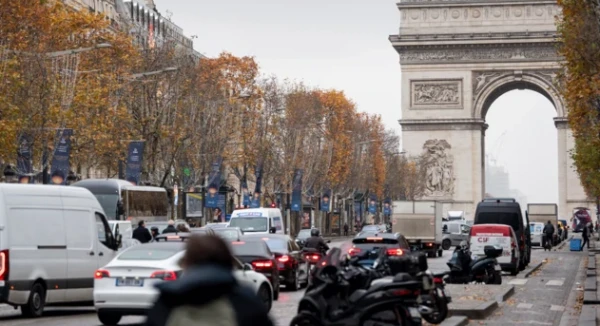
Paris is famous for many things — architectural landmarks like the Eiffel Tower and the Arc de Triomphe, wide avenues and boulevards, museums and art galleries, exquisite cuisine. And nightmarish traffic.
For the past 20 years, city authorities have been trying to solve this problem by introducing low-emission and restricted traffic zones, attempting to shift residents to public transport and bicycles, and recently — limiting the use of larger vehicles.
In October 2024, after a public vote, the parking fee on the streets for "heavy" vehicles was tripled: from 6 to 18 euros per hour in the city center and from 75 to 225 euros for six hours.
"The larger the car, the more it pollutes the environment," said Paris Mayor Anne Hidalgo before the vote. According to her, the new restrictions will "accelerate the ecological transition in which we are fighting against air pollution."
A few months later, the city hall announced that the number of very heavy vehicles parking on the streets had decreased by two-thirds. Other cities, including those in the UK, are taking note. Cardiff Council has already decided to raise the cost of parking permits for vehicles weighing over 2400 kg (about two Ford Fiestas).
The city council, controlled by Labour, stated: "These heavier vehicles tend to produce more emissions, cause greater road wear, and create significantly higher risks in the event of a traffic accident."
Initially, the higher fees will only affect a small number of models, but Cardiff plans to gradually lower the "weight category." Authorities in other cities are considering similar measures. However, many owners argue that they need larger vehicles.
Matt Mansell from Guildford, a father of three, runs a tech company and is also involved in property development. He says the Land Rover Defender 110 is essential for transporting clients and his children.
"I need enough space to fit the kids with all their gear, or to shove a door or a one-meter-long pipe in it," he says. "It’s largely a utilitarian vehicle, but it looks presentable."
Cars in the UK and Europe have been getting larger over the years. According to Thatcham Research, an organization that assesses new cars for the insurance industry, the average width of new models sold in the country has increased from 182 cm to 187.5 cm since 2018.
At the same time, the average weight has risen from 1365 kg to 1592 kg over the same period.
This trend did not start yesterday. According to data collected by the International Council on Clean Transportation, from 2001 to 2020, the average width of cars in European markets increased by nearly 10 cm. The length increased by more than 19 cm.
Some critics view this as a worrying trend, as there simply isn’t enough space on the crowded, often narrow roads of the UK and in city centers.
The standard minimum width for on-street parking spaces in many places is 1.8 m. However, data published by T&E, a transport environmental advocacy group, shows that by the first half of 2023, more than half of the 100 best-selling cars in the UK slightly exceeded this size.
Additionally, the popularity of crossovers, or "soft" SUVs — vehicles that resemble true frame SUVs, although in many cases this resemblance is cosmetic, and they lack true off-road capabilities such as full all-wheel drive and locking differentials — is growing.
The vast majority of them never leave the pavement, which is why they have earned the unflattering nickname "Chelsea tractor" — named after a wealthy area in central London.















Leave a comment