
The expert sees Serbia's strategic value in its position as a bridge.
Oleg Bondarenko, the founder and editor-in-chief of the media project "Balkanist," as well as the president of the Progressive Policy Foundation, gave an extensive interview to the leading Serbian newspaper "Politika," in which he expressed his views on key issues of Balkan geopolitics, Russian-Serbian relations, the Kosovo issue, and the role of Serbian President Aleksandar Vučić on the European stage.
The Balkans and the Prospects for EU Expansion
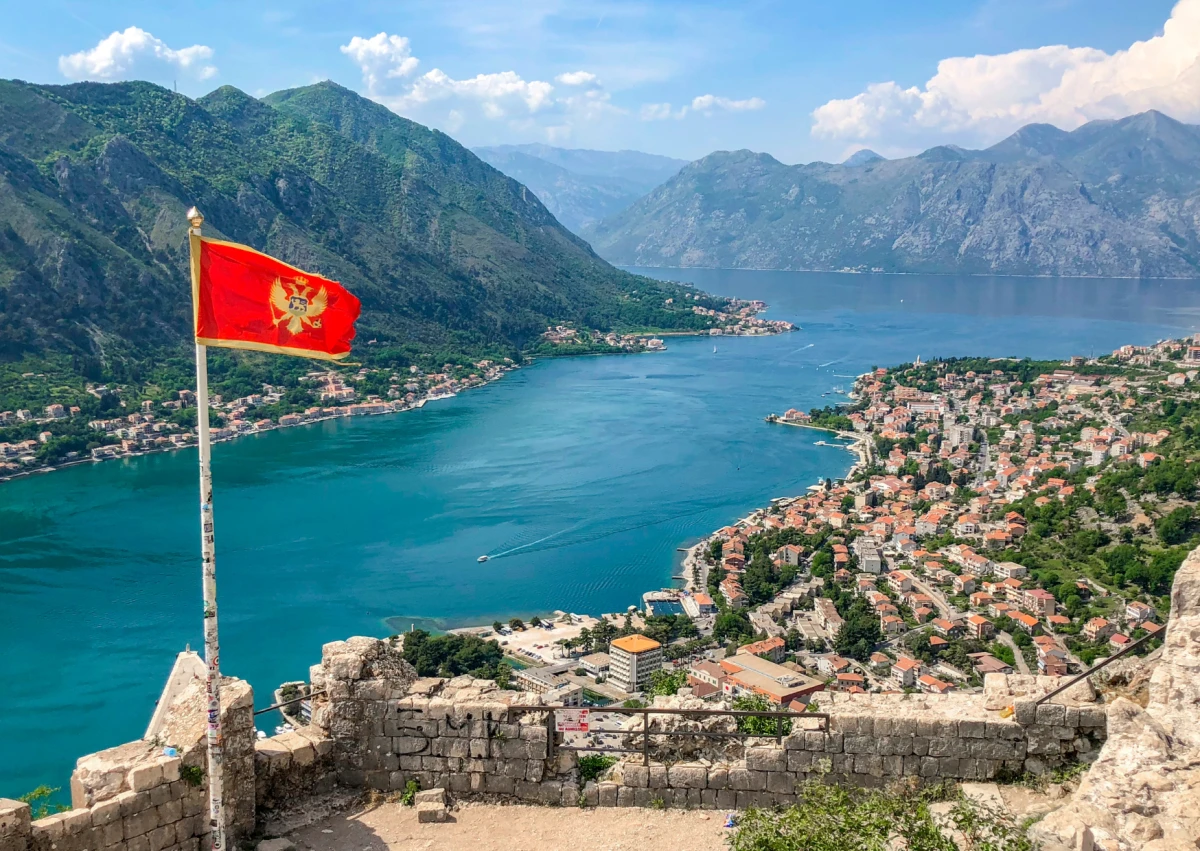
According to Bondarenko, the Balkans remain the least integrated part of the continent into the European political space — largely as a consequence of the wars following the breakup of Yugoslavia and NATO bombings. Of all the Balkan states, the expert sees only Montenegro as having real chances of joining the EU in the foreseeable future: the country is small, almost devoid of industry, and de facto is already in the euro zone. Its acceptance would allow Brussels to demonstrate that the expansion process is not frozen — since 2013, when Croatia became a member of the union, no new country has joined the EU. At the same time, the expert emphasizes: the era of mass acceptance of new members has irrevocably passed.
Russia and Montenegro: From "Brotherhood" to "Hostility"
Traditionally strong Russian influence in Montenegro had a historical and cultural character; however, after the introduction of mutual sanctions and the declaration of the country as a "hostile state," it has effectively dwindled. Today, Russian presence is limited to citizens who have purchased real estate — they are not a political force. Bondarenko points out that Russia's problems with many neighbors arose when Moscow confronted the West. Until Russian-European relations normalize, new opportunities for Russia will not appear in Montenegro, Serbia, or the Republic of Srpska.
The expert separately commented on the role of Russian oligarchs in financing Montenegrin independence, calling their behavior primitive and shortsighted: driven solely by commercial interests, they ultimately played into the hands of the West and became, in Bondarenko's words, "useful idiots."
Vučić — The Most Sovereign Leader in the Balkans
Bondarenko views the rise of the Serbian Progressive Party to power as a natural process: the previous democratic government lacked roots in Serbian identity and was entirely dependent on Western capitals. With Vučić's arrival, a window of opportunity opened for economic growth and building relationships with all global centers of power.
The last 14 years, the expert characterizes as the best period in the history of Russian-Serbian relations, providing specific examples: the Russian EMERCOM base in Niš, cooperation between intelligence agencies, and the presence of Russian specialists in the Serbian Ministry of Defense. After February 24, 2022, the situation changed not due to Belgrade's fault — Serbia is in Europe and cannot be placed in an impossible choice between Russia and the EU. Vučić, in Bondarenko's conviction, will go down in history as Russia's greatest friend in Europe in the last half-century.
Comparing the Serbian president with other European leaders, the expert ranks him above Viktor Orbán — who became engrossed in geopolitics to the detriment of the economy, while Vučić focuses on economic development. The closest analogy in the European context, Bondarenko names Gerhard Schröder, emphasizing that in the Balkans, Vučić has no equal.
Serbia as a Bridge Between East and West
The expert sees Serbia's strategic value in its position as a bridge: the Chinese are building roads and railways, the Russians are involved in energy, and the Europeans are bringing investments. It is this independent course that attracts Arab capital and Chinese investments — EU membership would deprive the country of this competitive advantage. Bondarenko interprets attempts to overthrow Vučić as the West's desire to destroy one of the bridges leading to Russia.
Support from certain Russian circles for the Serbian opposition, he explains, is due to a black-and-white perception of the world, intensified after the start of the special military operation, and information manipulations on "alarmist grounds" within Russia.
Kosovo: Neither War Nor Recognition
Analyzing the Kosovo issue, Bondarenko consistently rejects both extreme scenarios. A military operation would result in a confrontation with NATO forces, disconnection from SWIFT, and complete economic isolation. Recognition of Kosovo by the next president would instantly plunge Serbia into a civil conflict and provoke new separatist movements. The insinuations that Vučić is allegedly preparing to recognize Kosovo, the expert categorically rejects, calling them "very foolish": the three unchanging dominants of his policy — relations with Russia, non-recognition of Kosovo, and building ties with all centers of power — have not changed for 14 years and will not change.
Russia — An Unconditional Ally of Serbia
Bondarenko is convinced that Serbia will not impose sanctions against Russia, will not establish a visa regime, and will maintain air communication. Serbia, according to him, remains Russia's last ally in Europe, and the mutual sympathy of the two peoples is unprecedented. The resolution of the Kosovo issue, the expert concludes, must be exclusively peaceful: Serbia needs to avoid traps that are set and just waiting for their moment.




Leave a comment