Finland conducted tests of a new underwater infrastructure monitoring system that can detect potential threats to marine cables before they are damaged. The development emerged against the backdrop of increasing incidents in the Baltic Sea.
Finnish specialists tested a new technology for monitoring underwater cables in the Baltic Sea, which allows for the detection of potentially hazardous activity on the seabed in real time.
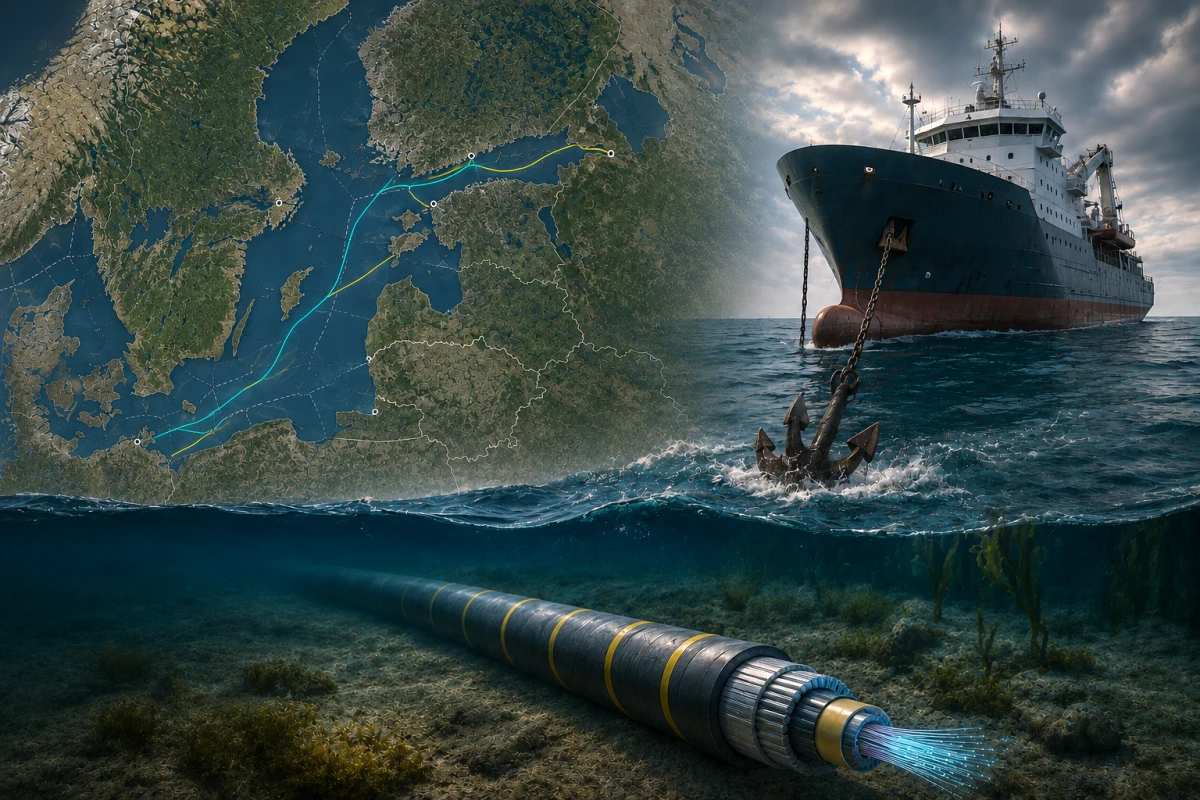
The system is based on Distributed Acoustic Sensing (DAS) technology. It uses existing fiber optic cables as sensors that capture vibrations and other changes in the environment.
The technology analyzes the reflected light signal within the cable and is capable of detecting abnormal activity. For example, the system can register the approach of a vessel dragging an anchor along the seabed — such situations have repeatedly led to damage to underwater infrastructure in the Baltic Sea in recent years.
Several organizations participated in the tests, including the Finnish Border Guard, the Naval Academy, operators of energy and telecommunications networks, as well as scientific institutions.
According to the telecommunications company Elisa, an automated alert system is planned to be created based on the successfully tested technology. It will warn government agencies and owners of critical infrastructure about potential threats even before an accident occurs.
It is important to note that the new system is not designed to locate already damaged cables. Its task is to identify risky actions in advance and prevent incidents before communication or power supply is disrupted.
The development emerged against the backdrop of a series of incidents in the Gulf of Finland and the Baltic Sea. In recent years, there have been repeated reports of damage to telecommunications and energy cables.
One of the most notable cases was the damage in late 2023 to the communication cable between Finland and Estonia. On Friday, the Finnish police reported the completion of the preliminary investigation into this case. Four individuals are under suspicion, and the materials have already been forwarded to the prosecutor's office.
Another high-profile incident was the damage to the EstLink 2 power cable between Finland and Estonia. The investigation linked the incident to the oil tanker Eagle S, which, according to law enforcement, dragged its anchor along the seabed for several kilometers.
The increase in such incidents is prompting countries in the region to seek new ways to protect critical infrastructure. The system tested in Finland could become one of the tools for such preventive monitoring.