The icy expanses of the Arctic may become the hottest spot.
The strategic narrowness in the Arctic Ocean risks becoming a new hotspot for global confrontation, writes the Independent. The United Kingdom fears that if Russia establishes control over the Bear Corridor, its Northern Fleet will gain free access to the Atlantic.
Tore Sandvik expressed concern in an interview with The Times that Russia may attempt to increase its presence in the Bear Corridor, which refers to the maritime passage 400 miles wide between the mainland of Norway and the Svalbard archipelago. This would give Moscow the opportunity to access the Atlantic.
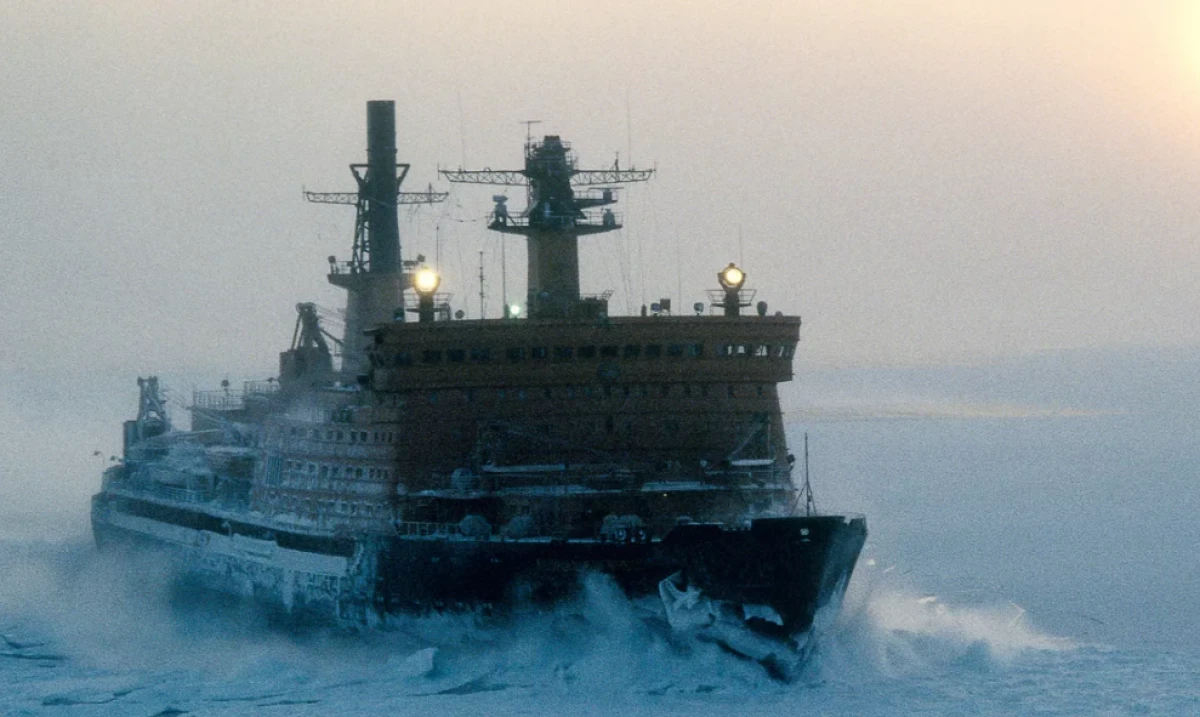
The powerful Northern Fleet accounts for about two-thirds of all nuclear strike capabilities of the Navy. It has greatly benefited from significant investments and is currently expanding its operational area around NATO waters in the north.
"For Britain, this is a matter of national defense," Sandvik warned. "If Putin establishes his control over the northern part of Scandinavia, if he can control the Bear Corridor, it will be a direct threat to the United Kingdom."
Sandvik added, "We see what weapon systems Russia is developing, and we know that if it manages to take control of the Bear Passage, it will have the ability to use hypersonic missiles against NATO... against London, against Norway, against Denmark."
According to the minister, this narrowness, which allows ships to pass from the Barents Sea to the Norwegian Sea, is of strategic importance, just like the Faroe-Icelandic gap located to the west, which separates the Norwegian Sea from the Atlantic. Norway has full sovereignty over Svalbard, which allows it to influence the Bear Passage. However, it is not allowed to militarily fortify this territory or establish naval bases there under the terms of the Svalbard Treaty signed in 1920. As a result, it has no permanent military presence in the archipelago.
Bruno Tertrais, deputy director of the French analytical center FRS, recently wrote that "direct and open military actions by Russia against Svalbard are unlikely; however, an increase in hybrid warfare against the archipelago is possible and even probable."
Norwegian Prime Minister Jonas Gahr Støre said that Oslo will begin negotiations to develop cooperation related to French activities in the field of nuclear deterrence, as Europe is increasingly concerned about the United States' unwillingness to ensure the security of this region.
Recently, Støre traveled to Paris to meet with French President Emmanuel Macron and to sign a new military agreement with France, which involves Norway joining the initiative on nuclear weapons proposed by Paris.
"We are doing this in light of the security situation in Europe, looking at the large-scale rearmament of Russia, which includes nuclear weapons, and how it is conducting a full-scale military operation against a European country," Støre told the Norwegian news agency NTB.
Russia has the largest nuclear arsenal in the world, with about 4,400 deployed and stockpiled warheads, while the United States has 3,700 such warheads, according to the Federation of American Scientists.
Last month, Moscow conducted its largest nuclear exercises in several years, involving 64,000 personnel. This was done to increase the readiness of the troops "for the preparation and use of nuclear weapons in the event of aggression."