The appearance of Ukrainian drones in the airspace of Latvia, Lithuania, and Estonia raises more and more questions. Experts believe that the reasons may be both Russian electronic warfare means and the technical features of the drones themselves, but there is currently no definitive evidence for any version.
BBC examines possible versions.
Regular incursions of Ukrainian drones into Estonia, Latvia, and Lithuania exacerbate the already tense relations these countries have with Russia. Moscow accuses the Baltic states of providing Ukraine with an air corridor for strikes on Russian targets and claims that Kyiv is allegedly preparing attacks on Russian rear regions from Latvian territory.
Baltic politicians reject Russia's accusations and place the responsibility for the situation on it. They cite the war unleashed by the Russian authorities against Ukraine as the root cause, and they associate the appearance of Ukrainian drones in the skies over the Baltics with Russia allegedly intentionally redirecting them to neighboring territory using electronic warfare (EW) means.
What is the real reason behind the increased instances of Ukrainian unmanned aerial vehicles (UAVs) invading the airspace of the Baltic states? The situation raises many questions, and not all can be answered simply.
Can EW systems so significantly misdirect drones?
In principle, they can. Jamming, suppressing satellite communication channels, and disabling the enemy's navigation systems are their primary purposes.
The Russian army has a vast arsenal of various ground, naval, and airborne electronic warfare systems.
Western media often mention the coastal EW complex "Murmansk-BN" located in the Kaliningrad region, which has a range of about 5,000 km.
To intercept Ukrainian drones moving north along the border with Belarus, Latvia, and Estonia, less powerful Russian EW systems can also be used along their flight path — for example, the EW systems "Pole-21," "Shipovnik," "Divnomorye," and many others.
They can affect flying targets in various ways. The simplest method is to create a continuous field of powerful interference, causing the drone to lose contact with the operator. Another method, known as spoofing, involves generating a false satellite signal that provides the drone with incorrect coordinates, causing it to veer off course.
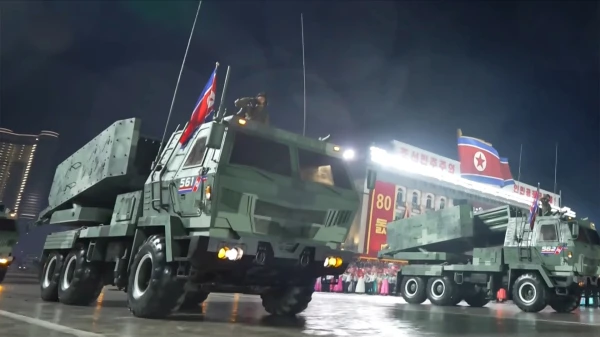
Some EW systems, such as the "Krasukha-4" complex, operate in a very narrow sector. Using a powerful electromagnetic pulse, they can "burn out" the electronic components of the aircraft, after which its control may completely fail.
If Russia has so many modern EW systems, why can't they repel attacks from Ukrainian drones?
In recent attacks on the Russian ports of Ust-Luga and Primorsk, as well as the oil refinery in Kirishi, hundreds of Ukrainian drones were involved, some of which hit their targets, and only a few entered the territory of the Baltic states.
The quantity certainly matters. But the issue is also that EW systems often prove to be ineffective against modern drones.
Firstly, unlike FPV drones operated by a first-person operator, many long-range drones do not require constant external control. They can operate autonomously, using inertial navigation systems, GPS signals, machine vision, and artificial intelligence, flying along a programmed route; some models engage target acquisition systems at the final stage of flight. And if there is no communication signal between the drone and the operator, it cannot be intercepted.
Yes, EW systems can spoof the GPS signal and provide the UAV with false coordinates and timing at a certain segment of the flight, but deceiving artificial intelligence is not so easy. A drone using an inertial system primarily relies on its own instruments — gyroscopes, speed sensors, pressure sensors, onboard clocks — and only occasionally checks satellite signals for flight correction.
In the case of a significant discrepancy between the onboard system data and the satellite signal (for example, when GPS provides coordinates for Tver while the aircraft's own data indicates it is in the Pskov area), the AI will recognize the spoofing and continue flying in inertial navigation mode until it receives a reliable signal.
Secondly, even drones that use external control are generally protected against interception — they constantly change or use floating frequencies, encrypted communication, and interference-resistant antennas.
In the best case, EW systems manage to suppress the communication signal with the operator. Then the out-of-control drone, depending on its functionality, either crashes immediately (and sometimes self-destructs) or switches to autonomous flight mode until it leaves the jamming zone and restores communication.
Thirdly, the range of EW systems is limited — it either has a very narrow sector or a short range. Of course, one can deploy many complexes in a certain area and turn them on at full power across a wide range. But in that case, the first systems to fail will be their own communication, control, and navigation systems, both civilian and military. Meanwhile, the enemy drone may suffer the least.
It is possible to disable the onboard electronics of an aircraft with a directed electromagnetic pulse, but this is also not easy to accomplish. It requires precise radar targeting, and in the case of drones, one of the main problems is their small size and low visibility. Some radar systems do not detect them even at close range.
Moreover, even a precise hit from an EW complex on a drone does not guarantee its immediate failure. In other words, if a drone is detected, it is easier and more reliable to shoot it down using conventional air defense means — anti-aircraft missiles and artillery — than to test the durability of the electronic chips installed on it.
So can Russia intentionally redirect Ukrainian drones into the Baltic states?
This viewpoint is held by the politicians of these countries, and there are many publications on this topic in the Western press.
For instance, the British newspaper Telegraph wrote on May 22 that Russia may be using a powerful transmitter in the Kaliningrad region that creates GPS interference in the Baltic region and affects the navigation of Ukrainian long-range drones.
However, the publication does not provide a complete set of technical evidence — recordings of signals, flight paths of the drones, intelligence data, or analysis of debris.
"I also saw the Telegraph article, which suggested that Russia has such a capability. I do not think so," said Marek Kohv, head of the "Security and Resilience" program at the Estonian International Centre for Defence and Security, to the BBC Russian Service. "I think they mainly jam the GPS signal, rather than necessarily spoof it or take control of the drones. It seems to me that this is more complicated. And the time period during which this can be done is very short."
"I do not think this is the case because, if you look at what happened to the drones that entered our airspace, some of them simply landed in random places. So there are no clear signs that they were deliberately directed somewhere," said the Estonian expert.
Could Russia repair fallen Ukrainian drones on its territory and launch them towards the Baltic states?
There is also such a conspiracy theory, but it does not hold up to scrutiny. All the parts from which drones are assembled have serial numbers, which easily allow for determining ownership, time, place, and direction of launch for any of them.
The Baltic states cooperate with Ukraine, and any attempt to use equipment under a foreign flag would immediately attract attention.
Can drones deviate from their targets on their own?
They can, and this happens quite often. The reasons can include weather conditions, design flaws, and simple manufacturing defects.
When flying long distances, the inertial navigation system accumulates errors, which are not always correctable even with a stable and accurate GPS/GLONASS signal.
The more maneuvers a drone has to perform, for example, to circumvent obstacles on the ground or avoid air defense systems, the greater the error.
The same Russian drones have repeatedly entered Poland, Moldova, and Romania during attacks on western Ukraine. On Friday, May 29, the Romanian Ministry of Defense reported that a Russian drone had fallen on the roof of a residential high-rise building in Galați, injuring two people.
Reports from the authorities of the Baltic states indicate several instances of Ukrainian drones falling in the eastern parts of Latvia and Estonia. It is possible that some of the drones launched from Ukrainian territory, moving along the Latvian and Estonian border, may have deviated off course in another direction, eastward, and fallen in uninhabited areas — simply, there is no information about this available in the public domain.
But how to explain the appearance of Ukrainian drones in Lithuania?
There is no exact answer to this question yet. Lithuania borders only a small Russian exclave, the Kaliningrad region, in the southwest, which the Ukrainian Armed Forces have not attacked so far. The country has no other borders with Russia.
Nevertheless, drones, presumably Ukrainian, have already been spotted several times in Lithuania: on March 23 of this year in the south, in the Varėna district, about 350 km from the Pskov region border with Belarus, and on May 17 — closer, in the east, in the Utena district — about 200 km away.
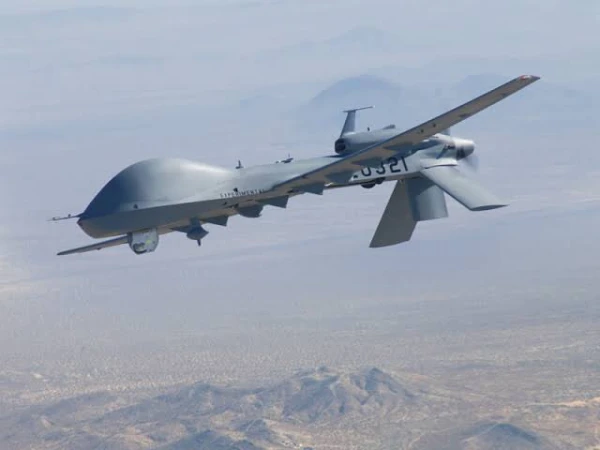
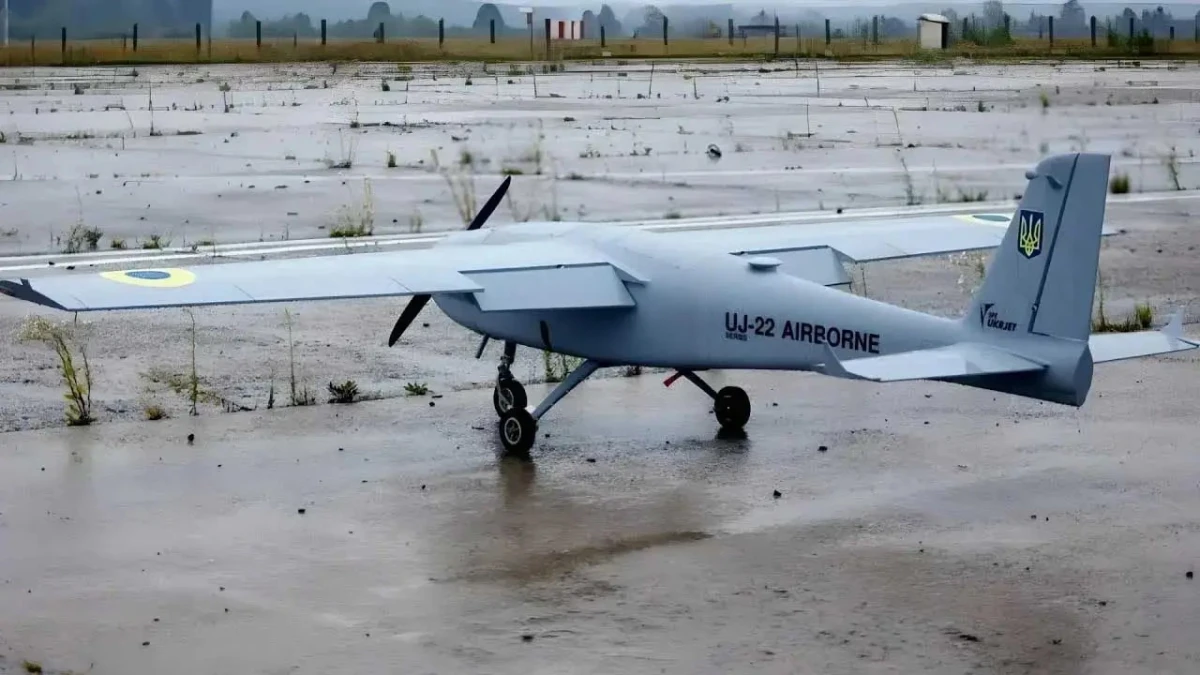
As Marek Kohv, an Estonian expert who has seen fallen drones and their fragments, told the BBC, they are generally of the same type: "We mainly saw drones of the 'Shahed' type, which fly quite low and at a rather slow speed."
According to him, security services are not yet disclosing detailed information about the type of drones detected, as a criminal investigation is currently underway.
Experts agree that there is no single explanation for the appearance of Ukrainian UAVs over the Baltic states so far. The deviation of flight paths may be influenced by electronic warfare means, technical features of the drones themselves, weather conditions, and other factors. It is premature to talk about intentional redirection of drones or any deliberate strategy until investigations are completed. However, the incidents themselves demonstrate how significantly modern military technologies affect the security of the entire Baltic region.