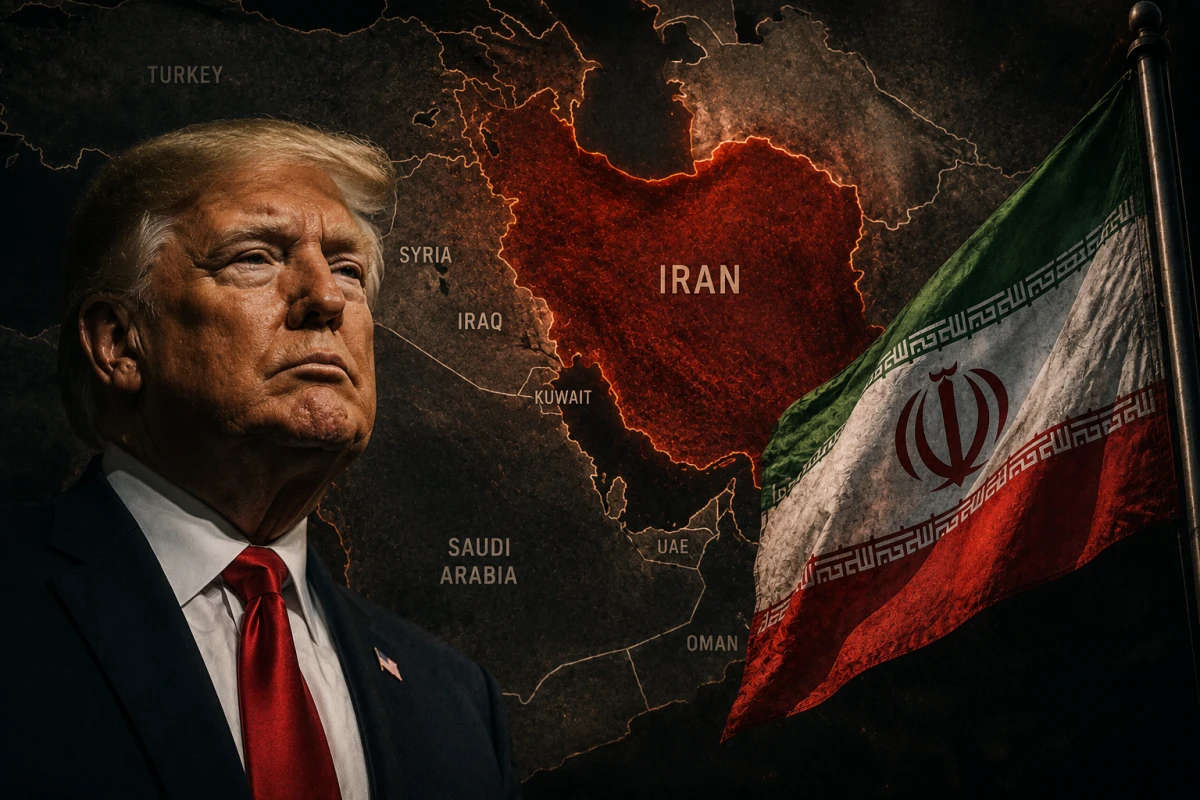
Despite new U.S. strikes on targets in Iran, Washington continues to insist on the possibility of a diplomatic agreement. At the same time, Donald Trump is trying to link a possible resolution to the expansion of the Abraham Accords in the Middle East.
U.S. Secretary of State Marco Rubio stated that an agreement to end the war with Iran remains possible, despite ongoing strikes and the tense situation in the region.
According to Rubio, negotiations are taking place in Qatar, and the parties are currently discussing the details and wording of a possible agreement.
"In my opinion, there are many discussions going on right now regarding the specific wording in the initial document, so this will take a few days," he told reporters during a visit to India.
Rubio also emphasized that U.S. President Donald Trump remains interested in a diplomatic solution.
"He will either make a good deal or there will be no deal at all," said the head of American diplomacy.
At the same time, the U.S. continues military actions against Iranian targets. The U.S. Central Command (CENTCOM) reported new "strikes in self-defense" in southern Iran.
According to U.S. military sources, the attacks targeted missile installations and vessels that were used to deploy naval mines. Washington claims that the strikes were necessary to protect American servicemen and facilities in the region.
CENTCOM specifically noted that the U.S. is trying to maintain restraint during the current ceasefire.
Meanwhile, Donald Trump is attempting to expand the diplomatic component of a possible deal. The U.S. president stated that a resolution with Iran should be linked to the inclusion of new countries in the Abraham Accords, a series of agreements normalizing relations with Israel.
Trump specifically mentioned Saudi Arabia, Qatar, Pakistan, and Turkey, stating that they should be prepared to support this process.
"After all the work the U.S. has done to try to piece together this extremely complicated puzzle, all these countries should at least sign the Abraham Accords simultaneously," he wrote on social media.
However, the implementation of such a scenario appears complex. Saudi Arabia has previously stated that normalization of relations with Israel is only possible with a clear plan for the creation of a Palestinian state. A similar position is important for Pakistan, which still does not have diplomatic relations with Israel.
Former Pakistani Ambassador to the U.S. Masood Khan noted that the attempt to link negotiations on Iran with the Abraham Accords "adds a completely new dimension to diplomatic processes."
Against the backdrop of negotiations, Iran is gradually beginning to restore access to the global internet. Iranian media reported that President Masoud Pezeshkian ordered the restoration of connectivity, which had been almost completely cut off after the start of the U.S. and Israel's war against Iran.
Officially, the authorities explained the blockade by security considerations; however, observers believe that the restrictions were also related to attempts to contain the spread of information about the consequences of the war within the country.
Despite statements about a possible deal, the timelines and real conditions of a potential agreement between the U.S. and Iran remain unclear.