
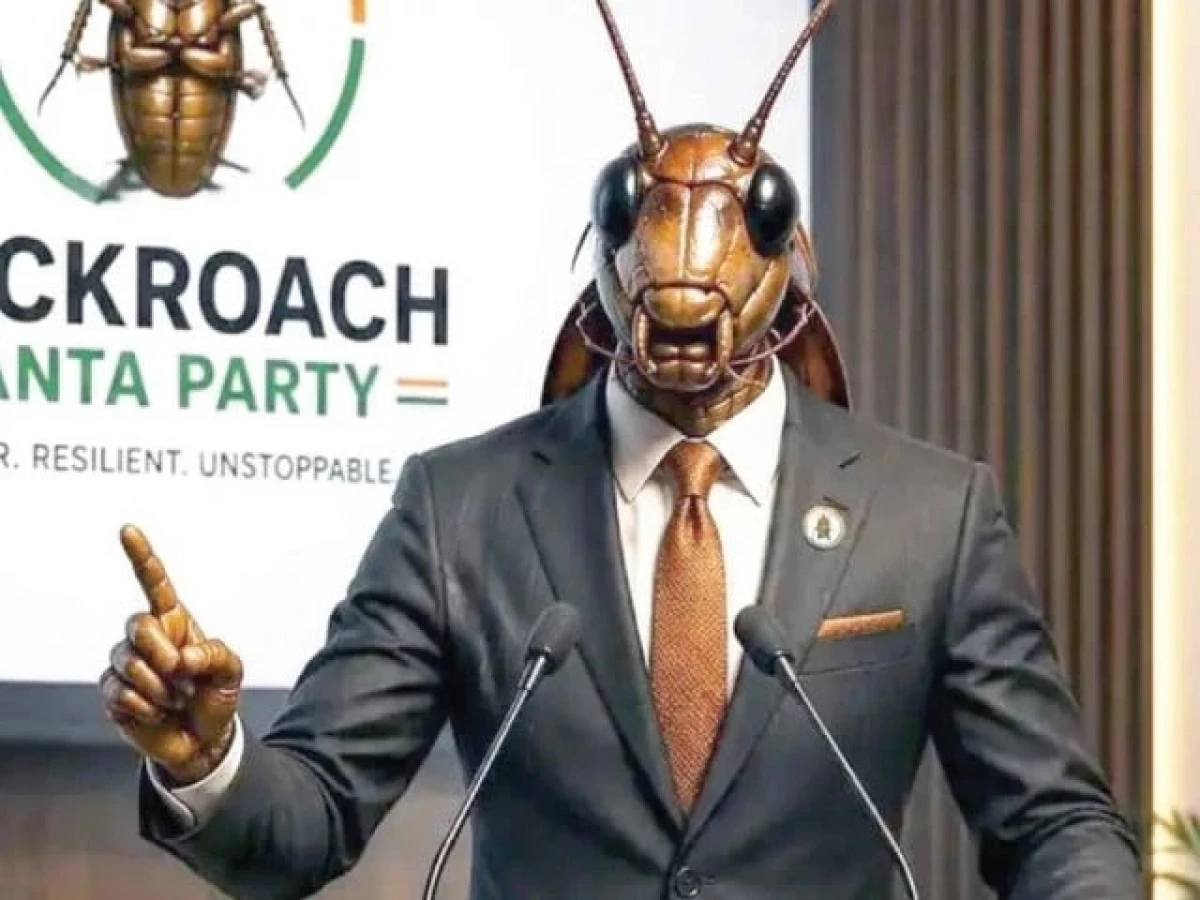
In India, the satirical internet movement 'Cockroach Party' — Cockroach Janta Party is rapidly gaining popularity. Created as a political parody, it unexpectedly turned into a symbol of youth discontent over unemployment, corruption, and lack of prospects, sparking debates about freedom of speech and attempts at censorship.
The movement emerged on social media as an ironic project mocking the political elite and the problems of modern India. However, within just a few days, the account gathered over 22 million followers on Instagram and became one of the most discussed internet phenomena in the country, as reported by Tribune.
The creator of the movement, Abhijit Deepke, claims that after the sharp rise in popularity, the project faced pressure: the website was blocked, the account on X was restricted within India, and participants' pages began to be attacked. According to him, even members of his family received threats.
Despite the successes of the ruling party Narendra Modi and BJP's victories in elections, the popularity of the 'Cockroach Party' has shown growing frustration among young Indians. The main themes of the movement are unemployment, exam question leaks, economic instability, and distrust in the political system.
The project's authors actively use memes, satire, and absurd humor. Images of politicians with cockroach heads are circulating on social media, and the hashtag #MainBhiCockroach ('I Am Also a Cockroach') has gone viral among the youth.
According to official data, the unemployment rate among urban youth in India is around 14%. Young people are particularly sensitive to scandals surrounding government exams and allegations of corruption.
Human rights advocates believe that the story surrounding the movement raises a broader question about freedom of speech in India. The Internet Freedom Foundation criticized the restrictions on the account on X, calling the situation an attempt to pressure online satire and political expression.
Experts believe that the phenomenon of the 'Cockroach Party' reflects a new form of political protest, where memes, irony, and digital culture become the main tools. For millions of young Indians, this is no longer just an internet joke, but a way to express dissatisfaction with a future in which they increasingly feel instability and lack of prospects.







Leave a comment