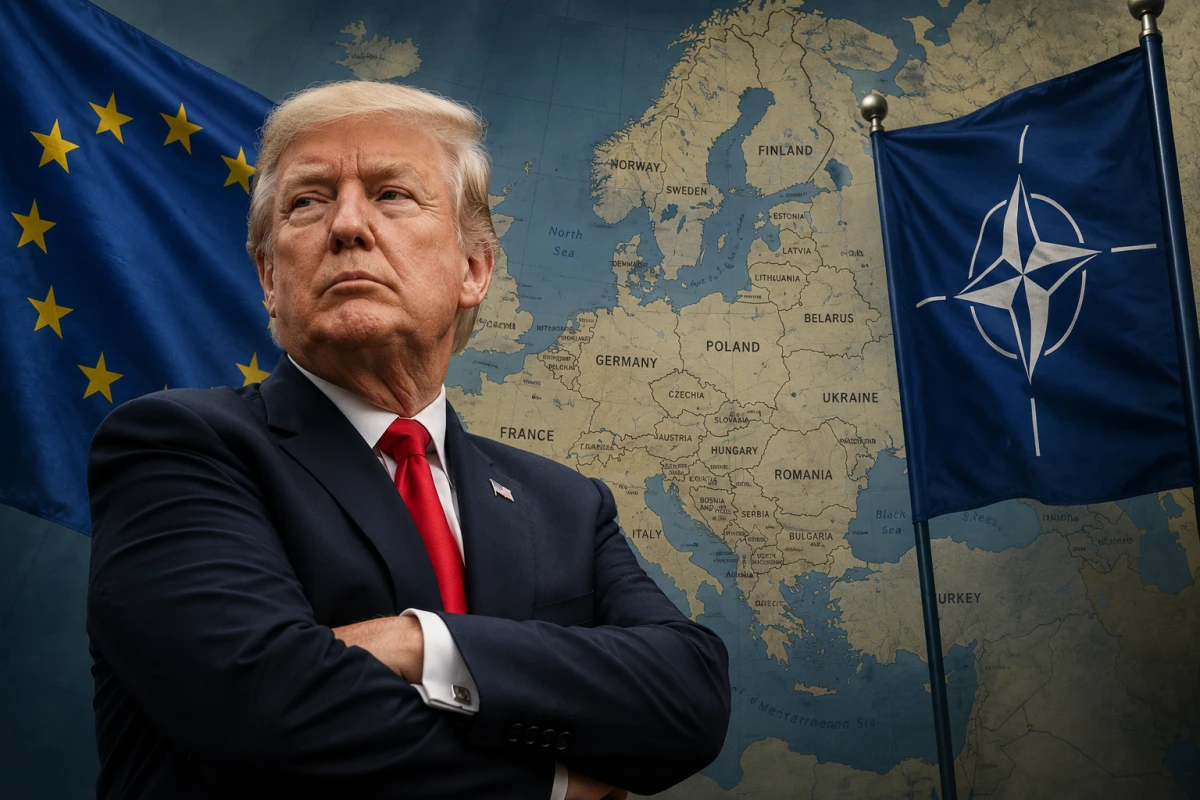
U.S. European allies are gradually reducing their dependence on Washington after Donald Trump's return to the White House. Ukraine is becoming an important part of the new security architecture of Europe.
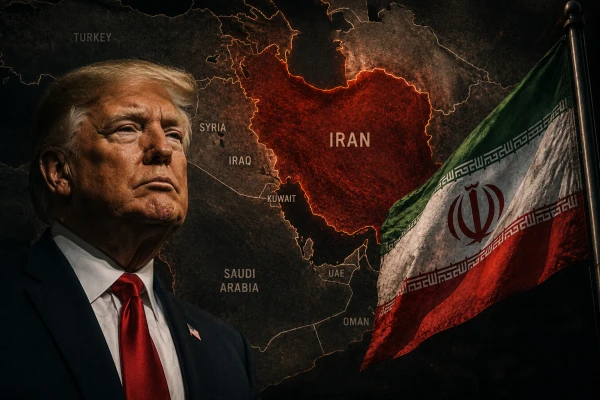
U.S. European allies are gradually beginning to distance themselves from Washington following Donald Trump's return to the White House. In EU countries, there is an increasing discussion about the need for strategic autonomy and reducing dependence on American policy, as stated in a piece by Foreign Policy.
The authors of the article note that after Trump's victory in the 2024 elections, European leaders initially tried to adapt to his management style. Prime Minister Keir Starmer was one of the first to visit the White House and even offered Trump a second state visit on behalf of the King of the United Kingdom. NATO Secretary General Mark Rutte also demonstrated loyalty to the American president.
However, over time, doubts began to arise in Europe about the reliability of the U.S. as a strategic partner. The article recalls Washington's decision to reduce military presence in Germany, the imposition of tariffs against allies, and regular criticism of European leaders by Trump.
Despite this, European countries continued to increase defense spending, compensated for part of the American aid to Ukraine, and provided infrastructure for U.S. operations in the Middle East.
At the same time, European states began making decisions aimed at reducing dependence on the U.S. in the future. In particular, the central bank of the Netherlands opted for the services of the German provider Lidl instead of Amazon, and Denmark's Ministry of Defense chose the Franco-Italian SAMP/T air defense system over the American Patriot. This process is referred to in the article as Europe’s "quiet exit" from transatlantic dependence.
The authors also note the strengthening of new international cooperation formats without the dominant role of the U.S. An example is the "coalition of the willing" – a coalition of more than 35 countries supporting Ukraine, including Canada, Japan, and Australia.
According to Canadian Prime Minister Mark Carney, "the international order will be reshaped, and it will be reshaped from Europe."
As reported by Politico, EU countries are increasingly preparing for potential problems within NATO due to the unpredictable policies of U.S. President Donald Trump. According to the publication, concerns have grown in Europe that the U.S. could simultaneously remain the main guarantor of the Alliance's security and a factor of instability for it.
According to The Washington Post, NATO allies are preparing for a reduction of the American contingent on the European continent. This situation is driven by the position of American leader Donald Trump, whose plans have confused everyone due to contradictory statements. Against this backdrop, Secretary of State Marco Rubio met with NATO foreign ministers in Sweden. The meeting discussed the situation regarding the deployment of "an additional 5,000 troops" to Poland after the withdrawal of the contingent from Germany.
Experts note that relations between Europe and the U.S. are gradually entering a new phase. Despite maintaining partnership within NATO, EU countries are increasingly seeking to strengthen their own defense and political independence. Against the backdrop of Donald Trump's unpredictable policies, Europe is trying to build a more autonomous security model, while Ukraine is gradually becoming one of the key players in the new architecture of international relations.