
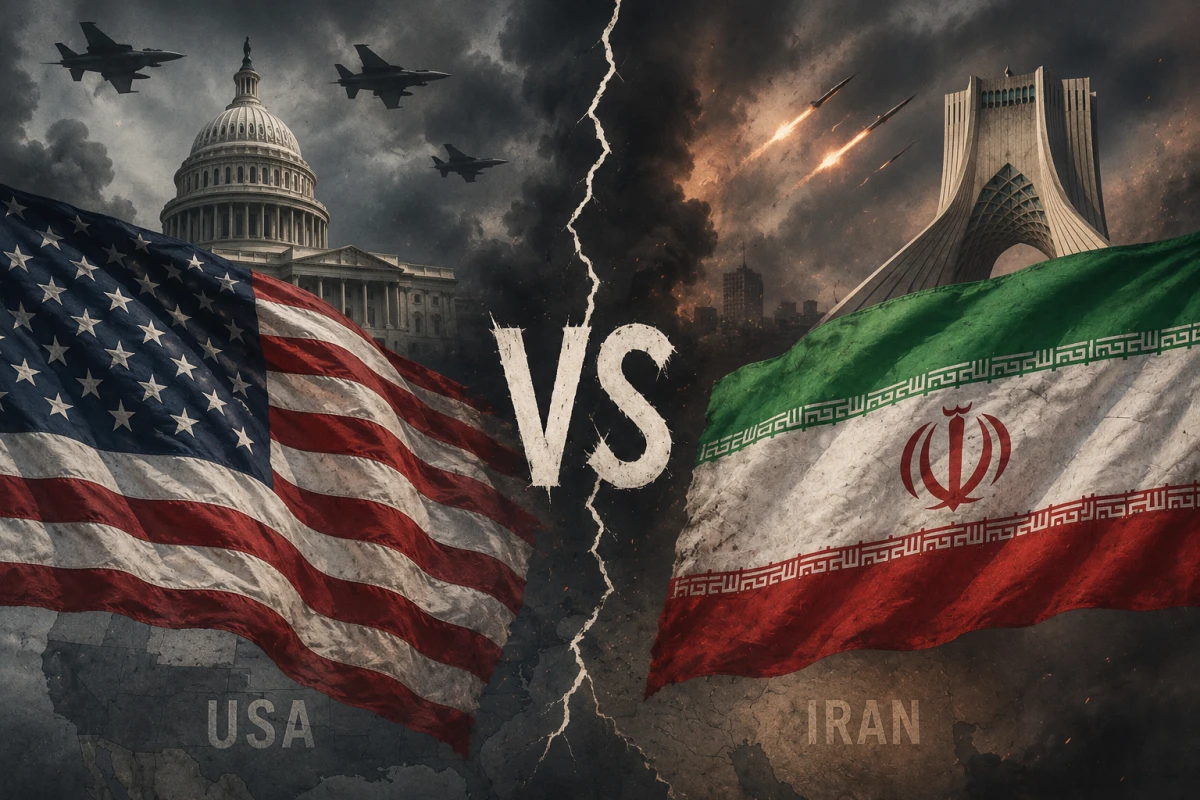
The U.S. and Israel have intensified preparations for a possible resumption of military operations against Iran as early as next week. According to The New York Times, the Pentagon is considering several scenarios—from large-scale bombings to sending special forces to Iranian nuclear sites.
The U.S. and Israel are currently intensifying preparations for a possible resumption of military operations against Iran as early as next week, The New York Times (NYT) reported on Friday evening, May 15, citing informed sources in the Middle East.
"The Pentagon is preparing for the possibility of resuming the 'Epic Fury' operation in the coming days, which was suspended after President (U.S. Donald Trump - Ed.) announced a ceasefire last month, even if under a new name," the article states.
According to sources, among the options being considered is the deployment of U.S. special forces to Iran to search for hidden underground nuclear materials, particularly at a site in Isfahan. "About 5,000 Marines and approximately 2,000 paratroopers from the elite 82nd Airborne Division are in the region awaiting orders," NYT writes.
At a Pentagon briefing on May 5, Chairman of the Joint Chiefs of Staff General Dan Kayne stated that more than 50,000 military personnel, two aircraft carriers, over a dozen Navy destroyers, and numerous combat aircraft "remain ready to resume major combat operations" against Iran if given the appropriate order.
NYT: The U.S. Considers Options for Capturing Khark Island and 'More Aggressive Bombings'
U.S. military units may also be used to capture Khark Island, Iran's main oil hub. "While more ground troops will be needed to hold it," officials noted in a comment to NYT. At the same time, military officials acknowledged that this option carries a higher risk of casualties.
Another scenario in case the White House decides to break the "negotiation deadlock" with Tehran includes "more aggressive bombings" of Iranian military and infrastructure targets, sources in the U.S. administration told the newspaper.
Earlier this week, The New York Times reported that Iran has restored operational access to 30 out of 33 missile bases located along the Strait of Hormuz, which could pose a threat to U.S. military ships and oil tankers.
Iran Confirms Negotiations with Russia on Uranium Transfer
Iran's Foreign Minister Abbas Araghchi confirmed the day before that Tehran has held preliminary consultations with Moscow regarding a possible transfer of enriched uranium stocks to the Russian side. According to him, Iran highly appreciates Russia's willingness to cooperate, but this issue will ultimately be resolved only at a later stage of negotiations with the U.S. regarding Iran's nuclear program, reports the Arab television channel Al Jazeera.
Russian President Vladimir Putin stated on May 9 that Moscow is ready to accept Iranian uranium. Russia has previously used a similar scheme as part of the 2015 nuclear deal, from which Donald Trump's administration unilaterally withdrew during his first term in office.
Meanwhile, the Iranian agency Tasnim, affiliated with the Islamic Revolutionary Guard Corps (IRGC), called false the reports that Tehran has already fundamentally agreed to the export of uranium. The American newspaper The Wall Street Journal, citing informed sources, reported that Iran is willing to transfer part of its stocks to a third country on the condition that they are returned in case negotiations with the U.S. fail.
American Conditions to Tehran Regarding Uranium
Earlier, Washington presented Tehran with a detailed 14-point settlement plan, which included a complete renunciation of nuclear weapons by Iran, a freeze on uranium enrichment for 12 years, and the transfer of approximately 440 kg of uranium enriched to 60 percent. In exchange, the U.S. is prepared to gradually lift sanctions and unblock Iranian assets. Trump called Iran's response to these conditions "completely unacceptable."
In the editorial's opinion, the situation surrounding Iran is rapidly approaching a dangerous threshold once again. Against the backdrop of failed negotiations and increased U.S. military activity, the risk of a new large-scale conflict in the Middle East is becoming increasingly real. Moreover, the consequences of a possible escalation could affect not only the region but also the global energy market, international security, and relations among major powers.









Leave a comment