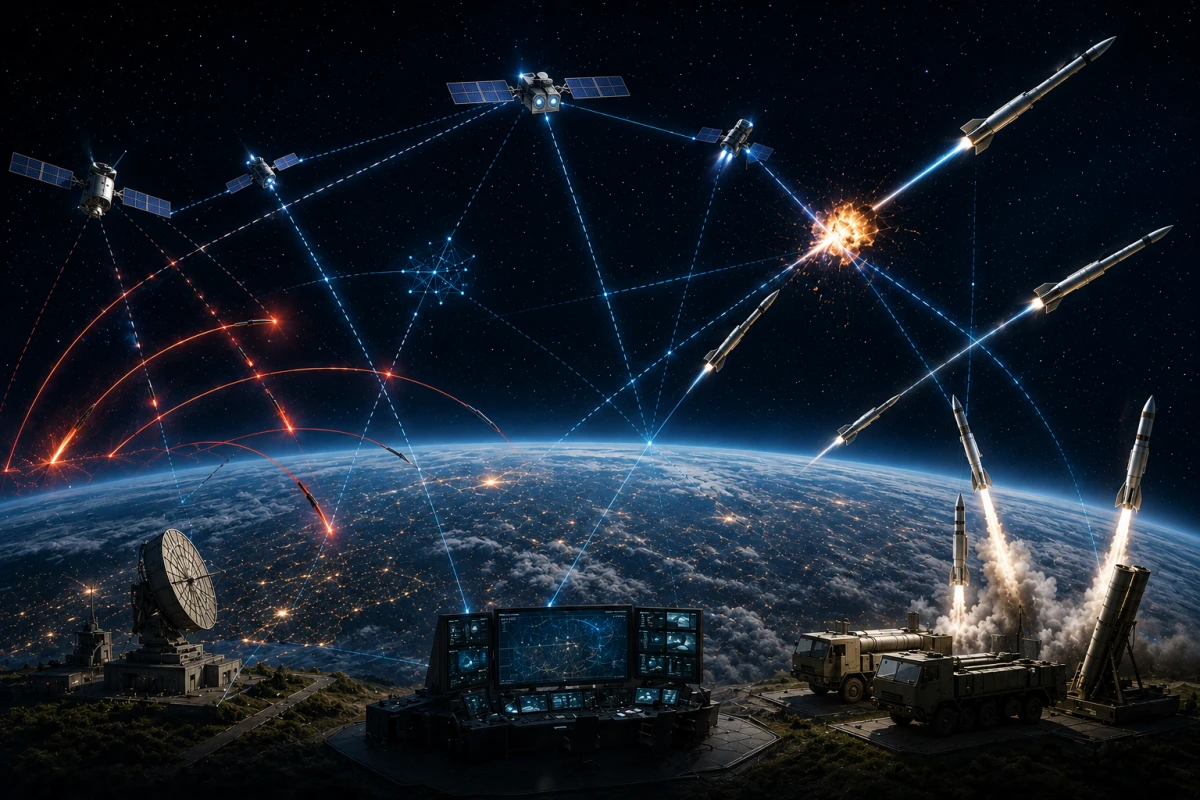
The Congressional Budget Office estimated the cost of the new American missile defense system "Golden Dome" at $1.2 trillion over 20 years. This significantly exceeds previous estimates by Donald Trump.
The missile defense system "Golden Dome" planned by the Donald Trump administration could become one of the most expensive military projects in U.S. history.
According to a new report from the Congressional Budget Office (CBO), the development, construction, and operation of the system over 20 years will cost approximately $1.2 trillion.
This refers to a large-scale multi-layered missile defense system designed to protect the U.S. from intercontinental missiles, mass aerial attacks, and other modern threats.
Most of the expenses—over $1 trillion—will be for the procurement of system components. These include interceptor missiles, satellite surveillance systems, and technologies for tracking missile launches.
The most expensive elements of the project could be space platforms for deploying interceptors. According to CBO estimates, they could account for up to 70% of all procurement costs.
Additionally, annual maintenance of the system will require about $8.3 billion.
What is important to understand is that the new Congressional estimate is significantly higher than the figures previously mentioned by Trump himself. The U.S. President claimed that the total cost of the project would be around $175 billion.
As early as the beginning of 2025, Trump instructed the Pentagon to prepare a plan for creating a new missile defense system, initially naming the project "Iron Dome for America"—analogous to the Israeli missile defense system.
Later, the project was renamed "Golden Dome."
However, the scale of the American system is significantly different from the Israeli one. While the "Iron Dome" is primarily designed to intercept short-range missiles, the new American program is intended to protect the country from a much broader range of threats, including mass missile strikes.
Against this backdrop, the cost of the project has sharply increased.
Earlier, the Congressional Budget Office warned that just the space interceptors for limited protection against intercontinental missiles could cost hundreds of billions of dollars.
Now, the U.S. National Defense Strategy for 2026 states the need to counter "massive missile salvos and other modern aerial attacks."
Critics of the project fear that the system could become excessively expensive and technologically extremely complex, especially considering the need to place missile defense elements in space.
Nevertheless, the Trump administration continues to promote the initiative as a key element of future U.S. defense.