
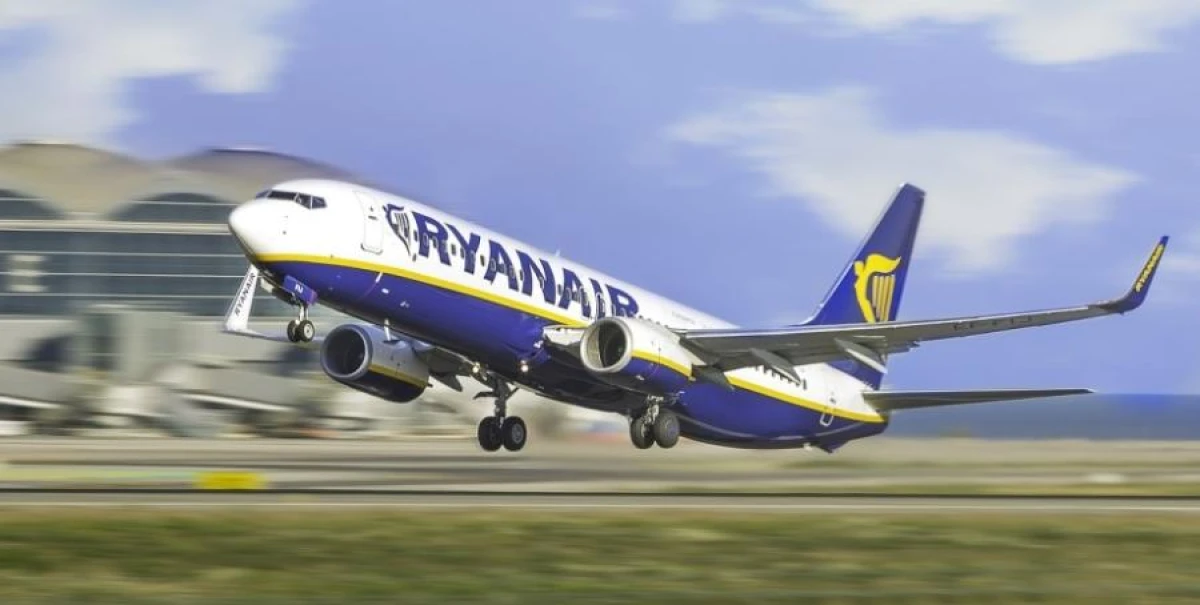
Among Ryanair's complaints is a sharp decline in passenger traffic, while aviation fees and airport charges continue to pressure its operations.
This move follows statements from Berlin's international airport that an increase in fees is not planned, and the approval by the German Ministry of Finance for a reduction in aviation taxes.
The largest European airline Ryanair will soon say goodbye to its Berlin base: on October 24, the company plans to cease operations of seven aircraft in the German capital.
The airline labeled Berlin airport as "the most failed in Europe," pointing to a 27% drop in passenger traffic — from 36 million people in 2019 to 26 million last year.
"All seven aircraft based in Berlin will be redistributed to cheaper airports in other EU countries that have eliminated aviation transport taxes, such as Sweden, Slovakia, Albania, and Italy," the low-cost carrier stated.
In its winter schedule, Ryanair will reduce the number of flights to and from Berlin by 50%.
The airline's dissatisfaction is also related to what Ryanair DAC CEO Eddie Wilson called "a foolish aviation taxation regime": according to him, the model of commercial civil aviation in Germany, largely based on high taxes, has let people down.
Wilson also characterized German aviation as "broken," noting the absence of any plan to reduce aviation transport taxes or high airport fees.
"Since 2019, Ryanair has been forced to close its bases in Frankfurt, Düsseldorf, and Stuttgart (resulting in the withdrawal of 13 aircraft based there), as well as to cease all flights to Dresden, Leipzig, and Dortmund," he added.
According to the airline, the aviation transport tax has doubled since 2019 — from €7.30 to €15.50 per passenger; security fees are expected to double — from €10 in 2024 to €20 per passenger by January 2028; air traffic management service fees have tripled — to €3.30 per passenger. And in addition to airport fees, which have already increased by 50% since the COVID-19 pandemic, an additional increase of 10% will be introduced by 2029.
Apparently, such statements came as a surprise to Berlin Brandenburg Airport.
"We are surprised by Ryanair's statement at this moment," the airport said in a message published on X. — "We are in constant negotiations with airlines. An increase in airport fees is not planned."
The low-cost carrier's announcement followed the German Ministry of Finance's report that the federal government approved plans to return the aviation transport tax (Luftverkehrsteuer) to the 2024 level.
"The Federal Ministry of Finance considers it important that this reduction is passed on to travelers," the agency stated.














Leave a comment