A look at the first days after the accident at the Chernobyl Nuclear Power Plant in 1986: how the Soviet authorities tried to conceal the true scale of the tragedy while West German media pieced together the full picture of what happened.
Exactly 40 years ago, on April 26, 1986, the world was shaken by the accident at the Chernobyl Nuclear Power Plant, which became the greatest technological disaster in human history, the consequences of which are still felt today. This DW overview will detail how radically different the presentation of information about the emergency was in the first days in West German and Soviet media.
April 26, 1986. Day One. Explosion
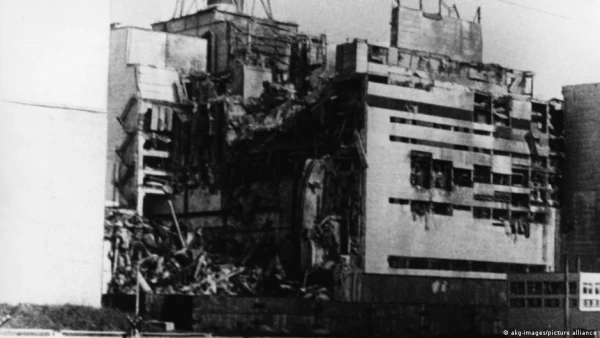
At 1:23 AM, an explosion occurred at the fourth reactor of the Chernobyl Nuclear Power Plant during experimental tests. This event completely destroyed the fourth reactor and the roof of the power unit, but no official messages for the media followed.
April 27, 1986. Day Two. Evacuation
Only on the second day after the disaster, April 27, did the evacuation of residents of Pripyat, the city of atomic workers located near the Chernobyl Nuclear Power Plant, begin. The announcer of the Pripyat radio station, Nina Melnik, read an announcement that spoke exclusively of a "temporary evacuation" due to the "unfavorable radiation situation" that arose as a result of the "accident at the Chernobyl Nuclear Power Plant." Residents were advised to take with them "documents, essential items, and, just in case, food supplies." There were still no official messages about what exactly had happened at the Chernobyl Nuclear Power Plant or the level of radiation contamination. Evacuated from Pripyat arrived in Kyiv, where the first rumors about the accident were already actively spreading.
April 28, 1986. Day Three. The World Learns of the Tragedy
It was on April 28, the third day after the explosion, that the world finally learned about Chernobyl. In the morning, an alarm went off at the Swedish nuclear power plant Forsmark, located north of Stockholm.
The safety system signaled when an extremely high level of radiation was detected on the clothing of one of the employees. The Swedish Defense Research Agency unequivocally pointed to the Soviet Union as the source of the radiation.
However, all attempts by the Swedes to obtain additional information through diplomatic channels in Moscow were unsuccessful, as Soviet officials categorically denied the fact of the accident. Meanwhile, radiation levels in Finland exceeded the norm by six times, and in Denmark by five.
In West Germany, the first report about the Chernobyl accident was broadcast at 7:00 PM in the news of the SWF television and radio company. It stated: "In several areas of Sweden, Finland, and Norway, an extremely high level of radioactive radiation has been recorded. Official bodies emphasize that there is no threat to people. The cause is likely a malfunction of a Soviet nuclear reactor. Soviet nuclear bomb tests are excluded as the cause of the increased radioactivity. The Atomic Energy Agency in Moscow informed the Swedish embassy that it knows nothing about a possible accident at the nuclear power plant, which it should have known about in any case."
Swedish Energy Minister Birgitta Dahl expressed outrage, calling the lack of information from the USSR "unacceptable" and threatened to turn to the IAEA. Under pressure, the Soviet authorities were forced to respond.
Later that same day, the TASS news agency published the first official message: "An accident occurred at the Chernobyl Nuclear Power Plant, one of the nuclear reactors was damaged. Measures are being taken to eliminate the consequences of the accident. Assistance is being provided to the victims. A government commission has been established." In the evening, this message, unchanged and with a duration of 18 seconds, was broadcast on Central Television in the all-union evening program "Vremya." A similar brief message from TASS about the accident at Chernobyl was simultaneously disseminated in the media of the German Democratic Republic (GDR). It was read verbatim at the end of the Aktuelle Kamera evening news broadcast.
At 9:00 PM, in the evening news, West German SWF was already reporting: "As a result of the accident at the nuclear power plant in the Soviet Union, according to official data, several people were injured. The official Soviet news agency TASS reported that one of the reactors of the Chernobyl Nuclear Power Plant near Kyiv in Ukraine was damaged. Assistance is being provided to the victims. TASS does not provide exact data on the number of people exposed to radioactive contamination as a result of the accident, on the presence of casualties, and on the time of the accident." That evening, this information was transmitted by other West German television and radio channels as well.
April 29, 1986. Day Four. Radioactive Cloud
The newspaper "Izvestia" published a short message "From the Council of Ministers of the USSR," which merely repeated the information previously transmitted by TASS. This same news was reprinted by newspapers of the Ukrainian SSR, while the program "Vremya" reported on "some release of radioactive substances" and two fatalities.
By this time, Moscow and Kyiv were forced to respond to active information messages from abroad. According to documents later declassified in Ukraine from the KGB archives, the main task of the Soviet authorities at that time was to prevent not only the leakage of radiation but also any information.
A significant part of the evening television news program Tageschau on the first channel of the West German broadcaster ARD was dedicated to the accident at the Chernobyl Nuclear Power Plant. The broadcast reported on the ongoing fire at the power unit, which could not be extinguished even on the third day after the explosion, as well as the possible melting of the reactor core at Chernobyl.
It was mentioned that Soviet representatives allegedly reached out to the German Atomic Forum in Bonn and to Sweden for help in extinguishing the fire. The Tageschau program criticized the lack of transparency from the USSR.
ARD correspondent Peter Bauer in his report from the Soviet capital noted that most Muscovites knew nothing about the accident. In that same episode, Tageschau spoke of a radioactive cloud that spread northwest after the accident in Chernobyl and then changed direction.
April 30, 1986. Day Five. The First Photo of the Chernobyl Accident
The KGB of the Ukrainian SSR closely monitored any attempts by foreigners to obtain information. Declassified documents from the Ukrainian Institute of National Memory indicate that the day before, there were "attempts by employees of diplomatic and other missions of the USA, France, and Canada in Moscow, correspondents, and other foreigners to obtain information regarding the Chernobyl accident."
The Kremlin decided to respond with denials in the evening program "Vremya" on Central Television. It was stated: "Some agencies in the West are spreading rumors that thousands of people died in the nuclear power plant accident. In fact, two people died. 197 people were hospitalized, of whom 49 were discharged after examination. The work of enterprises, collective farms, state farms, and institutions is proceeding normally."
Then commentator of Central Television Alexander Galkin appeared on air. He showed the first photograph of the destroyed fourth power unit and assured viewers that "there are no giant, as some Western agencies write, destructions and fires, nor are there thousands of dead."
Galkin added: "An accident occurred. But to inflate its scale, as some bourgeois media do, spreading absurd rumors, is hardly appropriate." In a recent interview, Galkin admitted that "he himself knew nothing about what was really happening at Chernobyl."
On East German television, scientists — Professor Günter Flach and Dr. Karl Lanius — were invited to the air. They expressed complete trust in Soviet nuclear workers and condemned the "demonization" of the USSR in Western media.
In the FRG, the news release Tagesschau also showed the aforementioned first photo of the destroyed power unit and quoted Galkin's statement, while emphasizing that the true scale of the Chernobyl accident remained unclear. Tagesschau referred to data from American intelligence about a supposedly large number of fatalities.
The Tagesschau presenter read a message: "At least 300-500 people, as reported, died as a result of the nuclear catastrophe in Chernobyl." According to her, this data was partially confirmed by testimonies from Western tourists in Kyiv, and German firms began recalling their employees from the Ukrainian capital.
The Soviet Chargé d'Affaires in Bonn, Vladislav Terekhov, in the same Tagesschau broadcast rejected accusations of untimely informing, stating: "The fact that we provided information two days later can be understood as meaning that there was no danger to neighboring countries."
May 1, 1986. Day Six. Radioactive May Day
In West German media, Chernobyl remained the main topic, and Moscow was again criticized for its measured information delivery. On the air of Tagesschau, it was stated: "The Soviet Union today provided another small portion of information about the nuclear accident in Chernobyl, but the full scale, as before, remains unclear. The authorities admitted that 18 people were seriously injured. (...) In the West, these figures are still considered underestimated."
In that same broadcast, American satellite images of Chernobyl after the accident were shown. Meanwhile, in Soviet media, the main news was May Day, the Day of Solidarity of Workers. For the communist regime, it was vital to show the world that everything was going as usual and life continued. Despite high radiation levels, festive events in Kyiv, the capital of Soviet Ukraine, took place in full and with customary pomp.
In the program "Vremya," viewers awaited a report from Kyiv, which appeared at the 13th minute of the broadcast. The republican party elite was present on the tribunes: Vladimir Shcherbitsky and Valentina Shevchenko.
Festive columns moved along Khreshchatyk, and Ukrainians in national costumes performed folk dances, creating a picture of a typical May Day. Similar reports were broadcast from East Berlin and other capitals of socialist countries.
Only at the very end of the broadcast was there a brief mention of the work to eliminate the consequences of the Chernobyl accident, where "radioactivity has decreased by 1.5-2 times," as well as a briefing for foreign diplomats at the USSR Ministry of Foreign Affairs. In the media of East Germany, the theme of May Day also dominated, and the situation around Chernobyl was mentioned only briefly and in passing.
May 2-4, 1986. Day Seven to Nine. Radioactive Salad
In West German media, the topic of Chernobyl remained central, but very little was still known about the real situation at the Chernobyl Nuclear Power Plant itself. The media in the FRG continued to inform about the radiation situation in the country after the passage of the Chernobyl radioactive cloud over Western and Northern Europe.
Thus, on May 4, in the news broadcast of Tagesschau on the first channel of West German television ARD, it was reported about a further decrease in the level of radiation in the air. However, as Tagesschau noted, "elevated levels have been recorded in Berlin, Hanover, and Freiburg. As a result of the rains over the past day, soil contamination has noticeably increased, especially in the southern regions of Germany." Since some of the radioactive dust settled on the ground, the commission for radiation protection under the government of the FRG established a maximum level of radiation for leafy vegetables and introduced strict radiation control for the new harvest. "This especially concerns imports from Eastern Bloc countries," emphasized the Tagesschau report.
At the same time, the newspaper "Pravda" during these days in a report from Kyiv painted "the tender watercolor greenery of trees, the red fabric of banners, and the brassy sounds of orchestras," completely ignoring mentions of radiation. The situation at Chernobyl was mentioned only in a few official lines of a separate message: members of the Politburo of the Central Committee of the Communist Party of the Soviet Union flew to the site of the accident.
In East Germany, the media sought to calm the population and criticized the "hysteria" of the West. The newspaper Neues Deutschland, the official organ of the SED, wrote that the goal of the Western press was to "discredit the Soviet Union and belittle its great efforts aimed at using scientific and technological achievements for the benefit of humanity."
Under the headline "Stabilization at a Low Level," indicators of radioactivity concentration were published. These figures were incomprehensible to most, as there were no data for comparison with the pre-accident period, and it was concealed that in the previous days they had exceeded the norm by hundreds of times.
In another issue of "Pravda," a speech by Boris Yeltsin, the first secretary of the Moscow City Committee of the Communist Party of the Soviet Union, at the congress of the German Communist Party in Hamburg was published. He sharply criticized "bourgeois propaganda," accusing it of "spinning the spiral of anti-Soviet hysteria" around the Chernobyl Nuclear Power Plant.
Next to this speech, a commentary was published, summarizing the thought that the Soviet Union had nothing to present, as accidents at nuclear power plants had also occurred in the West. Meanwhile, Kyiv was actively preparing for the "World Bicycle Race," which the West, except for France, boycotted. Soviet Central Television showed a short report on the treatment of liquidators in Moscow, where they all looked cheerful and optimistic. At the same time, in West Germany, the discussion around the Chernobyl accident and its consequences was taking on an increasingly pronounced domestic political character.
West German media reported on disputes over the measures taken by the government and on protest demonstrations against nuclear energy. The media in the FRG also wrote about the fears of ordinary citizens who were concerned about the safety of food products — vegetables, fruits, salad. Germans in conversations with WDR reporters expressed confusion: "So what is there to eat at all? Soon everything will be poisoned." In the following days, until May 14, similar trends in information presentation persisted in the media space of the USSR, GDR, and FRG.
May 14, 1986. Gorbachev's Speech
Three weeks after the accident, on May 14, a speech by Soviet leader Mikhail Gorbachev on Soviet television put a period to the assessment of the scale of the disaster at Chernobyl. Initially, he called the accident a "disaster" and accused "the media of some NATO countries, primarily the USA" of "waging a distorted anti-Soviet campaign."
However, this speech by Gorbachev became a turning point. The General Secretary acknowledged that the elimination of the consequences would be lengthy and would require assistance from the entire world.
It no longer made sense to downplay the scale of the disaster. Soviet media began a series of reports on the elimination of the consequences of the accident, the heroism of the liquidators, and international assistance.
After Gorbachev's speech, a new stage began in the chronicle of Chernobyl — a stage of reflection. DW journalists were among the first to attempt to do this just a few weeks after the accident.
In May 1986, in the Cologne studio of the "Discussion Club" of Deutsche Welle, head of the Nuclear Research Center in Karlsruhe, Yevgeny Golubovich, journalist Georg Doll, and host Nikolaus Ehlert discussed how Gorbachev could remain silent for three weeks, how the threats of Chernobyl would be perceived 40 years later, how German robots helped in the disaster zone, and what medicines, as hoped at the time, would be invented by 2026. They seemed to look 40 years ahead, reflecting on this and much more.