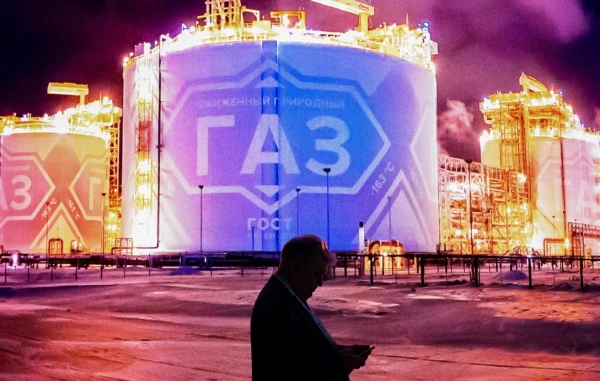
Despite the challenging situation in the Middle East, European countries have sufficient gas reserves and are actively replenishing their underground storage facilities in preparation for new restrictions on Russian LNG.
European countries, despite the tense situation in the Middle East, have sufficient gas volumes. The region has already begun actively injecting fuel into underground storage facilities.
Starting Saturday, April 25, Europe will begin a phased introduction of a ban on the import of Russian liquefied natural gas (LNG) on a short-term basis, as reported by Bloomberg. The European Union will completely cease purchases of Russian LNG on the spot market.
Impact on the Market and Prices
At the same time, supplies under long-term contracts will be able to continue until the end of the current year. The EU covers about 12% of its gas needs from Russia, with part of this volume coming through pipelines.
According to leading companies Wood Mackenzie Ltd. and Energy Aspects Ltd., the ban on the spot market could reduce supplies of Russian LNG by 2.8–3.5 million tons annually. This reduction occurs against the backdrop of a significant rise in base gas prices in the region, which have already surged by about 40% due to the conflict in the Middle East.
Currently, Europe has sufficient gas reserves, partly due to a voluntary reduction in global demand. The region has gradually begun the season of active gas injection into its underground storage facilities.
However, in the coming months, Europe will need to purchase significant volumes of fuel to fully replenish reserves ahead of the upcoming winter.
Future Challenges and Strategies
European Union officials have repeatedly emphasized the inadmissibility of returning to previous dependence on imports of Russian energy resources.
LNG analysts from Energy Aspects note that the European Commission has the authority to declare a state of emergency. In such a case, it could temporarily resume the authorization to purchase Russian fuel on the spot market.
Next year, several major European energy suppliers will face the necessity of terminating existing contracts for the supply of Russian LNG. Among them are French TotalEnergies SE, Spanish Naturgy Energy Group SA, and German SEFE Securing Energy for Europe GmbH.
Despite European restrictions, Russian Novatek, the main shareholder of the production facility in Yamal in the Arctic, is actively increasing its efforts to sell gas throughout Asia. This facility currently supplies gas to Europe as well.
It was previously reported that in March, EU countries collectively increased their purchases of Russian liquefied gas by 17%. The total volume reached 5 million tons amid the ongoing war in the Middle East.
According to the environmental organization Urgewald, these purchases could have cost EU countries approximately €2.88 billion. Notably, Spain imported a record volume of gas from Russia.