The escalation and protracted nature of the U.S.-Israeli conflict in the Middle East have provoked a deep crisis in the global aviation industry.
The escalation and protracted nature of the U.S.-Israeli conflict in the Middle East have provoked a deep crisis in the global aviation industry. The Iranian crisis has already caused a sharp increase in airfares across Europe.
According to an analysis by the European Federation for Transport and Environment, the key reason for this spike is the critical dependence of European aviation on fuel imports. The European Union imports about 95% of crude oil, but specific raw materials are required for aviation fuel, with imports reaching nearly 100%.
Moreover, approximately one-third of all aviation fuel purchased by the EU was in the form of ready-made refined products. The main suppliers were countries in the Middle East, and now these vital supplies are under threat due to the blockade of the Strait of Hormuz.
Rerouting Flight Plans
Major airlines are forced to cancel thousands of flights in advance, accompanied by a steady rise in ticket prices. This situation unfolds just before the start of the summer vacation season, creating additional challenges for travelers. Airlines confirm the need to change routes to avoid dangerous airspace zones. This inevitably increases flight durations and significantly raises fuel costs.
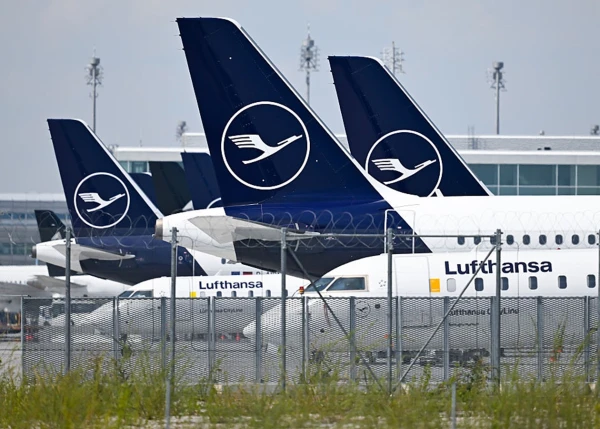
However, the most tangible result of the aviation fuel shortage has been the forced mass cancellations of flights. For instance, Lufthansa announced adjustments to its summer schedule until October, planning to cut about 20,000 short-haul, i.e., intra-European, flights.
According to estimates, such measures will save approximately 40,000 tons of aviation fuel.
Inevitable Cost Increase
The cost of flights has significantly increased for airlines, creating colossal financial pressure. Not all companies can withstand such a burden, so many have already been forced to raise ticket prices.
At the end of March, the Latvian airline airBaltic officially appealed to its main shareholder—the government—for assistance due to deteriorating financial conditions. The issue of supporting the carrier was discussed at the political level, and the Saeima of Latvia ultimately approved the provision of a short-term loan of 30 million euros to airBaltic.
Relative Stability in Some Regions
Some countries have not yet felt a sharp fuel shortage, although they are actively preparing for a possible worsening of the situation. However, the price increase has affected everyone without exception, making it impossible to completely avoid the crisis in the modern globalized world.
The British Airlines Association Airlines UK has urged the government to take proactive measures and prepare for a potential fuel shortage. This is necessary to prevent flight disruptions in case of further escalation of the crisis.
Southern European countries also report a more stable situation in their markets. Portugal's Minister of Infrastructure Miguel Pinto Luz even assured that his country does not expect a shortage of aviation fuel.
This is explained by a diversified supply system: the main supplier for Portuguese airports, Galp Energia, primarily sources oil from Brazil. The raw material is then processed at the company's own refinery in Sines.
Cautious optimism is also expressed in Spain, where imported fuel sources include the United States and North African countries.