
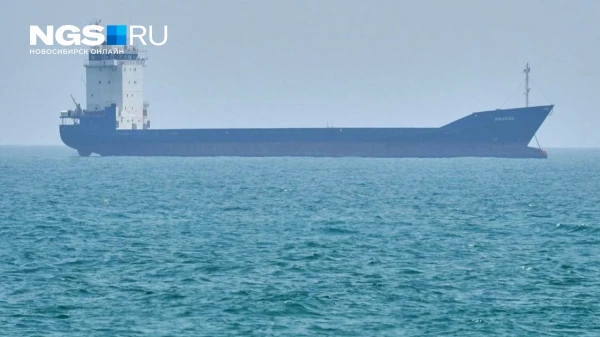
Tensions between the U.S. and Iran reach a peak: Washington orders the destruction of Iranian vessels, Tel Aviv prepares for strikes, and Tehran threatens symmetrical retaliation. Learn about the latest developments in the conflict that is already affecting global aviation.
The conflict between the United States and Iran, which began on February 28, has escalated again. A two-week ceasefire, established on April 7, ended without reaching a peace agreement. Washington is actively ordering strikes on Iranian vessels, while Tel Aviv expresses readiness to join the attack, as Tehran shows determination not to back down.
Trump Ordered to Sink Ships Laying Mines in the Strait of Hormuz
U.S. President Donald Trump ordered American military forces to destroy Iranian vessels spotted laying mines in the strategically important Strait of Hormuz. He announced this on April 23 on his social media platform Truth Social.
"I have ordered the U.S. Navy to fire upon and destroy any ships laying mines in the waters of the Strait of Hormuz. There should be no hesitation," emphasized the American leader, adding that 159 Iranian ships have already been sunk.
The U.S. Central Command reported the arrival of a third American aircraft carrier in the Middle East, indicating an increase in military presence. For the first time since 1986, naval forces used shipboard artillery against another vessel.
The USS Spruance destroyer opened fire on the Iranian cargo ship Touska off the coast of Iran, according to The War Zone. American military officials warned Congress that full demining of the Strait of Hormuz could take up to six months.
British divers are also preparing for demining operations, as reported by Politico.
Israel Awaits U.S. Approval for Strikes on Iran
Israeli Defense Minister Israel Katz confirmed the country's readiness to resume military actions against Iran. Israel is awaiting permission from the U.S. to strike key targets in the Islamic Republic.
According to Katz, Israel aims to "return Iran to the Stone Age" by destroying its energy system and undermining its national economy. "Israel is waiting for the 'green light' from the United States, primarily to eliminate the Khamenei regime, as well as to destroy central energy facilities and economic infrastructure in Iran," The Times of Israel quoted him.
Tehran Retains Significant Military Capability
Despite Washington's claims, Iran retains a significantly larger military capability, despite strikes from the U.S. and Israel. This was reported by CBS News, citing American officials familiar with intelligence data.
According to them, by April 8, when the ceasefire came into effect, Iran had retained about 50% of its ballistic missiles and launchers. Additionally, 60% of the Islamic Revolutionary Guard Corps (IRGC) forces remained intact, including fast boats used to control the Strait of Hormuz.
It is reported that two-thirds of Iran's aviation remains operational after the campaign conducted by the U.S. and Israel.
U.S. State Department Urges Citizens to Leave Iran Immediately
The U.S. State Department strongly advises its citizens to leave Iran immediately while the country's airspace is partially open. The official website of the department published the relevant warning.
Americans who cannot leave the Islamic Republic are advised to stay in safe places, such as homes or hotels, until further instructions are received, and to stay away from windows.
"As of April 21, Iran's airspace is partially open again. U.S. citizens should leave Iran now, relying on local media for current information and consulting commercial carriers for additional flight information. Americans attempting to leave Iran can also do so overland through Armenia, Azerbaijan, Turkey, and Turkmenistan," the message states.
Donald Trump Says He Is in No Rush to End Conflict with Iran
Donald Trump stated in his message on Truth Social that he is in no hurry to end the conflict with Iran. He noted that, despite the opinions of readers of The New York Times or viewers of CNN, he is the "least pressured" President in U.S. history.
"I have all the time in the world, and Iran does not. The clock is ticking," Trump wrote, emphasizing that any deal with Iran will only be made if it is beneficial for the U.S., its allies, and the entire world.
President Trump also categorically excluded the use of nuclear weapons in this conflict. He stressed that such weapons should not be used under any circumstances.
Tehran Threatens to Respond to New U.S. Aggression
Iranian military officials have developed a detailed plan for retaliatory measures in case of escalation of the conflict with the United States. The Fars agency reports that the strategy is based on the principle of symmetrical retaliation, implying an adequate response to aggressive actions.
If Washington or Tel Aviv strikes Iran's energy infrastructure, Tehran will respond with targeted attacks on power plants in Israel and American allies in the region. In response to an increased maritime blockade, a complete closure of shipping through the Bab-el-Mandeb Strait and mining of the Strait of Hormuz is planned.
In the event of U.S. ground military operations on Iranian territory, Tehran intends to intensify guerrilla warfare. Local populations and the paramilitary groups of the "Axis of Resistance" will be involved to seize American military bases in the region.
Rising Aviation Fuel Prices Lead to Major Changes in European Airlines' Operations
The significant rise in aviation fuel prices has caused major changes in the operations of European airlines. The German holding Lufthansa Group has decided to close its subsidiary Lufthansa CityLine and temporarily ground six long-haul aircraft.
Dutch KLM is cutting its schedule, canceling 160 flights, which accounts for about 1% of all its European routes. British low-cost carrier EasyJet reported additional costs of £25 million over the past month due to rising fuel prices.
The main company of the Lufthansa group in Germany plans to cancel about 20,000 flights for similar reasons. Irish carrier Ryanair is considering reducing the number of flights by 5–10% during the peak summer season, from May to July.
Against this backdrop, Iran has begun to receive revenue from tolls for the passage of vessels through the Strait of Hormuz.












Leave a comment